






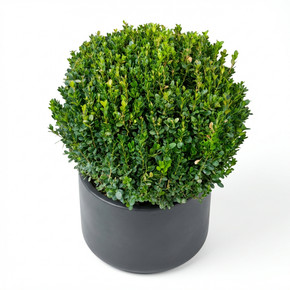
Define your space with the architectural elegance of the Boxwood Pyramid Topiary. A living sculpture, this Buxus sempervirens brings a touch of classic formality and sophistication to any setting. Its vibrant, deep green foliage provides year-round color, while the precise pyramidal form creates a powerful visual statement. Perfect for flanking doorways, lining walkways, or as a standalone feature on a patio, this topiary is a low-maintenance symbol of luxury and timeless design. Elevate your landscape today.
Common Name: Boxwood Pyramid Topiary / بوكسس
Botanical Name: Buxus sempervirens
Variety: Standard
Plant Color: Green
Plant Country: Netherlands
Kingdom: Plantae
Order: Buxales
Family: Buxaceae
Genus: Buxus
Species: B. sempervirens
Native to western and southern Europe, northwest Africa, and southwest Asia, from southern England south to northern Morocco, and east through the Mediterranean region to Turkey and the Caucasus.
Features small, dense, glossy dark green oval leaves that maintain their color throughout the winter. The plant is meticulously pruned and trained into a sharp, four-sided pyramidal shape, showcasing a formal and architectural aesthetic.
Typically maintained at a height of 60 to 150 cm (2 to 5 feet) for topiary purposes. If left unpruned, the species can eventually grow into a large shrub or small tree reaching up to 5-9 meters.
Thrives in full sun to partial shade. In very hot climates, partial shade during the afternoon is beneficial to prevent foliage scorch.
Requires regular watering to keep the soil consistently moist, especially during the first growing season. Once established, it is moderately drought-tolerant but prefers regular hydration.
Prefers well-drained, fertile soil. It is adaptable to various soil types including loamy, sandy, or clay, provided there is good drainage. Prefers a neutral to slightly alkaline pH.
Hardy in USDA zones 5-8. It is relatively cold-tolerant but should be protected from harsh, drying winter winds which can cause "bronzing" of the leaves.
Apply a balanced, slow-release fertilizer in early spring before new growth appears. Avoid fertilizing late in the fall as new growth may be damaged by frost.
Moderate. To maintain the precise pyramid shape, the plant requires shearing at least once or twice a year, typically in late spring and late summer.
Slow to moderate growth rate. Propagation is most commonly achieved through semi-hardwood cuttings taken in summer or late summer.
Susceptible to boxwood blight, leaf miner, boxwood psyllids, and spider mites. Proper air circulation and avoiding overhead watering can help prevent fungal issues.
Primarily used for ornamental and formal landscaping. Ideal for container gardening, framing entrances, or adding structure to garden beds. It is a classic choice for traditional and contemporary gardens alike.
Contains alkaloids that are toxic to humans, dogs, cats, and horses if ingested. Can cause skin irritation in some individuals upon contact with the sap during pruning.
Define your space with the architectural elegance of the Boxwood Pyramid Topiary. A living sculpture, this Buxus sempervirens brings a touch of classic formality and sophistication to any setting. Its vibrant, deep green foliage provides year-round color, while the precise pyramidal form creates a powerful visual statement. Perfect for flanking doorways, lining walkways, or as a standalone feature on a patio, this topiary is a low-maintenance symbol of luxury and timeless design. Elevate your landscape today.
Common Name: Boxwood Pyramid Topiary / بوكسس
Botanical Name: Buxus sempervirens
Variety: Standard
Plant Color: Green
Plant Country: Netherlands
Kingdom: Plantae
Order: Buxales
Family: Buxaceae
Genus: Buxus
Species: B. sempervirens
Native to western and southern Europe, northwest Africa, and southwest Asia, from southern England south to northern Morocco, and east through the Mediterranean region to Turkey and the Caucasus.
Features small, dense, glossy dark green oval leaves that maintain their color throughout the winter. The plant is meticulously pruned and trained into a sharp, four-sided pyramidal shape, showcasing a formal and architectural aesthetic.
Typically maintained at a height of 60 to 150 cm (2 to 5 feet) for topiary purposes. If left unpruned, the species can eventually grow into a large shrub or small tree reaching up to 5-9 meters.
Thrives in full sun to partial shade. In very hot climates, partial shade during the afternoon is beneficial to prevent foliage scorch.
Requires regular watering to keep the soil consistently moist, especially during the first growing season. Once established, it is moderately drought-tolerant but prefers regular hydration.
Prefers well-drained, fertile soil. It is adaptable to various soil types including loamy, sandy, or clay, provided there is good drainage. Prefers a neutral to slightly alkaline pH.
Hardy in USDA zones 5-8. It is relatively cold-tolerant but should be protected from harsh, drying winter winds which can cause "bronzing" of the leaves.
Apply a balanced, slow-release fertilizer in early spring before new growth appears. Avoid fertilizing late in the fall as new growth may be damaged by frost.
Moderate. To maintain the precise pyramid shape, the plant requires shearing at least once or twice a year, typically in late spring and late summer.
Slow to moderate growth rate. Propagation is most commonly achieved through semi-hardwood cuttings taken in summer or late summer.
Susceptible to boxwood blight, leaf miner, boxwood psyllids, and spider mites. Proper air circulation and avoiding overhead watering can help prevent fungal issues.
Primarily used for ornamental and formal landscaping. Ideal for container gardening, framing entrances, or adding structure to garden beds. It is a classic choice for traditional and contemporary gardens alike.
Contains alkaloids that are toxic to humans, dogs, cats, and horses if ingested. Can cause skin irritation in some individuals upon contact with the sap during pruning.

Take 20% off your first order
Enter the code below at checkout to get 20% off your first order


