

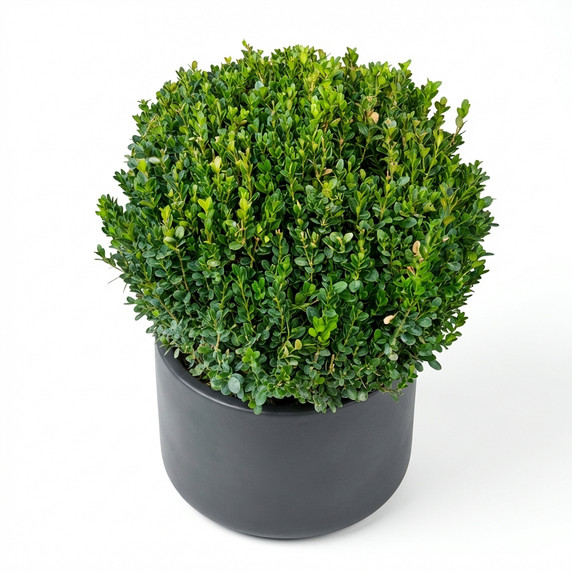





Define your garden with the timeless elegance of the Boxwood. A symbol of classic design and enduring structure, this hardy evergreen is the ultimate choice for creating crisp, formal hedges, stunning topiary, or sophisticated container arrangements. Our Buxus sempervirens, sourced from top Dutch growers, boasts dense, vibrant green foliage that provides a lush, year-round presence. Incredibly versatile and low-maintenance, it’s the perfect architectural plant to bring a touch of class and order to any outdoor space. Order now and build the garden of your dreams.
Common Name: Boxwood, Common Box, European Box
Botanical Name: Buxus sempervirens
Arabic Name: بوكسس
Plant Variant: Standard
Plant Color: Green
Kingdom: Plantae
Order: Buxales
Family: Buxaceae
Genus: Buxus
Species: Buxus sempervirens
Buxus sempervirens is native to western and southern Europe, northwest Africa, and southwest Asia, extending from southern England to northern Morocco and east to the northern Caucasus. This specific specimen is sourced from high-quality growers in the Netherlands.
This evergreen shrub is characterized by its exceptionally dense growth habit. It features small, opposite, oval-to-oblong leaves that are approximately 1.5–3 cm long. The foliage is a glossy dark green on the upper surface and a lighter, duller green underneath. It maintains its color throughout the winter.
In a standard garden setting, Boxwood typically grows to a height and spread of 1 to 5 meters if left unpruned. However, it is very slow-growing and is most frequently maintained through pruning at specific heights ranging from 30 cm for low borders to 2 meters for privacy screens.
Boxwood is highly adaptable, thriving in full sun to partial shade. In very hot climates, partial shade (especially in the afternoon) is beneficial to prevent leaf scorch.
It requires moderate watering. While established plants are relatively drought-tolerant, they prefer consistently moist, well-drained soil. Overwatering or poor drainage can lead to root rot. Weekly watering is usually sufficient, increasing frequency during extreme heat.
Prefers well-drained, loamy soil enriched with organic matter. It thrives in soils with a neutral to slightly alkaline pH. If kept in pots, ensure the container has excellent drainage holes and use a high-quality potting mix.
Extremely hardy, Boxwood can tolerate cold temperatures down to USDA Zone 5 (approx -20°F / -28°C). It adapts well to various humidity levels but benefits from good air circulation to prevent fungal issues.
Apply a balanced, slow-release fertilizer (such as a 10-10-10 NPK ratio) in early spring before new growth begins. Avoid fertilizing late in the fall, as this can encourage tender new growth that may be damaged by frost.
Low to Medium. While the plant itself is hardy and low-maintenance, it requires regular pruning once or twice a year if a specific formal shape or hedge structure is desired.
Boxwood is a slow-growing species, often growing only 5-15 cm per year. Propagation is most successful via semi-hardwood cuttings taken in late summer or autumn.
Watch for boxwood leafminer, boxwood mites, and psyllids. It can also be susceptible to boxwood blight (a fungal disease) and root rot if the soil remains waterlogged.
Widely used in landscape architecture for formal hedges, parterres, and topiary. It is excellent for defining garden "rooms," edging walkways, and as a sophisticated container plant for entryways and patios. It also provides year-round structure and privacy.
Buxus sempervirens contains alkaloids (such as cyclobuxine) that are toxic to dogs, cats, and horses if ingested. Contact with the sap may also cause minor skin irritation in sensitive individuals.
Define your garden with the timeless elegance of the Boxwood. A symbol of classic design and enduring structure, this hardy evergreen is the ultimate choice for creating crisp, formal hedges, stunning topiary, or sophisticated container arrangements. Our Buxus sempervirens, sourced from top Dutch growers, boasts dense, vibrant green foliage that provides a lush, year-round presence. Incredibly versatile and low-maintenance, it’s the perfect architectural plant to bring a touch of class and order to any outdoor space. Order now and build the garden of your dreams.
Common Name: Boxwood, Common Box, European Box
Botanical Name: Buxus sempervirens
Arabic Name: بوكسس
Plant Variant: Standard
Plant Color: Green
Kingdom: Plantae
Order: Buxales
Family: Buxaceae
Genus: Buxus
Species: Buxus sempervirens
Buxus sempervirens is native to western and southern Europe, northwest Africa, and southwest Asia, extending from southern England to northern Morocco and east to the northern Caucasus. This specific specimen is sourced from high-quality growers in the Netherlands.
This evergreen shrub is characterized by its exceptionally dense growth habit. It features small, opposite, oval-to-oblong leaves that are approximately 1.5–3 cm long. The foliage is a glossy dark green on the upper surface and a lighter, duller green underneath. It maintains its color throughout the winter.
In a standard garden setting, Boxwood typically grows to a height and spread of 1 to 5 meters if left unpruned. However, it is very slow-growing and is most frequently maintained through pruning at specific heights ranging from 30 cm for low borders to 2 meters for privacy screens.
Boxwood is highly adaptable, thriving in full sun to partial shade. In very hot climates, partial shade (especially in the afternoon) is beneficial to prevent leaf scorch.
It requires moderate watering. While established plants are relatively drought-tolerant, they prefer consistently moist, well-drained soil. Overwatering or poor drainage can lead to root rot. Weekly watering is usually sufficient, increasing frequency during extreme heat.
Prefers well-drained, loamy soil enriched with organic matter. It thrives in soils with a neutral to slightly alkaline pH. If kept in pots, ensure the container has excellent drainage holes and use a high-quality potting mix.
Extremely hardy, Boxwood can tolerate cold temperatures down to USDA Zone 5 (approx -20°F / -28°C). It adapts well to various humidity levels but benefits from good air circulation to prevent fungal issues.
Apply a balanced, slow-release fertilizer (such as a 10-10-10 NPK ratio) in early spring before new growth begins. Avoid fertilizing late in the fall, as this can encourage tender new growth that may be damaged by frost.
Low to Medium. While the plant itself is hardy and low-maintenance, it requires regular pruning once or twice a year if a specific formal shape or hedge structure is desired.
Boxwood is a slow-growing species, often growing only 5-15 cm per year. Propagation is most successful via semi-hardwood cuttings taken in late summer or autumn.
Watch for boxwood leafminer, boxwood mites, and psyllids. It can also be susceptible to boxwood blight (a fungal disease) and root rot if the soil remains waterlogged.
Widely used in landscape architecture for formal hedges, parterres, and topiary. It is excellent for defining garden "rooms," edging walkways, and as a sophisticated container plant for entryways and patios. It also provides year-round structure and privacy.
Buxus sempervirens contains alkaloids (such as cyclobuxine) that are toxic to dogs, cats, and horses if ingested. Contact with the sap may also cause minor skin irritation in sensitive individuals.




Take 20% off your first order
Enter the code below at checkout to get 20% off your first order