


Buddhist Pine Bonsai
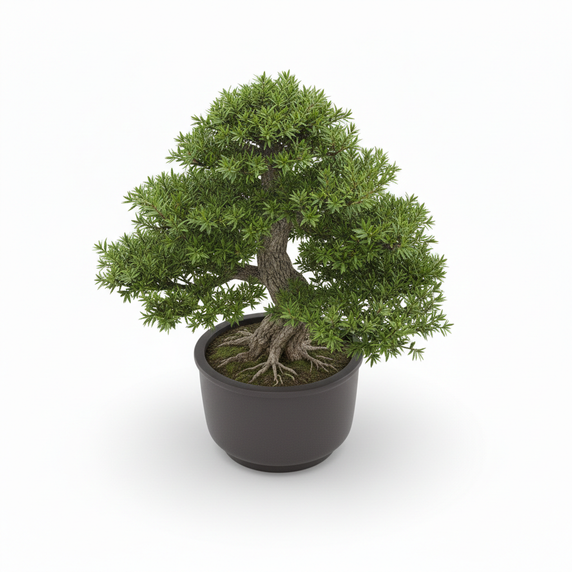
Cultivate peace and elegance with the Buddhist Pine Bonsai. A masterpiece of nature and patience, this living sculpture transforms any room into a sanctuary of calm. Its lush, deep green foliage and classic form make it a powerful statement piece, ideal for the discerning decorator or as a meaningful gift that grows with time. Easy to care for and incredibly resilient, the Podocarpus bonsai is your entry into a rewarding horticultural art form. Bring home more than a plant—bring home a legacy.
1. Basic Identification
Common Name: Buddhist Pine Bonsai (Kusamaki)
Botanical Name: Podocarpus macrophyllus
Arabic Name: راد ماكي بونزاي
2. Taxonomy & Classification
Kingdom: Plantae
Division: Pinophyta
Class: Pinopsida
Order: Pinales
Family: Podocarpaceae
Genus: Podocarpus
3. Origin & Distribution
Native to southern Japan and southern and eastern China. It is widely cultivated globally as an ornamental tree and a popular choice for traditional bonsai art.
4. Visual Characteristics
This evergreen conifer features dense, leathery, dark green needle-like leaves arranged spirally. In bonsai form, it is known for its elegant, woody trunk that develops a rugged, aged character over time.
5. Size & Dimensions
As a bonsai, it is typically maintained at a height of 12 to 30 inches (30–75 cm). In its natural habitat, the tree can reach heights of over 50 feet, but its growth rate is slow and easily controlled in containers.
6. Light Requirements
Thrives in bright, indirect light. It can tolerate some direct morning sunlight, which helps maintain dense foliage, but should be protected from harsh, scorching afternoon sun.
7. Watering Needs
Keep the soil consistently moist but never waterlogged. Water when the top layer of soil feels slightly dry to the touch. Avoid letting the root ball dry out completely, as this can cause needle drop.
8. Soil & Potting
Requires well-draining, slightly acidic soil. A dedicated bonsai mix consisting of akadama, pumice, and organic compost is ideal to ensure proper aeration and moisture retention.
9. Temperature & Humidity
Prefers moderate temperatures between 15°C and 25°C. It is relatively hardy but should be protected from freezing temperatures. It enjoys high humidity; regular misting or a pebble tray is recommended in dry indoor environments.
10. Fertilization
Apply a balanced liquid fertilizer every two to four weeks during the active growing season (spring through autumn). Reduce feeding during the winter months.
11. Maintenance & Care Level
Moderate. Requires regular pruning of new shoots to maintain its shape and encourage thicker growth. It is a resilient species that responds well to wiring, making it excellent for bonsai enthusiasts.
12. Growth & Propagation
A slow-growing species. Propagation is most commonly achieved through semi-hardwood cuttings taken in summer or by germinating seeds, though the latter takes significantly longer.
13. Common Problems
Susceptible to scale insects, mealybugs, and spider mites. Overwatering can lead to root rot, characterized by yellowing or browning needles and a lack of vigor.
14. Benefits & Uses
Highly valued for its air-purifying properties and aesthetic appeal. In many cultures, it is considered a symbol of good fortune and longevity, making it a popular choice for corporate offices, reception areas, and home décor.
15. Toxicity & Safety
The seeds and leaves contain toxins that are harmful if ingested. It is considered toxic to pets (dogs, cats, and horses) and can cause digestive distress. Handle with care and keep out of reach of small children.
Buddhist Pine Bonsai
Cultivate peace and elegance with the Buddhist Pine Bonsai. A masterpiece of nature and patience, this living sculpture transforms any room into a sanctuary of calm. Its lush, deep green foliage and classic form make it a powerful statement piece, ideal for the discerning decorator or as a meaningful gift that grows with time. Easy to care for and incredibly resilient, the Podocarpus bonsai is your entry into a rewarding horticultural art form. Bring home more than a plant—bring home a legacy.
1. Basic Identification
Common Name: Buddhist Pine Bonsai (Kusamaki)
Botanical Name: Podocarpus macrophyllus
Arabic Name: راد ماكي بونزاي
2. Taxonomy & Classification
Kingdom: Plantae
Division: Pinophyta
Class: Pinopsida
Order: Pinales
Family: Podocarpaceae
Genus: Podocarpus
3. Origin & Distribution
Native to southern Japan and southern and eastern China. It is widely cultivated globally as an ornamental tree and a popular choice for traditional bonsai art.
4. Visual Characteristics
This evergreen conifer features dense, leathery, dark green needle-like leaves arranged spirally. In bonsai form, it is known for its elegant, woody trunk that develops a rugged, aged character over time.
5. Size & Dimensions
As a bonsai, it is typically maintained at a height of 12 to 30 inches (30–75 cm). In its natural habitat, the tree can reach heights of over 50 feet, but its growth rate is slow and easily controlled in containers.
6. Light Requirements
Thrives in bright, indirect light. It can tolerate some direct morning sunlight, which helps maintain dense foliage, but should be protected from harsh, scorching afternoon sun.
7. Watering Needs
Keep the soil consistently moist but never waterlogged. Water when the top layer of soil feels slightly dry to the touch. Avoid letting the root ball dry out completely, as this can cause needle drop.
8. Soil & Potting
Requires well-draining, slightly acidic soil. A dedicated bonsai mix consisting of akadama, pumice, and organic compost is ideal to ensure proper aeration and moisture retention.
9. Temperature & Humidity
Prefers moderate temperatures between 15°C and 25°C. It is relatively hardy but should be protected from freezing temperatures. It enjoys high humidity; regular misting or a pebble tray is recommended in dry indoor environments.
10. Fertilization
Apply a balanced liquid fertilizer every two to four weeks during the active growing season (spring through autumn). Reduce feeding during the winter months.
11. Maintenance & Care Level
Moderate. Requires regular pruning of new shoots to maintain its shape and encourage thicker growth. It is a resilient species that responds well to wiring, making it excellent for bonsai enthusiasts.
12. Growth & Propagation
A slow-growing species. Propagation is most commonly achieved through semi-hardwood cuttings taken in summer or by germinating seeds, though the latter takes significantly longer.
13. Common Problems
Susceptible to scale insects, mealybugs, and spider mites. Overwatering can lead to root rot, characterized by yellowing or browning needles and a lack of vigor.
14. Benefits & Uses
Highly valued for its air-purifying properties and aesthetic appeal. In many cultures, it is considered a symbol of good fortune and longevity, making it a popular choice for corporate offices, reception areas, and home décor.
15. Toxicity & Safety
The seeds and leaves contain toxins that are harmful if ingested. It is considered toxic to pets (dogs, cats, and horses) and can cause digestive distress. Handle with care and keep out of reach of small children.