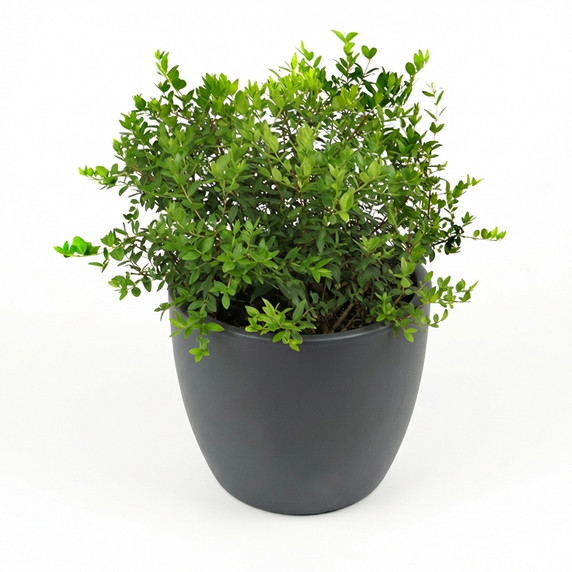
Create a premium, timeless look in minutes. This Boxwood Ball brings crisp, architectural greenery to entrances, patios, and reception areas—staying elegant all year with simple, occasional trimming. A go-to choice for professional landscaping style in a compact, container-friendly plant.
Common Name: Boxwood Ball
Botanical Name: Buxus sempervirens
Former Name: Not available
Plant Type: Topiary (evergreen shrub)
Plant Code / SKU: PLT-0127
Alternative Names:
English Boxwood
Common Boxwood
بوكسس
Order: Ericales
Family: Buxaceae
Genus: Buxus
Species: Buxus sempervirens
Native to western and southern Europe, northwest Africa, and southwest Asia.
Widely cultivated worldwide as ornamental hedges and topiary in temperate regions.
Evergreen shrub with dense, glossy, opposite leaves that are oval to elliptic, 1–2.5 cm long.
Smooth gray bark; small, inconspicuous greenish-yellow flowers in spring.
Pruned into a uniform, spherical form for a classic architectural look.
Natural growth up to 3–5 m tall when unpruned.
As a standard topiary ball: diameter typically 30–60 cm (12–24 inches).
Height including trunk can range 60–100 cm depending on container and design.
Prefers full sun to partial shade.
At least 4–6 hours of direct sunlight daily for dense foliage.
Tolerance to light shade, but excessive shade reduces leaf color and density.
Maintain evenly moist, well-drained soil.
Water when the top 2–5 cm of soil feels dry.
Moderately drought tolerant once established, but best performance with regular irrigation.
Use a fertile, well-draining potting mix with good moisture retention.
Ideal pH 6.5–7.5 (slightly acidic to neutral).
Ensure containers have adequate drainage holes to prevent waterlogging.
Hardy in USDA zones 5–9 (minimum −15 °C to −20 °C for brief periods).
Optimal growth at 15–24 °C.
Tolerates average indoor humidity; avoid extremely dry or hot indoor air.
Apply a balanced slow-release fertilizer in early spring.
Optional light feeding with a balanced liquid fertilizer mid-season.
Avoid high-nitrogen formulas to prevent overly vigorous, soft growth.
Moderate care required.
Trim 1–2 times per year (late spring and/or late summer) to maintain shape.
Inspect regularly for pests and adjust watering and light as needed.
Propagate by semi-hardwood cuttings in mid to late summer (6–8 weeks to root).
Use rooting hormone and maintain high humidity for best results.
Layering is also possible; seed propagation is slow and less common for topiary.
Diseases: boxwood blight (Cylindrocladium buxicola), root rot in poorly drained soil.
Pests: boxwood leafminer, boxwood mites, scale insects, aphids.
Physiological: leaf scorch in hot, dry conditions; chlorosis in poorly drained or alkaline soils.
Classic evergreen topiary for formal gardens, entrances, patios, and reception areas.
Provides year-round architectural interest and structure.
Suitable for containers, borders, and low hedges; enhances property curb appeal.
All parts contain alkaloids (especially the seeds) and are mildly toxic if ingested.
May cause nausea, vomiting, diarrhea in humans and pets.
Wear gloves when pruning to avoid skin irritation; keep away from children and animals.
Create a premium, timeless look in minutes. This Boxwood Ball brings crisp, architectural greenery to entrances, patios, and reception areas—staying elegant all year with simple, occasional trimming. A go-to choice for professional landscaping style in a compact, container-friendly plant.
Common Name: Boxwood Ball
Botanical Name: Buxus sempervirens
Former Name: Not available
Plant Type: Topiary (evergreen shrub)
Plant Code / SKU: PLT-0127
Alternative Names:
English Boxwood
Common Boxwood
بوكسس
Order: Ericales
Family: Buxaceae
Genus: Buxus
Species: Buxus sempervirens
Native to western and southern Europe, northwest Africa, and southwest Asia.
Widely cultivated worldwide as ornamental hedges and topiary in temperate regions.
Evergreen shrub with dense, glossy, opposite leaves that are oval to elliptic, 1–2.5 cm long.
Smooth gray bark; small, inconspicuous greenish-yellow flowers in spring.
Pruned into a uniform, spherical form for a classic architectural look.
Natural growth up to 3–5 m tall when unpruned.
As a standard topiary ball: diameter typically 30–60 cm (12–24 inches).
Height including trunk can range 60–100 cm depending on container and design.
Prefers full sun to partial shade.
At least 4–6 hours of direct sunlight daily for dense foliage.
Tolerance to light shade, but excessive shade reduces leaf color and density.
Maintain evenly moist, well-drained soil.
Water when the top 2–5 cm of soil feels dry.
Moderately drought tolerant once established, but best performance with regular irrigation.
Use a fertile, well-draining potting mix with good moisture retention.
Ideal pH 6.5–7.5 (slightly acidic to neutral).
Ensure containers have adequate drainage holes to prevent waterlogging.
Hardy in USDA zones 5–9 (minimum −15 °C to −20 °C for brief periods).
Optimal growth at 15–24 °C.
Tolerates average indoor humidity; avoid extremely dry or hot indoor air.
Apply a balanced slow-release fertilizer in early spring.
Optional light feeding with a balanced liquid fertilizer mid-season.
Avoid high-nitrogen formulas to prevent overly vigorous, soft growth.
Moderate care required.
Trim 1–2 times per year (late spring and/or late summer) to maintain shape.
Inspect regularly for pests and adjust watering and light as needed.
Propagate by semi-hardwood cuttings in mid to late summer (6–8 weeks to root).
Use rooting hormone and maintain high humidity for best results.
Layering is also possible; seed propagation is slow and less common for topiary.
Diseases: boxwood blight (Cylindrocladium buxicola), root rot in poorly drained soil.
Pests: boxwood leafminer, boxwood mites, scale insects, aphids.
Physiological: leaf scorch in hot, dry conditions; chlorosis in poorly drained or alkaline soils.
Classic evergreen topiary for formal gardens, entrances, patios, and reception areas.
Provides year-round architectural interest and structure.
Suitable for containers, borders, and low hedges; enhances property curb appeal.
All parts contain alkaloids (especially the seeds) and are mildly toxic if ingested.
May cause nausea, vomiting, diarrhea in humans and pets.
Wear gloves when pruning to avoid skin irritation; keep away from children and animals.