




Transform your home into a vibrant oasis with the Calamondin Citrus on Trellis. More than just a plant, it's a piece of living art, meticulously trained to create an elegant vertical display. Imagine the sweet, intoxicating fragrance of citrus blossoms filling your room, followed by the delightful sight of bright orange fruits dotting the lush green foliage. This isn't just a decorative item; it's an experience. Perfect for a sun-drenched corner, it’s a conversation starter and a testament to nature’s beauty. Order now and bring home a touch of everlasting summer.
Common Name: Calamondin Citrus, Calamansi
Botanical Name: Citrus × microcarpa
Plant Variant: Trellis
Plant Color: Natural
Plant Country: Netherlands
Arabic Name: حمضيات
Family: Rutaceae
The Calamondin is a hybrid citrus fruit resulting from a cross between a mandarin orange (Citrus reticulata) and a kumquat (Citrus japonica). It belongs to the genus Citrus within the family Rutaceae.
Native to Southeast Asia, particularly the Philippines, and Southern China. It is widely distributed across tropical and subtropical regions and is highly popular as an ornamental indoor plant in temperate climates.
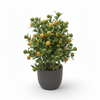
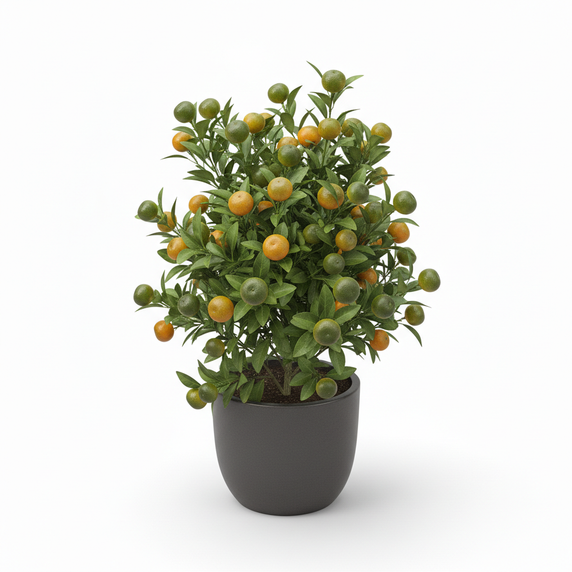
This variety features glossy, dark green, oval leaves. It produces small, highly fragrant white flowers. The fruit is small, round, and bright orange when ripe, resembling a miniature tangerine. In this specific trellis variant, the plant is expertly trained to grow vertically against a support structure.
When grown on a trellis, it typically reaches a height of 2 to 4 feet (60–120 cm) in indoor containers. The width is maintained by the trellis structure, usually spanning 12 to 18 inches.
Requires very bright, direct light. For successful fruiting and flowering, it needs at least 4 to 6 hours of direct sunlight daily. A south-facing window is ideal.
Water thoroughly when the top inch of soil feels dry to the touch. Ensure the pot has excellent drainage to prevent root rot. Do not allow the plant to sit in standing water.
Prefers well-draining, slightly acidic soil. A specialized citrus potting mix or a blend of standard potting soil with added perlite and peat moss works best.
Thrives in temperatures between 15°C and 30°C. It appreciates moderate to high humidity; misting the leaves or using a humidity tray is recommended in dry indoor environments.
Feed every 2–4 weeks during the growing season (spring and summer) using a high-nitrogen citrus-specific fertilizer or a balanced liquid fertilizer.
Moderate. Regular attention is needed to maintain light levels and moisture consistency. Pruning is occasionally necessary to maintain its shape on the trellis.
Moderately fast grower under optimal light conditions. It can be propagated through semi-hardwood stem cuttings or by seeds, although cuttings are more reliable for maintaining fruit quality.
Susceptible to common citrus pests such as spider mites, scale insects, and aphids. Leaf drop may occur if the plant is moved suddenly or experiences a sharp drop in temperature.
Primarily used as an ornamental decorative plant. The fruit is edible but very tart, often used in cooking, beverages, or preserves. It also acts as a natural air freshener due to its fragrant blooms.
The fruit is safe for human consumption. However, the leaves and stems contain essential oils and psoralens which are toxic to cats and dogs if ingested.
Transform your home into a vibrant oasis with the Calamondin Citrus on Trellis. More than just a plant, it's a piece of living art, meticulously trained to create an elegant vertical display. Imagine the sweet, intoxicating fragrance of citrus blossoms filling your room, followed by the delightful sight of bright orange fruits dotting the lush green foliage. This isn't just a decorative item; it's an experience. Perfect for a sun-drenched corner, it’s a conversation starter and a testament to nature’s beauty. Order now and bring home a touch of everlasting summer.
Common Name: Calamondin Citrus, Calamansi
Botanical Name: Citrus × microcarpa
Plant Variant: Trellis
Plant Color: Natural
Plant Country: Netherlands
Arabic Name: حمضيات
Family: Rutaceae
The Calamondin is a hybrid citrus fruit resulting from a cross between a mandarin orange (Citrus reticulata) and a kumquat (Citrus japonica). It belongs to the genus Citrus within the family Rutaceae.
Native to Southeast Asia, particularly the Philippines, and Southern China. It is widely distributed across tropical and subtropical regions and is highly popular as an ornamental indoor plant in temperate climates.
This variety features glossy, dark green, oval leaves. It produces small, highly fragrant white flowers. The fruit is small, round, and bright orange when ripe, resembling a miniature tangerine. In this specific trellis variant, the plant is expertly trained to grow vertically against a support structure.
When grown on a trellis, it typically reaches a height of 2 to 4 feet (60–120 cm) in indoor containers. The width is maintained by the trellis structure, usually spanning 12 to 18 inches.
Requires very bright, direct light. For successful fruiting and flowering, it needs at least 4 to 6 hours of direct sunlight daily. A south-facing window is ideal.
Water thoroughly when the top inch of soil feels dry to the touch. Ensure the pot has excellent drainage to prevent root rot. Do not allow the plant to sit in standing water.
Prefers well-draining, slightly acidic soil. A specialized citrus potting mix or a blend of standard potting soil with added perlite and peat moss works best.
Thrives in temperatures between 15°C and 30°C. It appreciates moderate to high humidity; misting the leaves or using a humidity tray is recommended in dry indoor environments.
Feed every 2–4 weeks during the growing season (spring and summer) using a high-nitrogen citrus-specific fertilizer or a balanced liquid fertilizer.
Moderate. Regular attention is needed to maintain light levels and moisture consistency. Pruning is occasionally necessary to maintain its shape on the trellis.
Moderately fast grower under optimal light conditions. It can be propagated through semi-hardwood stem cuttings or by seeds, although cuttings are more reliable for maintaining fruit quality.
Susceptible to common citrus pests such as spider mites, scale insects, and aphids. Leaf drop may occur if the plant is moved suddenly or experiences a sharp drop in temperature.
Primarily used as an ornamental decorative plant. The fruit is edible but very tart, often used in cooking, beverages, or preserves. It also acts as a natural air freshener due to its fragrant blooms.
The fruit is safe for human consumption. However, the leaves and stems contain essential oils and psoralens which are toxic to cats and dogs if ingested.
Take 20% off your first order
Enter the code below at checkout to get 20% off your first order