


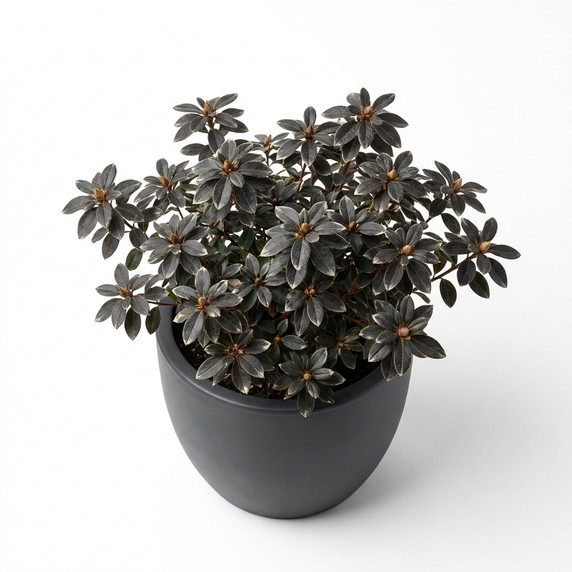





Bring instant color and structure to your space with Loropetalum chinense. Its dense, designer-ready foliage looks polished all year, while seasonal fringe blooms add a soft, elegant touch. Perfect for entrances, patios, and modern landscapes—easy to shape, easy to love, and striking in a decorative pot.
Common Name: Chinese Fringe Flower, Loropetalum
Botanical Name: Loropetalum chinense
Arabic Name: ازاليا
Family: Hamamelidaceae
Plant Variant: Standard
Plant Color: Multicolor
Plant Country: Unknown
Stems: 1
Loropetalum chinense belongs to the Hamamelidaceae family, commonly known as the witch-hazel family. It is the most well-known species within the genus Loropetalum, distinguished by its unique fringe-like floral structure.
This plant is native to the woodlands of China, Japan, and Southeast Asia. Since its introduction to western horticulture, it has become a staple in temperate and subtropical landscapes worldwide.
Loropetalum is an evergreen shrub with an elegant, arching growth habit. Its foliage consists of small, ovate leaves that can range from olive green to deep burgundy or purple. The flowers are distinctive, featuring clusters of "fringe-like" or strap-shaped petals that bloom prolifically in spring and sporadically throughout the year.
As a standard variety, it typically grows between 6 to 10 feet in height and width, though it can be maintained at a smaller size through regular pruning. Dwarf cultivars are also available that remain much shorter.
It thrives best in full sun to partial shade. While it can tolerate shade, full sun exposure (at least 6 hours) ensures the most vibrant foliage color and the most abundant flowering.
Loropetalum prefers regular watering to keep the soil consistently moist but not waterlogged. Once established, it possesses a moderate degree of drought tolerance, though it performs best with a steady moisture supply.
This plant requires well-drained, acidic soil rich in organic matter. It is sensitive to alkaline soils, which can lead to iron chlorosis (yellowing of the leaves). For container growing, use a high-quality ericaceous (acidic) potting mix.
It is hardy in USDA zones 7 through 9. It prefers moderate humidity and can tolerate temperatures down to approximately -12°C (10°F). In colder climates, it should be grown in containers and brought indoors or protected during hard freezes.
Feed in early spring with a balanced, slow-release fertilizer formulated for acid-loving plants (such as Azalea or Camellia food) to support new growth and flowering.
Easy to moderate. Maintenance primarily involves occasional pruning to maintain shape or size. Pruning should be done immediately after the main spring flowering flush to avoid cutting off next year's flower buds.
It has a moderate growth rate. Propagation is most successfully achieved through semi-hardwood cuttings taken during the summer months or via layering.
The plant is relatively pest-resistant but can occasionally be affected by spider mites, aphids, or scale. Its most common physiological issue is iron chlorosis if the soil pH becomes too high (alkaline).
Highly valued for its ornamental appeal, it is used for hedging, privacy screens, specimen planting, and foundation plantings. It is also an excellent candidate for large decorative containers and can even be trained into a small multi-trunked tree.
Loropetalum chinense is generally considered non-toxic to humans, dogs, and cats. It is a safe choice for households with pets and children.
Bring instant color and structure to your space with Loropetalum chinense. Its dense, designer-ready foliage looks polished all year, while seasonal fringe blooms add a soft, elegant touch. Perfect for entrances, patios, and modern landscapes—easy to shape, easy to love, and striking in a decorative pot.
Common Name: Chinese Fringe Flower, Loropetalum
Botanical Name: Loropetalum chinense
Arabic Name: ازاليا
Family: Hamamelidaceae
Plant Variant: Standard
Plant Color: Multicolor
Plant Country: Unknown
Stems: 1
Loropetalum chinense belongs to the Hamamelidaceae family, commonly known as the witch-hazel family. It is the most well-known species within the genus Loropetalum, distinguished by its unique fringe-like floral structure.
This plant is native to the woodlands of China, Japan, and Southeast Asia. Since its introduction to western horticulture, it has become a staple in temperate and subtropical landscapes worldwide.
Loropetalum is an evergreen shrub with an elegant, arching growth habit. Its foliage consists of small, ovate leaves that can range from olive green to deep burgundy or purple. The flowers are distinctive, featuring clusters of "fringe-like" or strap-shaped petals that bloom prolifically in spring and sporadically throughout the year.
As a standard variety, it typically grows between 6 to 10 feet in height and width, though it can be maintained at a smaller size through regular pruning. Dwarf cultivars are also available that remain much shorter.
It thrives best in full sun to partial shade. While it can tolerate shade, full sun exposure (at least 6 hours) ensures the most vibrant foliage color and the most abundant flowering.
Loropetalum prefers regular watering to keep the soil consistently moist but not waterlogged. Once established, it possesses a moderate degree of drought tolerance, though it performs best with a steady moisture supply.
This plant requires well-drained, acidic soil rich in organic matter. It is sensitive to alkaline soils, which can lead to iron chlorosis (yellowing of the leaves). For container growing, use a high-quality ericaceous (acidic) potting mix.
It is hardy in USDA zones 7 through 9. It prefers moderate humidity and can tolerate temperatures down to approximately -12°C (10°F). In colder climates, it should be grown in containers and brought indoors or protected during hard freezes.
Feed in early spring with a balanced, slow-release fertilizer formulated for acid-loving plants (such as Azalea or Camellia food) to support new growth and flowering.
Easy to moderate. Maintenance primarily involves occasional pruning to maintain shape or size. Pruning should be done immediately after the main spring flowering flush to avoid cutting off next year's flower buds.
It has a moderate growth rate. Propagation is most successfully achieved through semi-hardwood cuttings taken during the summer months or via layering.
The plant is relatively pest-resistant but can occasionally be affected by spider mites, aphids, or scale. Its most common physiological issue is iron chlorosis if the soil pH becomes too high (alkaline).
Highly valued for its ornamental appeal, it is used for hedging, privacy screens, specimen planting, and foundation plantings. It is also an excellent candidate for large decorative containers and can even be trained into a small multi-trunked tree.
Loropetalum chinense is generally considered non-toxic to humans, dogs, and cats. It is a safe choice for households with pets and children.





Take 20% off your first order
Enter the code below at checkout to get 20% off your first order