


Chlorophytum comosum
Bring effortless greenery to any room with the Spider Plant—one of the most reliable indoor plants for homes and offices. Its cascading variegated leaves brighten corners, while its famous baby plantlets make it perfect for gifting and propagation. If you want a stylish plant that forgives missed waterings and thrives in everyday indoor light, Chlorophytum comosum is a proven best-seller.
1. Basic Identification
Common Name: Spider Plant
Botanical Name: Chlorophytum comosum
Former Name: Not available
Plant Type: Houseplant (Ornamental foliage)
Plant Code / SKU: PLT-0647
Alternative Names:
نبات العنكبوت
2. Taxonomy & Classification
Order: Asparagales
Family: Asparagaceae
Genus: Chlorophytum
3. Origin & Distribution
Native to tropical and southern Africa
Widely cultivated and naturalized in warm climates worldwide as an ornamental houseplant and outdoor groundcover in frost-free regions
4. Visual Characteristics
Leaves: Arching, linear-lanceolate, 20–45 cm long; green margins with a central white or yellowish stripe (variegated cultivar)
Flowers: Small, white, star-shaped blooms on long arching inflorescences (stolons)
Plantlets: Produce stoloniferous runners bearing miniature plantlets that root readily when they touch soil
5. Size & Dimensions
Height: 20–35 cm
Spread: Up to 45 cm
Leaf Length: 20–45 cm
Stolon Length: 30–60 cm; plantlets form at intervals along stolons
6. Light Requirements
Bright, indirect light ideal for best variegation
Tolerates moderate to low indoor light but may lose variegation and become leggy in too-dim conditions
Avoid direct midday sun to prevent leaf scorch
7. Watering Needs
Allow top 2–3 cm of soil to dry between waterings
Water thoroughly, then let excess drain away; do not let plant sit in waterlogged soil
Tolerates occasional drying out better than overwatering
8. Soil & Potting
Use a well-draining potting mix rich in organic matter (e.g., peat-based with perlite or coarse sand)
Ideal pH: Slightly acidic to neutral (6.0–7.0)
Repot every 1–2 years or when root-bound, using a container with drainage holes
9. Temperature & Humidity
Temperature: Prefers 18–24 °C (65–75 °F); minimum 10 °C (50 °F)
Humidity: Average indoor humidity sufficient; benefits from moderate to high humidity (40–60%)
Avoid cold drafts and temperatures below 10 °C
10. Fertilization
Feed every 4–6 weeks during active growth (spring through summer) with a balanced, water-soluble fertilizer at half strength
Reduce or suspend feeding in autumn and winter when growth slows
11. Maintenance & Care Level
Care Level: Easy; forgiving of irregular care
Maintenance: Remove yellowing or damaged leaves; trim spent flower stalks and runners as desired to control appearance and shape
12. Growth & Propagation
Growth Habit: Clumping perennial forming rosettes and producing stolons with plantlets
Propagation: Remove plantlets from stolons once roots form and pot up individually; divide mature clumps during repotting
13. Common Problems
Brown leaf tips: Often due to fluoride or chlorine in water, low humidity, or overfertilization
Root rot: Caused by persistently waterlogged soil
Pests: Susceptible to spider mites, mealybugs, aphids, and scale
14. Benefits & Uses
Air purifying qualities: Effective at removing indoor pollutants such as formaldehyde and xylene
Ornamental: Ideal for hanging baskets, shelves, and tabletops
Propagation gifts: Plantlets make attractive, easy-to-gift starter plants
15. Toxicity & Safety
Pets: Mildly toxic to cats and dogs; ingestion may cause vomiting, diarrhea, and drooling
Humans: Non-toxic; safe for homes with children when kept out of reach
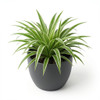
Chlorophytum comosum

Bring effortless greenery to any room with the Spider Plant—one of the most reliable indoor plants for homes and offices. Its cascading variegated leaves brighten corners, while its famous baby plantlets make it perfect for gifting and propagation. If you want a stylish plant that forgives missed waterings and thrives in everyday indoor light, Chlorophytum comosum is a proven best-seller.
1. Basic Identification
Common Name: Spider Plant
Botanical Name: Chlorophytum comosum
Former Name: Not available
Plant Type: Houseplant (Ornamental foliage)
Plant Code / SKU: PLT-0647
Alternative Names:
نبات العنكبوت
2. Taxonomy & Classification
Order: Asparagales
Family: Asparagaceae
Genus: Chlorophytum
3. Origin & Distribution
Native to tropical and southern Africa
Widely cultivated and naturalized in warm climates worldwide as an ornamental houseplant and outdoor groundcover in frost-free regions
4. Visual Characteristics
Leaves: Arching, linear-lanceolate, 20–45 cm long; green margins with a central white or yellowish stripe (variegated cultivar)
Flowers: Small, white, star-shaped blooms on long arching inflorescences (stolons)
Plantlets: Produce stoloniferous runners bearing miniature plantlets that root readily when they touch soil
5. Size & Dimensions
Height: 20–35 cm
Spread: Up to 45 cm
Leaf Length: 20–45 cm
Stolon Length: 30–60 cm; plantlets form at intervals along stolons
6. Light Requirements
Bright, indirect light ideal for best variegation
Tolerates moderate to low indoor light but may lose variegation and become leggy in too-dim conditions
Avoid direct midday sun to prevent leaf scorch
7. Watering Needs
Allow top 2–3 cm of soil to dry between waterings
Water thoroughly, then let excess drain away; do not let plant sit in waterlogged soil
Tolerates occasional drying out better than overwatering
8. Soil & Potting
Use a well-draining potting mix rich in organic matter (e.g., peat-based with perlite or coarse sand)
Ideal pH: Slightly acidic to neutral (6.0–7.0)
Repot every 1–2 years or when root-bound, using a container with drainage holes
9. Temperature & Humidity
Temperature: Prefers 18–24 °C (65–75 °F); minimum 10 °C (50 °F)
Humidity: Average indoor humidity sufficient; benefits from moderate to high humidity (40–60%)
Avoid cold drafts and temperatures below 10 °C
10. Fertilization
Feed every 4–6 weeks during active growth (spring through summer) with a balanced, water-soluble fertilizer at half strength
Reduce or suspend feeding in autumn and winter when growth slows
11. Maintenance & Care Level
Care Level: Easy; forgiving of irregular care
Maintenance: Remove yellowing or damaged leaves; trim spent flower stalks and runners as desired to control appearance and shape
12. Growth & Propagation
Growth Habit: Clumping perennial forming rosettes and producing stolons with plantlets
Propagation: Remove plantlets from stolons once roots form and pot up individually; divide mature clumps during repotting
13. Common Problems
Brown leaf tips: Often due to fluoride or chlorine in water, low humidity, or overfertilization
Root rot: Caused by persistently waterlogged soil
Pests: Susceptible to spider mites, mealybugs, aphids, and scale
14. Benefits & Uses
Air purifying qualities: Effective at removing indoor pollutants such as formaldehyde and xylene
Ornamental: Ideal for hanging baskets, shelves, and tabletops
Propagation gifts: Plantlets make attractive, easy-to-gift starter plants
15. Toxicity & Safety
Pets: Mildly toxic to cats and dogs; ingestion may cause vomiting, diarrhea, and drooling
Humans: Non-toxic; safe for homes with children when kept out of reach