


Chrysanthemum morifolium
Elevate your space with the regal beauty of the Purple Chrysanthemum. Bursting with rich, velvety purple petals, this plant is more than just a pretty face—it's a natural air-purifying hero ready to brighten your home or office. Perfect as a thoughtful gift or a treat for yourself, its stunning blooms provide a long-lasting display of color and cheer. Add this low-maintenance burst of joy to your cart today and let nature's artistry flourish in your life!
1. Basic Identification
Common Name: Purple Chrysanthemum
Botanical Name: Chrysanthemum morifolium
Former Name: Dendranthema morifolium
Plant Type: Flowering herbaceous perennial
Plant Code / SKU: PLT-1847
Alternative Names:
Florist's Chrysanthemum
Hardy Garden Mum
Mum
داودي (Daoudi)
2. Taxonomy & Classification
Order: Asterales
Family: Asteraceae
Genus: Chrysanthemum
3. Origin & Distribution
Native to China, chrysanthemums have been cultivated for over 1,500 years. They were later introduced to Japan and then to Europe in the 17th century. Today, they are one of the most popular and widely cultivated ornamental plants in the world.
4. Visual Characteristics
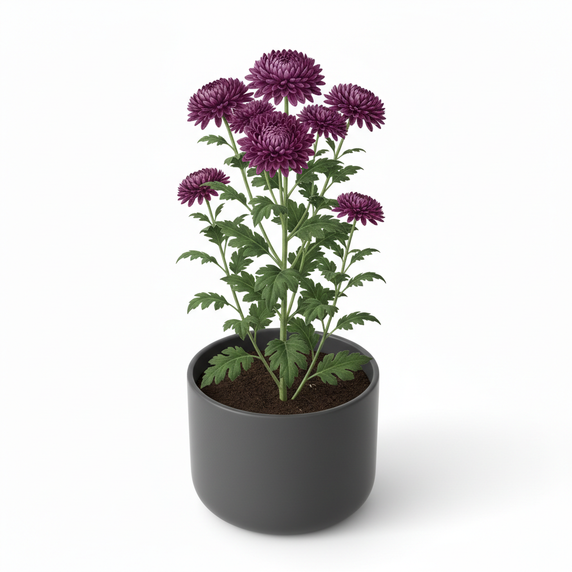
Foliage: The leaves are dark green, deeply lobed, and aromatic when crushed.
Flowers: Features large, composite flower heads with dense, velvety petals in a vibrant shade of purple. The flower form can vary but is typically of the 'decorative' type, with multiple layers of ray florets.
Stem: The stems are erect, herbaceous, and can become slightly woody at the base as the plant matures.
5. Size & Dimensions
Height: Typically grows 1 to 3 feet (30 to 90 cm) tall.
Spread: Can spread 1 to 2 feet (30 to 60 cm) wide, forming a bushy, mounded clump.
6. Light Requirements
Prefers full sun, requiring at least 6 hours of direct sunlight per day for optimal growth and flowering. When kept indoors as a temporary houseplant, place it in a location that receives bright, indirect light.
7. Watering Needs
Keep the soil consistently moist but not waterlogged. Water thoroughly when the top 1-2 inches of soil feel dry to the touch. Avoid overhead watering to prevent moisture from sitting on the leaves and flowers, which can lead to fungal diseases.
8. Soil & Potting
Thrives in rich, well-draining soil. A standard, high-quality potting mix is suitable for container-grown plants. For garden planting, amend the soil with compost to improve fertility and drainage. Prefers a slightly acidic to neutral soil pH (6.2 to 7.0).
9. Temperature & Humidity
Prefers cooler temperatures for long-lasting blooms, ideally between 60-70°F (15-21°C). They are hardy in USDA zones 5-9. Average household humidity is generally sufficient. Good air circulation is important to prevent disease.
10. Fertilization
During the active growing season (spring and summer), feed with a balanced liquid fertilizer every 2-4 weeks. Once flower buds appear, switch to a high-potassium fertilizer to promote vibrant blooms. Reduce fertilization in fall and winter.
11. Maintenance & Care Level
Moderate. Requires consistent watering and deadheading (removing spent flowers) to encourage continuous blooming. For garden mums, pinching back the stems in late spring and early summer promotes a bushier habit and more flowers in the fall.
12. Growth & Propagation
Growth Rate: Moderate to fast.
Propagation: Can be propagated easily through stem cuttings taken in spring or early summer. It can also be propagated by division of established clumps in the spring.
13. Common Problems
Pests: Susceptible to aphids, spider mites, thrips, and leafminers.
Diseases: Prone to fungal diseases such as powdery mildew, gray mold, and rust, especially in conditions of high humidity and poor air circulation.
14. Benefits & Uses
Ornamental: A highly popular plant for autumn gardens, container displays, and as a long-lasting cut flower. Often given as a gift plant.
Air Purification: Recognized by the NASA Clean Air Study for its ability to help filter indoor air pollutants such as ammonia, benzene, and formaldehyde.
Cultural: Holds significant cultural importance in many Asian cultures, symbolizing longevity, joy, and optimism.
15. Toxicity & Safety
Mildly toxic to pets. If ingested by cats, dogs, or horses, it can cause gastrointestinal upset, including vomiting, diarrhea, drooling, and loss of coordination. The plant's leaves may also cause dermatitis or skin irritation in sensitive individuals.
```
Chrysanthemum morifolium
Elevate your space with the regal beauty of the Purple Chrysanthemum. Bursting with rich, velvety purple petals, this plant is more than just a pretty face—it's a natural air-purifying hero ready to brighten your home or office. Perfect as a thoughtful gift or a treat for yourself, its stunning blooms provide a long-lasting display of color and cheer. Add this low-maintenance burst of joy to your cart today and let nature's artistry flourish in your life!
1. Basic Identification
Common Name: Purple Chrysanthemum
Botanical Name: Chrysanthemum morifolium
Former Name: Dendranthema morifolium
Plant Type: Flowering herbaceous perennial
Plant Code / SKU: PLT-1847
Alternative Names:
Florist's Chrysanthemum
Hardy Garden Mum
Mum
داودي (Daoudi)
2. Taxonomy & Classification
Order: Asterales
Family: Asteraceae
Genus: Chrysanthemum
3. Origin & Distribution
Native to China, chrysanthemums have been cultivated for over 1,500 years. They were later introduced to Japan and then to Europe in the 17th century. Today, they are one of the most popular and widely cultivated ornamental plants in the world.
4. Visual Characteristics
Foliage: The leaves are dark green, deeply lobed, and aromatic when crushed.
Flowers: Features large, composite flower heads with dense, velvety petals in a vibrant shade of purple. The flower form can vary but is typically of the 'decorative' type, with multiple layers of ray florets.
Stem: The stems are erect, herbaceous, and can become slightly woody at the base as the plant matures.
5. Size & Dimensions
Height: Typically grows 1 to 3 feet (30 to 90 cm) tall.
Spread: Can spread 1 to 2 feet (30 to 60 cm) wide, forming a bushy, mounded clump.
6. Light Requirements
Prefers full sun, requiring at least 6 hours of direct sunlight per day for optimal growth and flowering. When kept indoors as a temporary houseplant, place it in a location that receives bright, indirect light.
7. Watering Needs
Keep the soil consistently moist but not waterlogged. Water thoroughly when the top 1-2 inches of soil feel dry to the touch. Avoid overhead watering to prevent moisture from sitting on the leaves and flowers, which can lead to fungal diseases.
8. Soil & Potting
Thrives in rich, well-draining soil. A standard, high-quality potting mix is suitable for container-grown plants. For garden planting, amend the soil with compost to improve fertility and drainage. Prefers a slightly acidic to neutral soil pH (6.2 to 7.0).
9. Temperature & Humidity
Prefers cooler temperatures for long-lasting blooms, ideally between 60-70°F (15-21°C). They are hardy in USDA zones 5-9. Average household humidity is generally sufficient. Good air circulation is important to prevent disease.
10. Fertilization
During the active growing season (spring and summer), feed with a balanced liquid fertilizer every 2-4 weeks. Once flower buds appear, switch to a high-potassium fertilizer to promote vibrant blooms. Reduce fertilization in fall and winter.
11. Maintenance & Care Level
Moderate. Requires consistent watering and deadheading (removing spent flowers) to encourage continuous blooming. For garden mums, pinching back the stems in late spring and early summer promotes a bushier habit and more flowers in the fall.
12. Growth & Propagation
Growth Rate: Moderate to fast.
Propagation: Can be propagated easily through stem cuttings taken in spring or early summer. It can also be propagated by division of established clumps in the spring.
13. Common Problems
Pests: Susceptible to aphids, spider mites, thrips, and leafminers.
Diseases: Prone to fungal diseases such as powdery mildew, gray mold, and rust, especially in conditions of high humidity and poor air circulation.
14. Benefits & Uses
Ornamental: A highly popular plant for autumn gardens, container displays, and as a long-lasting cut flower. Often given as a gift plant.
Air Purification: Recognized by the NASA Clean Air Study for its ability to help filter indoor air pollutants such as ammonia, benzene, and formaldehyde.
Cultural: Holds significant cultural importance in many Asian cultures, symbolizing longevity, joy, and optimism.
15. Toxicity & Safety
Mildly toxic to pets. If ingested by cats, dogs, or horses, it can cause gastrointestinal upset, including vomiting, diarrhea, drooling, and loss of coordination. The plant's leaves may also cause dermatitis or skin irritation in sensitive individuals.
```