


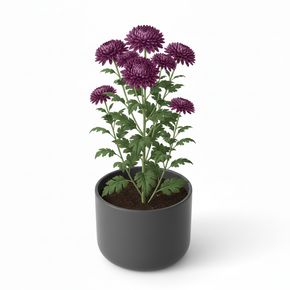




Instantly elevate any room with the timeless beauty of the Chrysanthemum. Bursting with dense, colorful flowers, this 'Daoudi' plant is more than just a pretty face—it's a hardworking air purifier that brightens your space and cleans your air. Perfect for desks, living rooms, or as a cheerful gift, it's the easy-care solution for a healthier, more beautiful home.
Common Name: Chrysanthemum / Daoudi
Botanical Name: Chrysanthemum morifolium
Plant Variant: Touba
Plant Color: Multicolor
Plant Country: Netherlands
Arabic Name: داودي
Family: Asteraceae
The Chrysanthemum morifolium, often called the Florist's Chrysanthemum, belongs to the genus Chrysanthemum within the Asteraceae (daisy) family. It is a perennial herbaceous plant resulting from centuries of hybridization, primarily from East Asian species.
While this specific variant is sourced from the Netherlands, Chrysanthemums are native to East Asia, specifically China and Japan. They were first cultivated in China as a flowering herb as early as the 15th century BC and have since become globally distributed as a primary ornamental crop.
The 'Touba' variant features a dense, mounding habit with deeply lobed, aromatic dark green leaves. The flowers are typically "double" or "pompon" style, characterized by numerous layers of petals that create a lush, spherical appearance. The multicolor nature of this plant provides a vibrant contrast against its dark foliage.
Indoors, these plants typically reach a height and spread of 12 to 24 inches (30 to 60 cm). Their compact growth habit makes them ideal for tabletop displays and office desks.
Chrysanthemums thrive in bright, indirect light when kept indoors. To encourage blooming, they need significant light exposure. If kept outdoors, they prefer full sun but benefit from some afternoon shade in very hot climates.
Maintain consistently moist soil, but avoid waterlogging. Water the plant when the top inch of soil feels dry to the touch. It is best to water at the base of the plant to keep the foliage and flowers dry, which prevents fungal issues.
Use a high-quality, well-draining potting mix rich in organic matter. A slightly acidic to neutral pH is ideal. Ensure the pot has adequate drainage holes to prevent root rot.
They prefer cool to moderate temperatures ranging from 60°F to 72°F (15°C to 22°C). High humidity is not strictly necessary, but they benefit from average indoor humidity levels. Avoid placing them near heat vents or air conditioners.
Apply a balanced liquid fertilizer every two weeks during the growing and blooming season. Once the plant has finished flowering, fertilization can be reduced or stopped until new growth appears in the spring.
The care level is considered easy to moderate. Maintenance involves "deadheading" (removing spent blooms) to encourage further flowering and maintain a tidy appearance. Pruning back after flowering helps maintain a compact shape.
These plants grow at a moderate rate. They can be propagated through stem cuttings taken in the spring or by dividing the root ball of established plants.
Watch for common pests like aphids, spider mites, and leaf miners. Overwatering can lead to root rot, while poor air circulation may cause powdery mildew or botrytis blight on the petals.
Beyond its ornamental value, Chrysanthemum morifolium is a powerful air purifier; it was highlighted in the NASA Clean Air Study for its ability to remove ammonia, benzene, formaldehyde, and xylene from indoor air. It is widely used for home decor, gifting, and office environments.
Chrysanthemums are toxic to dogs, cats, and horses if ingested. They contain pyrethrins, which can cause gastrointestinal upset, drooling, and loss of coordination. They are generally considered non-safe for pets and should be kept out of reach of small children as skin contact with the sap may cause dermatitis in sensitive individuals.
Instantly elevate any room with the timeless beauty of the Chrysanthemum. Bursting with dense, colorful flowers, this 'Daoudi' plant is more than just a pretty face—it's a hardworking air purifier that brightens your space and cleans your air. Perfect for desks, living rooms, or as a cheerful gift, it's the easy-care solution for a healthier, more beautiful home.
Common Name: Chrysanthemum / Daoudi
Botanical Name: Chrysanthemum morifolium
Plant Variant: Touba
Plant Color: Multicolor
Plant Country: Netherlands
Arabic Name: داودي
Family: Asteraceae
The Chrysanthemum morifolium, often called the Florist's Chrysanthemum, belongs to the genus Chrysanthemum within the Asteraceae (daisy) family. It is a perennial herbaceous plant resulting from centuries of hybridization, primarily from East Asian species.
While this specific variant is sourced from the Netherlands, Chrysanthemums are native to East Asia, specifically China and Japan. They were first cultivated in China as a flowering herb as early as the 15th century BC and have since become globally distributed as a primary ornamental crop.
The 'Touba' variant features a dense, mounding habit with deeply lobed, aromatic dark green leaves. The flowers are typically "double" or "pompon" style, characterized by numerous layers of petals that create a lush, spherical appearance. The multicolor nature of this plant provides a vibrant contrast against its dark foliage.
Indoors, these plants typically reach a height and spread of 12 to 24 inches (30 to 60 cm). Their compact growth habit makes them ideal for tabletop displays and office desks.
Chrysanthemums thrive in bright, indirect light when kept indoors. To encourage blooming, they need significant light exposure. If kept outdoors, they prefer full sun but benefit from some afternoon shade in very hot climates.
Maintain consistently moist soil, but avoid waterlogging. Water the plant when the top inch of soil feels dry to the touch. It is best to water at the base of the plant to keep the foliage and flowers dry, which prevents fungal issues.
Use a high-quality, well-draining potting mix rich in organic matter. A slightly acidic to neutral pH is ideal. Ensure the pot has adequate drainage holes to prevent root rot.
They prefer cool to moderate temperatures ranging from 60°F to 72°F (15°C to 22°C). High humidity is not strictly necessary, but they benefit from average indoor humidity levels. Avoid placing them near heat vents or air conditioners.
Apply a balanced liquid fertilizer every two weeks during the growing and blooming season. Once the plant has finished flowering, fertilization can be reduced or stopped until new growth appears in the spring.
The care level is considered easy to moderate. Maintenance involves "deadheading" (removing spent blooms) to encourage further flowering and maintain a tidy appearance. Pruning back after flowering helps maintain a compact shape.
These plants grow at a moderate rate. They can be propagated through stem cuttings taken in the spring or by dividing the root ball of established plants.
Watch for common pests like aphids, spider mites, and leaf miners. Overwatering can lead to root rot, while poor air circulation may cause powdery mildew or botrytis blight on the petals.
Beyond its ornamental value, Chrysanthemum morifolium is a powerful air purifier; it was highlighted in the NASA Clean Air Study for its ability to remove ammonia, benzene, formaldehyde, and xylene from indoor air. It is widely used for home decor, gifting, and office environments.
Chrysanthemums are toxic to dogs, cats, and horses if ingested. They contain pyrethrins, which can cause gastrointestinal upset, drooling, and loss of coordination. They are generally considered non-safe for pets and should be kept out of reach of small children as skin contact with the sap may cause dermatitis in sensitive individuals.
Take 20% off your first order
Enter the code below at checkout to get 20% off your first order