


Cider Gum
Transform your space with the captivating beauty and fragrance of our Eucalyptus Standard Tree. Its stunning silver-blue leaves create an instant focal point, while its natural, calming scent turns your home into a sanctuary. Perfect for a sunny corner, patio, or entryway, this fast-growing tree offers both style and wellness benefits. Elevate your décor and breathe easier – bring home the timeless elegance of Eucalyptus today!
1. Basic Identification
Common Name: Eucalyptus Standard Tree / Cider Gum
Botanical Name: Eucalyptus gunnii
Arabic Name: اقلينوس
Variation: Standard
Color: Natural
Country of Origin: Netherlands
2. Taxonomy & Classification
Kingdom: Plantae
Order: Myrtales
Family: Myrtaceae
Genus: Eucalyptus
Species: E. gunnii
3. Origin & Distribution
Eucalyptus gunnii is native to the high-altitude plateaus and mountains of Tasmania, Australia. Due to its ornamental appeal and relative cold hardiness compared to other eucalyptus species, it is widely cultivated across Europe, North America, and other temperate regions.
4. Visual Characteristics
In its "Standard" form, this plant features a clear straight trunk topped with a rounded canopy of foliage. The juvenile leaves are strikingly silver-blue, rounded, and stalkless, growing in opposite pairs. As the plant matures, the leaves transition to a more elongated, sickle-shape. The bark is smooth and decorative, often peeling in patches of cream, grey, and brown.
5. Size & Dimensions
When grown as a standard tree in containers, it is typically maintained at a height of 1.5 to 2.5 meters. In the ground, Eucalyptus gunnii can grow very rapidly, potentially reaching heights of over 10 meters if not pruned regularly.
6. Light Requirements
This plant requires high light levels. It thrives in full sun or very bright indirect light. For indoor placement, it must be situated near a south-facing window or in a sunroom to receive at least 6-8 hours of direct sunlight daily.
7. Watering Needs
Eucalyptus has a high water requirement, especially when grown in pots. The soil should be kept consistently moist but never waterlogged. During hot summer months, it may require daily watering. Reduce watering frequency slightly during the winter months.
8. Soil & Potting
Requires well-draining, fertile soil. A mix of high-quality potting soil with added perlite or grit for drainage is ideal. It prefers slightly acidic to neutral pH levels. Because it grows fast, it may require repotting every 1-2 years.
9. Temperature & Humidity
This is one of the hardiest eucalyptus species, capable of withstanding temperatures down to -10°C to -15°C once established. It prefers low to moderate humidity and requires excellent air circulation to prevent fungal issues.
10. Fertilization
Apply a balanced liquid fertilizer every 4 weeks during the active growing season (spring through late summer). Avoid heavy nitrogen fertilizers late in the autumn to prevent soft growth that could be damaged by cold.
11. Maintenance & Care Level
Maintenance Level: Moderate. To maintain the "Standard" tree shape, regular pruning of the canopy is necessary to encourage bushiness and prevent the tree from becoming top-heavy. Dead or damaged branches should be removed promptly.
12. Growth & Propagation
Eucalyptus gunnii is a fast grower. Propagation is primarily done through seeds, which require a period of cold stratification. Stem cuttings are notoriously difficult to root and are rarely successful for home gardeners.
13. Common Problems
The most common issues include root rot from overwatering/poor drainage and powdery mildew due to stagnant air. It can also be susceptible to Eucalyptus psyllids or leaf beetles in certain environments. Dropping leaves usually indicates the plant is too dry or lacks sufficient light.
14. Benefits & Uses
Highly valued for its aromatic essential oils (eucalyptol), which have decongestant and calming properties. It is an excellent air-purifying plant. The silvery foliage is a staple in the floral industry for bouquets and arrangements. It serves as a stunning architectural focal point in modern landscapes and bright interiors.
15. Toxicity & Safety
Toxicity: Toxic to pets. Eucalyptus leaves and essential oils are toxic to dogs, cats, and horses if ingested, causing symptoms like salivation, vomiting, and lethargy. It is generally safe for human contact, though the oils may cause skin irritation in highly sensitive individuals if handled excessively.
Cider Gum
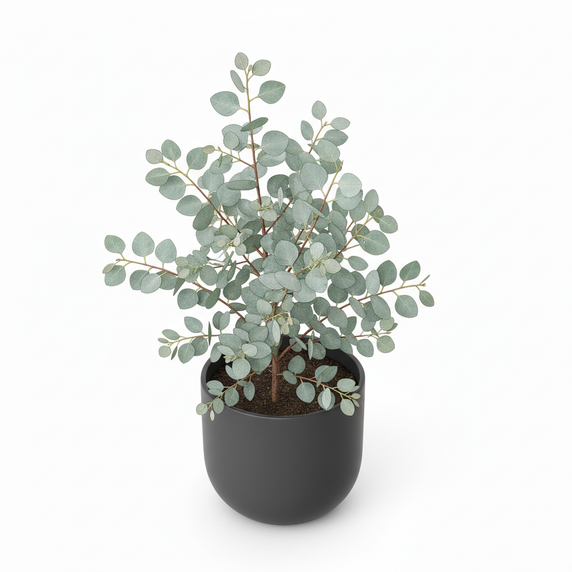
Transform your space with the captivating beauty and fragrance of our Eucalyptus Standard Tree. Its stunning silver-blue leaves create an instant focal point, while its natural, calming scent turns your home into a sanctuary. Perfect for a sunny corner, patio, or entryway, this fast-growing tree offers both style and wellness benefits. Elevate your décor and breathe easier – bring home the timeless elegance of Eucalyptus today!
1. Basic Identification
Common Name: Eucalyptus Standard Tree / Cider Gum
Botanical Name: Eucalyptus gunnii
Arabic Name: اقلينوس
Variation: Standard
Color: Natural
Country of Origin: Netherlands
2. Taxonomy & Classification
Kingdom: Plantae
Order: Myrtales
Family: Myrtaceae
Genus: Eucalyptus
Species: E. gunnii
3. Origin & Distribution
Eucalyptus gunnii is native to the high-altitude plateaus and mountains of Tasmania, Australia. Due to its ornamental appeal and relative cold hardiness compared to other eucalyptus species, it is widely cultivated across Europe, North America, and other temperate regions.
4. Visual Characteristics
In its "Standard" form, this plant features a clear straight trunk topped with a rounded canopy of foliage. The juvenile leaves are strikingly silver-blue, rounded, and stalkless, growing in opposite pairs. As the plant matures, the leaves transition to a more elongated, sickle-shape. The bark is smooth and decorative, often peeling in patches of cream, grey, and brown.
5. Size & Dimensions
When grown as a standard tree in containers, it is typically maintained at a height of 1.5 to 2.5 meters. In the ground, Eucalyptus gunnii can grow very rapidly, potentially reaching heights of over 10 meters if not pruned regularly.
6. Light Requirements
This plant requires high light levels. It thrives in full sun or very bright indirect light. For indoor placement, it must be situated near a south-facing window or in a sunroom to receive at least 6-8 hours of direct sunlight daily.
7. Watering Needs
Eucalyptus has a high water requirement, especially when grown in pots. The soil should be kept consistently moist but never waterlogged. During hot summer months, it may require daily watering. Reduce watering frequency slightly during the winter months.
8. Soil & Potting
Requires well-draining, fertile soil. A mix of high-quality potting soil with added perlite or grit for drainage is ideal. It prefers slightly acidic to neutral pH levels. Because it grows fast, it may require repotting every 1-2 years.
9. Temperature & Humidity
This is one of the hardiest eucalyptus species, capable of withstanding temperatures down to -10°C to -15°C once established. It prefers low to moderate humidity and requires excellent air circulation to prevent fungal issues.
10. Fertilization
Apply a balanced liquid fertilizer every 4 weeks during the active growing season (spring through late summer). Avoid heavy nitrogen fertilizers late in the autumn to prevent soft growth that could be damaged by cold.
11. Maintenance & Care Level
Maintenance Level: Moderate. To maintain the "Standard" tree shape, regular pruning of the canopy is necessary to encourage bushiness and prevent the tree from becoming top-heavy. Dead or damaged branches should be removed promptly.
12. Growth & Propagation
Eucalyptus gunnii is a fast grower. Propagation is primarily done through seeds, which require a period of cold stratification. Stem cuttings are notoriously difficult to root and are rarely successful for home gardeners.
13. Common Problems
The most common issues include root rot from overwatering/poor drainage and powdery mildew due to stagnant air. It can also be susceptible to Eucalyptus psyllids or leaf beetles in certain environments. Dropping leaves usually indicates the plant is too dry or lacks sufficient light.
14. Benefits & Uses
Highly valued for its aromatic essential oils (eucalyptol), which have decongestant and calming properties. It is an excellent air-purifying plant. The silvery foliage is a staple in the floral industry for bouquets and arrangements. It serves as a stunning architectural focal point in modern landscapes and bright interiors.
15. Toxicity & Safety
Toxicity: Toxic to pets. Eucalyptus leaves and essential oils are toxic to dogs, cats, and horses if ingested, causing symptoms like salivation, vomiting, and lethargy. It is generally safe for human contact, though the oils may cause skin irritation in highly sensitive individuals if handled excessively.