


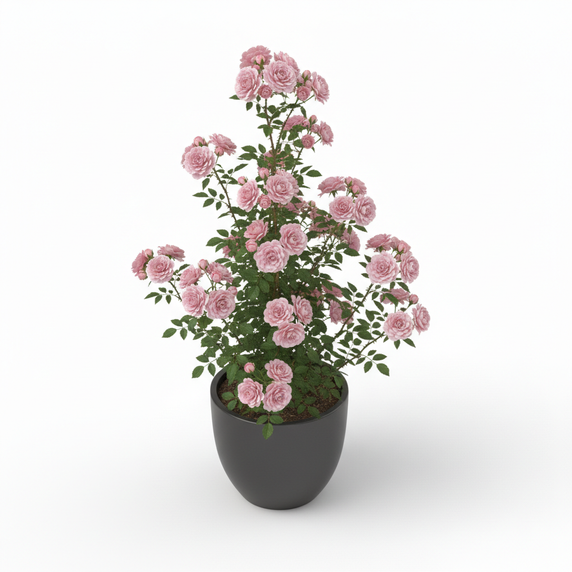





Transform any vertical space into a tapestry of color and romance with our Climbing Baby Rose! This isn't just a plant; it's a living decoration that grows with you, covering trellises, walls, and arches with a profusion of enchanting miniature blooms. Easy to manage and incredibly rewarding, it brings the timeless beauty of a classic rose garden to even the smallest spaces. Order now and let your garden reach new heights!
Common Name: Climbing Baby Rose / Climbing Miniature Rose
Botanical Name: Rosa sp. 'Climbing Miniature'
Arabic Name: بيبي روز متسلق
Plant Variant: Standard
Plant Color: Natural
Plant Country: Netherlands
Kingdom: Plantae
Order: Rosales
Family: Rosaceae
Genus: Rosa
Species: Rosa sp. (Miniature climbing cultivar)
Miniature roses are modern hybrids primarily developed in Europe and the United States. This specific variant is sourced from the Netherlands, known for its high-quality floriculture and rose breeding programs.
This rose features small, delicate blooms that appear in clusters, creating a dense blanket of color. The flowers are typically double or semi-double and are accompanied by small, glossy, dark green serrated leaves. As a climbing variety, it produces long, flexible canes that can be easily trained onto structures.
Height: Typically reaches 1.5 to 3 meters (5 to 10 feet) when provided with vertical support. Bloom Size: Miniature flowers are usually 2 to 4 centimeters in diameter.
Requires full sun to thrive and bloom prolifically. It should receive at least 6 to 8 hours of direct sunlight daily. In extremely hot climates, some light afternoon shade can help protect the blooms from scorching.
Requires regular watering to keep the soil consistently moist but not waterlogged. Water at the base of the plant to keep the foliage dry, which helps prevent fungal diseases. During hot summer months, daily watering may be necessary.
Prefers rich, loamy, well-drained soil with a slightly acidic to neutral pH (6.0–7.0). If grown in containers, ensure the pot is large enough to accommodate the root system and has excellent drainage holes.
Thrives in moderate temperatures between 15°C and 25°C. While it is relatively hardy, it appreciates protection from extreme winter frost. It tolerates average humidity but requires good air circulation to prevent leaf diseases.
Feed every 2–4 weeks during the growing season (spring and summer) with a balanced rose fertilizer or a liquid bloom-booster fertilizer to encourage continuous flowering.
Level: Moderate. Care involves regular "deadheading" (removing spent blooms) to encourage new flowers and annual pruning in late winter or early spring to remove dead wood and maintain the desired shape.
Growth Rate: Moderate to fast during the active growing season. Propagation is typically achieved through hardwood or softwood stem cuttings, or by grafting onto hardy rootstocks.
Susceptible to common rose pests like aphids, spider mites, and thrips. Fungal issues such as black spot, powdery mildew, and rust can occur if air circulation is poor or if the foliage stays wet for long periods.
Perfect for vertical gardening, covering trellises, fences, and balconies. It adds a romantic aesthetic to gardens, provides a pleasant fragrance (depending on the specific cultivar), and attracts beneficial pollinators like bees.
Non-toxic to humans, cats, and dogs. However, like most roses, it has sharp thorns on the stems which can cause physical injury if handled without gloves.
Transform any vertical space into a tapestry of color and romance with our Climbing Baby Rose! This isn't just a plant; it's a living decoration that grows with you, covering trellises, walls, and arches with a profusion of enchanting miniature blooms. Easy to manage and incredibly rewarding, it brings the timeless beauty of a classic rose garden to even the smallest spaces. Order now and let your garden reach new heights!
Common Name: Climbing Baby Rose / Climbing Miniature Rose
Botanical Name: Rosa sp. 'Climbing Miniature'
Arabic Name: بيبي روز متسلق
Plant Variant: Standard
Plant Color: Natural
Plant Country: Netherlands
Kingdom: Plantae
Order: Rosales
Family: Rosaceae
Genus: Rosa
Species: Rosa sp. (Miniature climbing cultivar)
Miniature roses are modern hybrids primarily developed in Europe and the United States. This specific variant is sourced from the Netherlands, known for its high-quality floriculture and rose breeding programs.
This rose features small, delicate blooms that appear in clusters, creating a dense blanket of color. The flowers are typically double or semi-double and are accompanied by small, glossy, dark green serrated leaves. As a climbing variety, it produces long, flexible canes that can be easily trained onto structures.
Height: Typically reaches 1.5 to 3 meters (5 to 10 feet) when provided with vertical support. Bloom Size: Miniature flowers are usually 2 to 4 centimeters in diameter.
Requires full sun to thrive and bloom prolifically. It should receive at least 6 to 8 hours of direct sunlight daily. In extremely hot climates, some light afternoon shade can help protect the blooms from scorching.
Requires regular watering to keep the soil consistently moist but not waterlogged. Water at the base of the plant to keep the foliage dry, which helps prevent fungal diseases. During hot summer months, daily watering may be necessary.
Prefers rich, loamy, well-drained soil with a slightly acidic to neutral pH (6.0–7.0). If grown in containers, ensure the pot is large enough to accommodate the root system and has excellent drainage holes.
Thrives in moderate temperatures between 15°C and 25°C. While it is relatively hardy, it appreciates protection from extreme winter frost. It tolerates average humidity but requires good air circulation to prevent leaf diseases.
Feed every 2–4 weeks during the growing season (spring and summer) with a balanced rose fertilizer or a liquid bloom-booster fertilizer to encourage continuous flowering.
Level: Moderate. Care involves regular "deadheading" (removing spent blooms) to encourage new flowers and annual pruning in late winter or early spring to remove dead wood and maintain the desired shape.
Growth Rate: Moderate to fast during the active growing season. Propagation is typically achieved through hardwood or softwood stem cuttings, or by grafting onto hardy rootstocks.
Susceptible to common rose pests like aphids, spider mites, and thrips. Fungal issues such as black spot, powdery mildew, and rust can occur if air circulation is poor or if the foliage stays wet for long periods.
Perfect for vertical gardening, covering trellises, fences, and balconies. It adds a romantic aesthetic to gardens, provides a pleasant fragrance (depending on the specific cultivar), and attracts beneficial pollinators like bees.
Non-toxic to humans, cats, and dogs. However, like most roses, it has sharp thorns on the stems which can cause physical injury if handled without gloves.
Take 20% off your first order
Enter the code below at checkout to get 20% off your first order