


Coleus
Instant color, zero fuss. Coleus brings dramatic patterns of green, burgundy, and pink to any space—perfect for bright windows, office desks, and outdoor containers. It grows quickly, shapes beautifully with simple pinching, and can be propagated easily for more plants. Add it to mixed planters or hang it to create a lush, designer look in weeks.
1. Basic Identification
Common Name: Coleus
Botanical Name: Plectranthus scutellarioides
Arabic Name: كوليوس
Variant: Standard
Plant Color: Multicolor (patterns of green, burgundy, pink, etc.)
Plant Country: Unknown (Native to Southeast Asia/Australia)
Stems: 1
Family: Lamiaceae
2. Taxonomy & Classification
Kingdom: Plantae
Clade: Tracheophytes
Clade: Angiosperms
Order: Lamiales
Family: Lamiaceae
Genus: Plectranthus
Species: P. scutellarioides
3. Origin & Distribution
Coleus is native to Southeast Asia, ranging from India to Indonesia, and extending into Australia. It has been widely naturalized in tropical regions worldwide and is one of the most popular ornamental foliage plants in temperate climates.
4. Visual Characteristics
Known for its vibrant and highly variegated foliage, the leaves can be ovate or heart-shaped with toothed, fringed, or smooth edges. Colors include neon green, deep burgundy, vibrant pink, cream, and red, often appearing in complex patterns. The stems are square, a characteristic trait of the mint family.
5. Size & Dimensions
Typically grows to a height of 12 to 36 inches (30–90 cm) and spreads 12 to 36 inches wide. Size can be easily managed through pruning and pinching.
6. Light Requirements
Indoors: Requires bright, indirect light to maintain its vivid colors. Outdoor: Prefers partial shade or dappled sunlight; however, some modern "sun coleus" cultivars can handle full sun if kept sufficiently moist.
7. Watering Needs
Prefers consistently moist but well-drained soil. It will wilt noticeably when thirsty but usually recovers quickly once watered. Avoid letting the soil become waterlogged, as this can lead to root rot.
8. Soil & Potting
Thrives in a rich, loose, well-draining potting soil with a slightly acidic to neutral pH (6.0 to 7.0). Use containers with drainage holes to prevent standing water.
9. Temperature & Humidity
Coleus loves warm temperatures, ideally between 65°F and 85°F (18°C–29°C). It is very sensitive to frost and will perish if temperatures drop below 50°F (10°C). It prefers moderate to high humidity.
10. Fertilization
Feed every 2 to 4 weeks during the growing season (spring and summer) with a balanced, water-soluble fertilizer diluted to half-strength. Reduce feeding in the winter months.
11. Maintenance & Care Level
Care Level: Easy/Low Maintenance. Regularly pinch off the growing tips to encourage a bushier growth habit. Remove any flower spikes as they appear to redirect the plant's energy into its colorful foliage.
12. Growth & Propagation
Fast-growing habit. Propagation is exceptionally easy via stem cuttings; they root quickly in both water and moist soil, making it a favorite for beginners.
13. Common Problems
Susceptible to mealybugs, aphids, and spider mites. Overwatering can lead to root rot or downy mildew. Insufficient light may cause the stems to become "leggy" and the leaf colors to fade.
14. Benefits & Uses
Primarily used for ornamental purposes in home décor, office settings, and landscapes. Excellent for hanging baskets, mixed container gardens, and borders. It adds instant vertical and color interest to any space.
15. Toxicity & Safety
Toxic to pets (dogs, cats, and horses). The sap contains essential oils that can cause skin irritation or allergic dermatitis in humans and gastrointestinal upset if ingested by animals.

Coleus
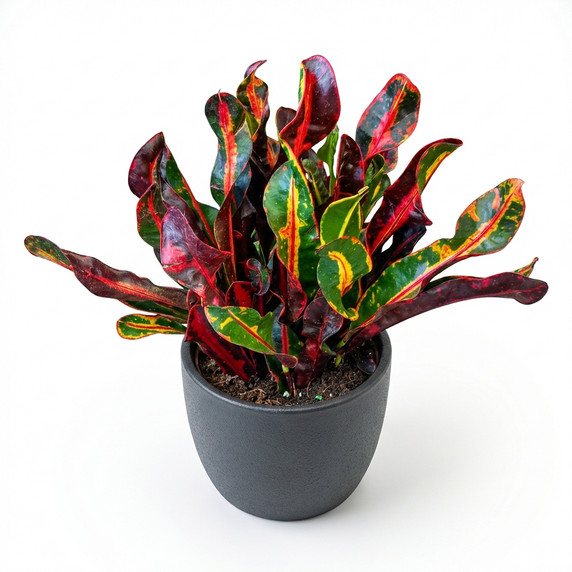
Instant color, zero fuss. Coleus brings dramatic patterns of green, burgundy, and pink to any space—perfect for bright windows, office desks, and outdoor containers. It grows quickly, shapes beautifully with simple pinching, and can be propagated easily for more plants. Add it to mixed planters or hang it to create a lush, designer look in weeks.
1. Basic Identification
Common Name: Coleus
Botanical Name: Plectranthus scutellarioides
Arabic Name: كوليوس
Variant: Standard
Plant Color: Multicolor (patterns of green, burgundy, pink, etc.)
Plant Country: Unknown (Native to Southeast Asia/Australia)
Stems: 1
Family: Lamiaceae
2. Taxonomy & Classification
Kingdom: Plantae
Clade: Tracheophytes
Clade: Angiosperms
Order: Lamiales
Family: Lamiaceae
Genus: Plectranthus
Species: P. scutellarioides
3. Origin & Distribution
Coleus is native to Southeast Asia, ranging from India to Indonesia, and extending into Australia. It has been widely naturalized in tropical regions worldwide and is one of the most popular ornamental foliage plants in temperate climates.
4. Visual Characteristics
Known for its vibrant and highly variegated foliage, the leaves can be ovate or heart-shaped with toothed, fringed, or smooth edges. Colors include neon green, deep burgundy, vibrant pink, cream, and red, often appearing in complex patterns. The stems are square, a characteristic trait of the mint family.
5. Size & Dimensions
Typically grows to a height of 12 to 36 inches (30–90 cm) and spreads 12 to 36 inches wide. Size can be easily managed through pruning and pinching.
6. Light Requirements
Indoors: Requires bright, indirect light to maintain its vivid colors. Outdoor: Prefers partial shade or dappled sunlight; however, some modern "sun coleus" cultivars can handle full sun if kept sufficiently moist.
7. Watering Needs
Prefers consistently moist but well-drained soil. It will wilt noticeably when thirsty but usually recovers quickly once watered. Avoid letting the soil become waterlogged, as this can lead to root rot.
8. Soil & Potting
Thrives in a rich, loose, well-draining potting soil with a slightly acidic to neutral pH (6.0 to 7.0). Use containers with drainage holes to prevent standing water.
9. Temperature & Humidity
Coleus loves warm temperatures, ideally between 65°F and 85°F (18°C–29°C). It is very sensitive to frost and will perish if temperatures drop below 50°F (10°C). It prefers moderate to high humidity.
10. Fertilization
Feed every 2 to 4 weeks during the growing season (spring and summer) with a balanced, water-soluble fertilizer diluted to half-strength. Reduce feeding in the winter months.
11. Maintenance & Care Level
Care Level: Easy/Low Maintenance. Regularly pinch off the growing tips to encourage a bushier growth habit. Remove any flower spikes as they appear to redirect the plant's energy into its colorful foliage.
12. Growth & Propagation
Fast-growing habit. Propagation is exceptionally easy via stem cuttings; they root quickly in both water and moist soil, making it a favorite for beginners.
13. Common Problems
Susceptible to mealybugs, aphids, and spider mites. Overwatering can lead to root rot or downy mildew. Insufficient light may cause the stems to become "leggy" and the leaf colors to fade.
14. Benefits & Uses
Primarily used for ornamental purposes in home décor, office settings, and landscapes. Excellent for hanging baskets, mixed container gardens, and borders. It adds instant vertical and color interest to any space.
15. Toxicity & Safety
Toxic to pets (dogs, cats, and horses). The sap contains essential oils that can cause skin irritation or allergic dermatitis in humans and gastrointestinal upset if ingested by animals.