


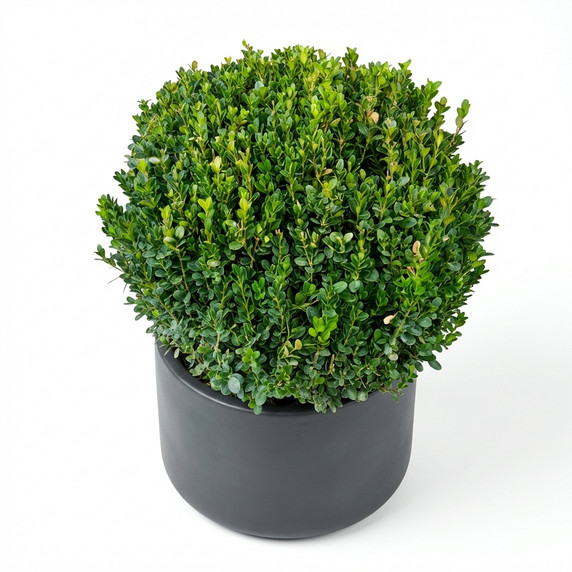
Common Boxwood 'Topiary Ball'
Philodendron Sellum, also known as the Lace Tree Philodendron, is a stunning tropical plant known for its large, deeply lobed, shiny green leaves. It adds a touch of the tropics to any indoor or outdoor space. This robust plant is relatively easy to care for and is excellent for purifying the air, making it a favorite for homeowners and landscapers alike.
1. Basic Identification
Common Name: Sellum, Lace Tree Philodendron
Botanical Name: Thaumatophyllum bipinnatifidum
Arabic Name: سيلوم
Scientific Name: Thaumatophyllum bipinnatifidum
Family: Araceae
Variant: N/A
Color: Dark Green
Country of Origin: South America
Stems: Thick, woody trunk-like stems
Location: Indoor and Outdoor
2. Taxonomy & Classification
Philodendron Sellum belongs to the Araceae family. Recently, it was reclassified from the Philodendron genus to the Thaumatophyllum genus, specifically as Thaumatophyllum bipinnatifidum, though it is still widely sold under its former name.
3. Origin & Distribution
This plant is native to the tropical regions of South America, including Brazil, Paraguay, Argentina, and Bolivia, where it grows in humid, warm forest environments.
4. Visual Characteristics
It features massive, leathery, dark green leaves that are deeply divided into many lobes. As the plant matures, it develops a thick, woody stem that often shows leaf scars resembling "eyes," giving it a distinctive, prehistoric appearance.
5. Size & Dimensions
Indoors, it typically reaches 3 to 5 feet in height and width. When grown outdoors in optimal conditions, it can reach massive proportions, growing up to 10-15 feet tall and spreading nearly as wide.
6. Light Requirements
Prefers bright, indirect light. It can tolerate some direct morning sun, but harsh afternoon rays may scorch the leaves. It can adapt to medium light but will grow more slowly and with smaller leaves.
7. Watering Needs
Water when the top 1–2 inches of soil feel dry. It prefers consistently moist soil but is sensitive to overwatering, which can lead to root rot. Reduce watering significantly during the winter months.
8. Soil & Potting
Thrives in a rich, well-draining potting mix high in organic matter. A mix of peat moss, perlite, and pine bark is ideal to ensure both moisture retention and aeration.
9. Temperature & Humidity
Prefers warm temperatures between 65°F and 85°F (18°C - 29°C). It is a humidity lover and benefits from regular misting, a humidifier, or being placed in a naturally humid room like a bathroom.
10. Fertilization
Feed with a balanced, water-soluble liquid fertilizer once a month during the spring and summer growing seasons. No fertilizer is needed during the dormant winter period.
11. Maintenance & Care Level
The care level is considered easy to moderate. Maintenance involves wiping the large leaves with a damp cloth to remove dust and pruning any yellowing or damaged lower leaves to encourage new growth.
12. Growth & Propagation
A fast-growing plant in ideal conditions. Propagation is most successful through stem cuttings or by planting the seeds, though it can also be divided if the plant has produced offsets at the base.
13. Common Problems
Common issues include yellow leaves due to overwatering, drooping leaves from underwatering, and pests such as mealybugs, aphids, and spider mites, which can be treated with neem oil.
14. Benefits & Uses
Highly effective at removing indoor air toxins like formaldehyde. Its dramatic foliage makes it an excellent focal point for interior design and tropical landscaping.
15. Toxicity & Safety
Toxic to both humans and pets. The plant contains calcium oxalate crystals which, if ingested, can cause swelling of the lips and tongue, oral irritation, and digestive distress.
Common Boxwood 'Topiary Ball'
Philodendron Sellum, also known as the Lace Tree Philodendron, is a stunning tropical plant known for its large, deeply lobed, shiny green leaves. It adds a touch of the tropics to any indoor or outdoor space. This robust plant is relatively easy to care for and is excellent for purifying the air, making it a favorite for homeowners and landscapers alike.
1. Basic Identification
Common Name: Sellum, Lace Tree Philodendron
Botanical Name: Thaumatophyllum bipinnatifidum
Arabic Name: سيلوم
Scientific Name: Thaumatophyllum bipinnatifidum
Family: Araceae
Variant: N/A
Color: Dark Green
Country of Origin: South America
Stems: Thick, woody trunk-like stems
Location: Indoor and Outdoor
2. Taxonomy & Classification
Philodendron Sellum belongs to the Araceae family. Recently, it was reclassified from the Philodendron genus to the Thaumatophyllum genus, specifically as Thaumatophyllum bipinnatifidum, though it is still widely sold under its former name.
3. Origin & Distribution
This plant is native to the tropical regions of South America, including Brazil, Paraguay, Argentina, and Bolivia, where it grows in humid, warm forest environments.
4. Visual Characteristics
It features massive, leathery, dark green leaves that are deeply divided into many lobes. As the plant matures, it develops a thick, woody stem that often shows leaf scars resembling "eyes," giving it a distinctive, prehistoric appearance.
5. Size & Dimensions
Indoors, it typically reaches 3 to 5 feet in height and width. When grown outdoors in optimal conditions, it can reach massive proportions, growing up to 10-15 feet tall and spreading nearly as wide.
6. Light Requirements
Prefers bright, indirect light. It can tolerate some direct morning sun, but harsh afternoon rays may scorch the leaves. It can adapt to medium light but will grow more slowly and with smaller leaves.
7. Watering Needs
Water when the top 1–2 inches of soil feel dry. It prefers consistently moist soil but is sensitive to overwatering, which can lead to root rot. Reduce watering significantly during the winter months.
8. Soil & Potting
Thrives in a rich, well-draining potting mix high in organic matter. A mix of peat moss, perlite, and pine bark is ideal to ensure both moisture retention and aeration.
9. Temperature & Humidity
Prefers warm temperatures between 65°F and 85°F (18°C - 29°C). It is a humidity lover and benefits from regular misting, a humidifier, or being placed in a naturally humid room like a bathroom.
10. Fertilization
Feed with a balanced, water-soluble liquid fertilizer once a month during the spring and summer growing seasons. No fertilizer is needed during the dormant winter period.
11. Maintenance & Care Level
The care level is considered easy to moderate. Maintenance involves wiping the large leaves with a damp cloth to remove dust and pruning any yellowing or damaged lower leaves to encourage new growth.
12. Growth & Propagation
A fast-growing plant in ideal conditions. Propagation is most successful through stem cuttings or by planting the seeds, though it can also be divided if the plant has produced offsets at the base.
13. Common Problems
Common issues include yellow leaves due to overwatering, drooping leaves from underwatering, and pests such as mealybugs, aphids, and spider mites, which can be treated with neem oil.
14. Benefits & Uses
Highly effective at removing indoor air toxins like formaldehyde. Its dramatic foliage makes it an excellent focal point for interior design and tropical landscaping.
15. Toxicity & Safety
Toxic to both humans and pets. The plant contains calcium oxalate crystals which, if ingested, can cause swelling of the lips and tongue, oral irritation, and digestive distress.