


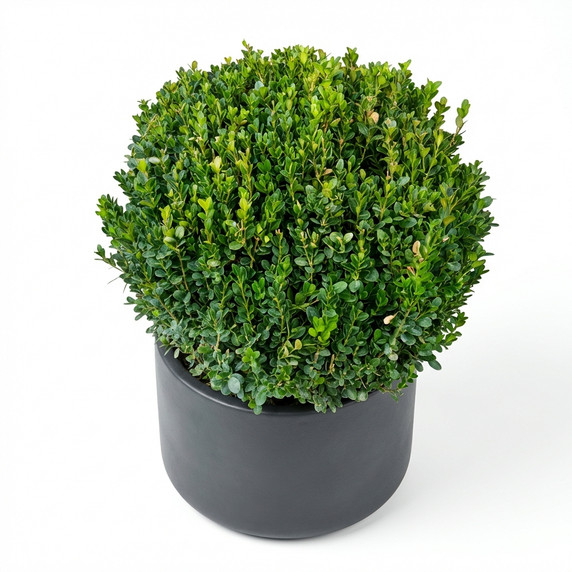
Common Boxwood Topiary 'Topiary'
Bird of Paradise (Strelitzia reginae) is a stunning tropical plant known for its dramatic, crane-like flowers and large, banana-shaped leaves. It adds a touch of exotic elegance to any space, making it a favorite for both indoor and outdoor decor.
\n\n1. Basic Identification
\nCommon Name: Bird of Paradise, Crane Flower
\nBotanical Name: Strelitzia reginae
\nArabic Name: عصفور الجنة (Asfour al-Jannah)
\nPlant Variant: Standard
\nPlant Color: Orange/Blue flowers, Green leaves
\nPlant Country: South Africa
\nStems: Multi-stem clump
\nFamily: Strelitziaceae
\nLocation: Indoor/Outdoor
2. Taxonomy & Classification
\nThe Bird of Paradise belongs to the Kingdom Plantae and the family Strelitziaceae. It is a monocotyledonous flowering plant within the order Zingiberales, making it closely related to ginger and bananas.
\n\n3. Origin & Distribution
\nNative to the subtropical coastal regions of South Africa, particularly the Cape Provinces and KwaZulu-Natal. It has been naturalized in other warm regions including Mexico, Belize, and various parts of the Mediterranean and Australia.
\n\n4. Visual Characteristics
\nIt features large, stiff, evergreen leaves that grow on long petioles, resembling banana leaves but with a thicker, waxier texture and a bluish-green hue. The flowers are truly unique, appearing as a horizontal, beak-like spathe from which orange sepals and deep blue petals emerge, mimicking the plumage of a bird.
\n\n5. Size & Dimensions
\nIn optimal conditions, Strelitzia reginae typically reaches a height and spread of 1.5 to 2 meters (5 to 6 feet). Indoor specimens may be slightly smaller depending on pot size and available light.
\n\n6. Light Requirements
\nThrives in bright, direct light. For indoor placement, a south or west-facing window is best. It requires at least 4-6 hours of direct sunlight daily to encourage regular blooming. In extremely hot climates, some afternoon shade may prevent leaf scorch.
\n\n7. Watering Needs
\nRequires regular watering during the spring and summer growing seasons to keep the soil consistently moist but not waterlogged. Allow the top 2 inches of soil to dry out before watering again. During winter, reduce watering frequency significantly.
\n\n8. Soil & Potting
\nNeeds rich, well-draining soil. A high-quality potting mix enriched with organic compost and a bit of perlite or sand for drainage is ideal. They prefer to be slightly root-bound to stimulate blooming but will eventually need larger containers every 2-3 years.
\n\n9. Temperature & Humidity
\nPrefers warm temperatures between 18°C and 28°C (65°F–82°F). It is sensitive to frost and should be brought indoors if temperatures drop below 10°C (50°F). It appreciates moderate to high humidity levels.
\n\n10. Fertilization
\nFeed every two weeks during the growing season (spring and summer) with a balanced liquid fertilizer. Reduce fertilization to once every 1-2 months in the autumn and stop entirely during the dormant winter period.
\n\n11. Maintenance & Care Level
\nModerate care level. Maintenance involves removing dead or yellowing leaves near the base and cutting back spent flower stalks (deadheading) to maintain the plant's energy and aesthetic appeal.
\n\n12. Growth & Propagation
\nGenerally has a slow to moderate growth rate. Propagation is most successful via division of mature clumps during repotting in the spring. While it can be grown from seed, it may take 3 to 5 years or longer for the plant to produce its first flower.
\n\n13. Common Problems
\nRoot rot is the most common issue, caused by overwatering or poor drainage. Pests such as mealybugs, scale, and spider mites can occasionally occur. Leaf splitting is a natural biological adaptation to wind and is not usually a cause for concern.
\n\n14. Benefits & Uses
\nPrimarily used as a statement ornamental plant in landscaping and interior design. It is highly valued in the floral industry as a long-lasting cut flower. It is also recognized for its ability to enhance the tropical ambiance of any environment.
\n\n15. Toxicity & Safety
\nThe plant is considered mildly toxic to dogs, cats, and horses if ingested. The seeds and fruit contain tannins that can cause nausea, vomiting, and drowsiness. It is best kept out of reach of pets and small children.
Common Boxwood Topiary 'Topiary'
Bird of Paradise (Strelitzia reginae) is a stunning tropical plant known for its dramatic, crane-like flowers and large, banana-shaped leaves. It adds a touch of exotic elegance to any space, making it a favorite for both indoor and outdoor decor.
\n\n1. Basic Identification
\nCommon Name: Bird of Paradise, Crane Flower
\nBotanical Name: Strelitzia reginae
\nArabic Name: عصفور الجنة (Asfour al-Jannah)
\nPlant Variant: Standard
\nPlant Color: Orange/Blue flowers, Green leaves
\nPlant Country: South Africa
\nStems: Multi-stem clump
\nFamily: Strelitziaceae
\nLocation: Indoor/Outdoor
2. Taxonomy & Classification
\nThe Bird of Paradise belongs to the Kingdom Plantae and the family Strelitziaceae. It is a monocotyledonous flowering plant within the order Zingiberales, making it closely related to ginger and bananas.
\n\n3. Origin & Distribution
\nNative to the subtropical coastal regions of South Africa, particularly the Cape Provinces and KwaZulu-Natal. It has been naturalized in other warm regions including Mexico, Belize, and various parts of the Mediterranean and Australia.
\n\n4. Visual Characteristics
\nIt features large, stiff, evergreen leaves that grow on long petioles, resembling banana leaves but with a thicker, waxier texture and a bluish-green hue. The flowers are truly unique, appearing as a horizontal, beak-like spathe from which orange sepals and deep blue petals emerge, mimicking the plumage of a bird.
\n\n5. Size & Dimensions
\nIn optimal conditions, Strelitzia reginae typically reaches a height and spread of 1.5 to 2 meters (5 to 6 feet). Indoor specimens may be slightly smaller depending on pot size and available light.
\n\n6. Light Requirements
\nThrives in bright, direct light. For indoor placement, a south or west-facing window is best. It requires at least 4-6 hours of direct sunlight daily to encourage regular blooming. In extremely hot climates, some afternoon shade may prevent leaf scorch.
\n\n7. Watering Needs
\nRequires regular watering during the spring and summer growing seasons to keep the soil consistently moist but not waterlogged. Allow the top 2 inches of soil to dry out before watering again. During winter, reduce watering frequency significantly.
\n\n8. Soil & Potting
\nNeeds rich, well-draining soil. A high-quality potting mix enriched with organic compost and a bit of perlite or sand for drainage is ideal. They prefer to be slightly root-bound to stimulate blooming but will eventually need larger containers every 2-3 years.
\n\n9. Temperature & Humidity
\nPrefers warm temperatures between 18°C and 28°C (65°F–82°F). It is sensitive to frost and should be brought indoors if temperatures drop below 10°C (50°F). It appreciates moderate to high humidity levels.
\n\n10. Fertilization
\nFeed every two weeks during the growing season (spring and summer) with a balanced liquid fertilizer. Reduce fertilization to once every 1-2 months in the autumn and stop entirely during the dormant winter period.
\n\n11. Maintenance & Care Level
\nModerate care level. Maintenance involves removing dead or yellowing leaves near the base and cutting back spent flower stalks (deadheading) to maintain the plant's energy and aesthetic appeal.
\n\n12. Growth & Propagation
\nGenerally has a slow to moderate growth rate. Propagation is most successful via division of mature clumps during repotting in the spring. While it can be grown from seed, it may take 3 to 5 years or longer for the plant to produce its first flower.
\n\n13. Common Problems
\nRoot rot is the most common issue, caused by overwatering or poor drainage. Pests such as mealybugs, scale, and spider mites can occasionally occur. Leaf splitting is a natural biological adaptation to wind and is not usually a cause for concern.
\n\n14. Benefits & Uses
\nPrimarily used as a statement ornamental plant in landscaping and interior design. It is highly valued in the floral industry as a long-lasting cut flower. It is also recognized for its ability to enhance the tropical ambiance of any environment.
\n\n15. Toxicity & Safety
\nThe plant is considered mildly toxic to dogs, cats, and horses if ingested. The seeds and fruit contain tannins that can cause nausea, vomiting, and drowsiness. It is best kept out of reach of pets and small children.