


Common Thyme
Bring the timeless flavor and fragrance of the Mediterranean to your home with our premium Common Thyme plant. Perfect for the sunny kitchen windowsill or a patio herb garden, this essential culinary herb is ready for you to harvest and add a fresh, aromatic punch to your favorite recipes. It’s incredibly easy to care for—thriving on sunlight and minimal water—making it the ideal choice for both novice gardeners and seasoned chefs. Grow your own flavor today!
1. Basic Identification
Common Name: Common Thyme
Botanical Name: Thymus vulgaris
Variant: Standard
Color: Natural
Country of Origin: Netherlands
Arabic Name: تيفيشة
Stems: Not available
Family: Lamiaceae
2. Taxonomy & Classification
Common Thyme belongs to the Kingdom Plantae, Order Lamiales, and the Family Lamiaceae (the mint family). It is classified under the genus Thymus, which contains hundreds of species of evergreen perennial herbaceous plants and subshrubs.
3. Origin & Distribution
Thymus vulgaris is native to the Mediterranean region of Southern Europe and Northern Africa. It has been cultivated for thousands of years and is now widely distributed globally in temperate climates for culinary, medicinal, and ornamental use.
4. Visual Characteristics
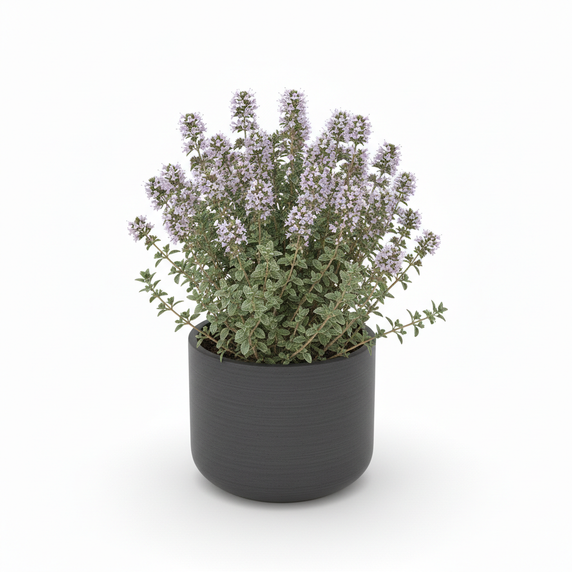
This plant is a low-growing, woody perennial subshrub. It features small, narrow, oval-shaped leaves that are grey-green in color and highly aromatic. During the summer, it produces tiny, tubular flowers in shades of pale purple, pink, or white that are highly attractive to bees.
5. Size & Dimensions
Common Thyme typically grows to a height of 15 to 30 cm (6 to 12 inches) and can spread approximately 30 to 45 cm (12 to 18 inches) wide, forming a dense, bushy mound.
6. Light Requirements
Thyme thrives in full sun. It requires at least 6 to 8 hours of direct sunlight daily to maintain its aromatic oils and compact growth habit. If grown indoors, a south-facing window is ideal.
7. Watering Needs
This herb is highly drought-tolerant once established. It prefers the "soak and dry" method; allow the soil to dry out completely between waterings. Overwatering or soggy soil can quickly lead to root rot.
8. Soil & Potting
Thyme requires very well-draining soil. A sandy or gritty potting mix with a neutral to slightly alkaline pH is best. Avoid heavy clay soils that retain too much moisture.
9. Temperature & Humidity
It prefers warm temperatures between 15°C and 27°C (60°F to 80°F) but is remarkably hardy and can survive frost. It thrives in low to moderate humidity; high humidity can lead to fungal issues like powdery mildew.
10. Fertilization
Thyme is a light feeder. Apply a balanced, half-strength liquid fertilizer once a month during the spring and summer growing season. Avoid over-fertilizing, as this can dilute the flavor and aroma of the leaves.
11. Maintenance & Care Level
The care level is easy/low maintenance. Pruning is recommended in the spring and after flowering to prevent the plant from becoming too woody and to encourage fresh, flavorful new growth.
12. Growth & Propagation
Common Thyme is a moderate to fast grower. It can be easily propagated through stem cuttings, by dividing the root ball in early spring, or by sowing seeds in well-drained starter mix.
13. Common Problems
The most common issue is root rot due to overwatering. It can also occasionally be affected by spider mites, aphids, or Botrytis rot if air circulation is poor or humidity is too high.
14. Benefits & Uses
Thyme is a powerhouse culinary herb used in meats, stews, and soups. Medicinally, it contains thymol, known for its antiseptic and antifungal properties. It is also used in aromatherapy and as a fragrant groundcover in landscaping.
15. Toxicity & Safety
Thymus vulgaris is considered non-toxic to humans, dogs, and cats. It is safe for use in households with pets and is a staple in many kitchens.
Common Thyme
Bring the timeless flavor and fragrance of the Mediterranean to your home with our premium Common Thyme plant. Perfect for the sunny kitchen windowsill or a patio herb garden, this essential culinary herb is ready for you to harvest and add a fresh, aromatic punch to your favorite recipes. It’s incredibly easy to care for—thriving on sunlight and minimal water—making it the ideal choice for both novice gardeners and seasoned chefs. Grow your own flavor today!
1. Basic Identification
Common Name: Common Thyme
Botanical Name: Thymus vulgaris
Variant: Standard
Color: Natural
Country of Origin: Netherlands
Arabic Name: تيفيشة
Stems: Not available
Family: Lamiaceae
2. Taxonomy & Classification
Common Thyme belongs to the Kingdom Plantae, Order Lamiales, and the Family Lamiaceae (the mint family). It is classified under the genus Thymus, which contains hundreds of species of evergreen perennial herbaceous plants and subshrubs.
3. Origin & Distribution
Thymus vulgaris is native to the Mediterranean region of Southern Europe and Northern Africa. It has been cultivated for thousands of years and is now widely distributed globally in temperate climates for culinary, medicinal, and ornamental use.
4. Visual Characteristics
This plant is a low-growing, woody perennial subshrub. It features small, narrow, oval-shaped leaves that are grey-green in color and highly aromatic. During the summer, it produces tiny, tubular flowers in shades of pale purple, pink, or white that are highly attractive to bees.
5. Size & Dimensions
Common Thyme typically grows to a height of 15 to 30 cm (6 to 12 inches) and can spread approximately 30 to 45 cm (12 to 18 inches) wide, forming a dense, bushy mound.
6. Light Requirements
Thyme thrives in full sun. It requires at least 6 to 8 hours of direct sunlight daily to maintain its aromatic oils and compact growth habit. If grown indoors, a south-facing window is ideal.
7. Watering Needs
This herb is highly drought-tolerant once established. It prefers the "soak and dry" method; allow the soil to dry out completely between waterings. Overwatering or soggy soil can quickly lead to root rot.
8. Soil & Potting
Thyme requires very well-draining soil. A sandy or gritty potting mix with a neutral to slightly alkaline pH is best. Avoid heavy clay soils that retain too much moisture.
9. Temperature & Humidity
It prefers warm temperatures between 15°C and 27°C (60°F to 80°F) but is remarkably hardy and can survive frost. It thrives in low to moderate humidity; high humidity can lead to fungal issues like powdery mildew.
10. Fertilization
Thyme is a light feeder. Apply a balanced, half-strength liquid fertilizer once a month during the spring and summer growing season. Avoid over-fertilizing, as this can dilute the flavor and aroma of the leaves.
11. Maintenance & Care Level
The care level is easy/low maintenance. Pruning is recommended in the spring and after flowering to prevent the plant from becoming too woody and to encourage fresh, flavorful new growth.
12. Growth & Propagation
Common Thyme is a moderate to fast grower. It can be easily propagated through stem cuttings, by dividing the root ball in early spring, or by sowing seeds in well-drained starter mix.
13. Common Problems
The most common issue is root rot due to overwatering. It can also occasionally be affected by spider mites, aphids, or Botrytis rot if air circulation is poor or humidity is too high.
14. Benefits & Uses
Thyme is a powerhouse culinary herb used in meats, stews, and soups. Medicinally, it contains thymol, known for its antiseptic and antifungal properties. It is also used in aromatherapy and as a fragrant groundcover in landscaping.
15. Toxicity & Safety
Thymus vulgaris is considered non-toxic to humans, dogs, and cats. It is safe for use in households with pets and is a staple in many kitchens.