

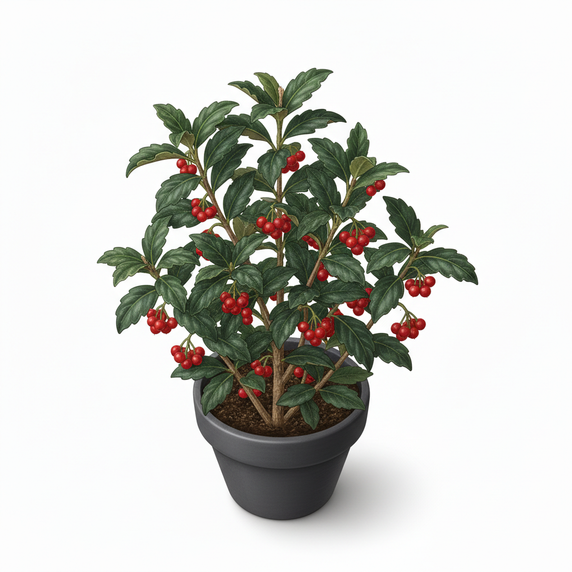





Bring enduring color to your home with the enchanting Coral Berry! This elegant shrub showcases a perfect contrast between its deep, glossy green leaves and clusters of jewel-like red berries. A symbol of cheer and festivity, the Ardisia crenata is remarkably long-lasting, holding its vibrant berries for months on end. It's the ideal statement piece for a bright reception area, a cozy living room, or as a thoughtful, living gift that keeps on giving. Low-maintenance and visually stunning, the Coral Berry is your go-to for effortless, year-round beauty.
Common Name: Coral Berry, Christmas Berry, Spiceberry, Hen's Eyes
Botanical Name: Ardisia crenata
Arabic Name: ارديسيا
Plant Variant: Standard
Plant Color: Natural
Plant Country: Netherlands
Kingdom: Plantae
Clade: Tracheophytes
Order: Ericales
Family: Primulaceae
Genus: Ardisia
Species: Ardisia crenata
Ardisia crenata is native to East Asia, spanning from Japan and Korea to China and Southeast Asia (Vietnam). It has been introduced to other regions as an ornamental plant and is naturalized in parts of the southeastern United States.
This upright, evergreen shrub features thick, glossy, dark green leaves with wavy or scalloped (crenate) margins. It is most famous for its heavy clusters of bright red, pea-sized berries that develop in winter and can remain on the plant for over six months. Before the berries appear, it produces small, star-shaped white or light pink flowers.
As an indoor specimen, Ardisia crenata typically grows to a height of 2 to 3 feet (60-90 cm) and has a spread of about 1 to 2 feet. In its natural outdoor habitat, it can occasionally reach up to 6 feet in height.
Prefers bright, indirect light. It thrives near a window with filtered sunlight. Avoid direct, harsh afternoon sun as it can scorch the glossy leaves, though some morning sun can help with berry production.
Keep the soil consistently moist but never soggy. Water when the top inch of the soil feels dry to the touch. It requires less frequent watering during the dormant winter months but should never be allowed to dry out completely.
Thrives in a rich, peat-based potting mix that offers excellent drainage. A slightly acidic to neutral pH is ideal. Ensure the pot has adequate drainage holes to prevent root rot.
Prefers moderate temperatures between 60°F and 75°F (15°C - 24°C). It enjoys high humidity levels; misting the leaves regularly or placing the pot on a tray filled with pebbles and water can help maintain the necessary moisture in the air.
Feed with a balanced, water-soluble liquid fertilizer once a month during the active growing season (spring through autumn). Do not fertilize during the winter months.
Moderate care level. The main requirements are consistent moisture and high humidity. Light pruning in early spring can help maintain a bushy shape and manage its size.
This is a slow-growing shrub. It can be propagated by seeds harvested from the ripe berries or through semi-hardwood cuttings taken during the summer months.
Susceptible to common houseplant pests like spider mites, scale, and mealybugs, especially in dry environments. Leaf drop may occur if the plant is exposed to cold drafts or if the soil is allowed to dry out excessively.
Highly valued for its ornamental beauty and long-lasting winter berries, making it a popular choice for holiday decor. It also functions as an air-purifying plant and is excellent for brightening up indoor office spaces and living rooms.
Ardisia crenata contains chemicals called saponins which are mildly toxic if ingested. It should be kept out of reach of pets (cats and dogs) and small children as the berries can cause gastrointestinal distress if eaten.
Bring enduring color to your home with the enchanting Coral Berry! This elegant shrub showcases a perfect contrast between its deep, glossy green leaves and clusters of jewel-like red berries. A symbol of cheer and festivity, the Ardisia crenata is remarkably long-lasting, holding its vibrant berries for months on end. It's the ideal statement piece for a bright reception area, a cozy living room, or as a thoughtful, living gift that keeps on giving. Low-maintenance and visually stunning, the Coral Berry is your go-to for effortless, year-round beauty.
Common Name: Coral Berry, Christmas Berry, Spiceberry, Hen's Eyes
Botanical Name: Ardisia crenata
Arabic Name: ارديسيا
Plant Variant: Standard
Plant Color: Natural
Plant Country: Netherlands
Kingdom: Plantae
Clade: Tracheophytes
Order: Ericales
Family: Primulaceae
Genus: Ardisia
Species: Ardisia crenata
Ardisia crenata is native to East Asia, spanning from Japan and Korea to China and Southeast Asia (Vietnam). It has been introduced to other regions as an ornamental plant and is naturalized in parts of the southeastern United States.
This upright, evergreen shrub features thick, glossy, dark green leaves with wavy or scalloped (crenate) margins. It is most famous for its heavy clusters of bright red, pea-sized berries that develop in winter and can remain on the plant for over six months. Before the berries appear, it produces small, star-shaped white or light pink flowers.
As an indoor specimen, Ardisia crenata typically grows to a height of 2 to 3 feet (60-90 cm) and has a spread of about 1 to 2 feet. In its natural outdoor habitat, it can occasionally reach up to 6 feet in height.
Prefers bright, indirect light. It thrives near a window with filtered sunlight. Avoid direct, harsh afternoon sun as it can scorch the glossy leaves, though some morning sun can help with berry production.
Keep the soil consistently moist but never soggy. Water when the top inch of the soil feels dry to the touch. It requires less frequent watering during the dormant winter months but should never be allowed to dry out completely.
Thrives in a rich, peat-based potting mix that offers excellent drainage. A slightly acidic to neutral pH is ideal. Ensure the pot has adequate drainage holes to prevent root rot.
Prefers moderate temperatures between 60°F and 75°F (15°C - 24°C). It enjoys high humidity levels; misting the leaves regularly or placing the pot on a tray filled with pebbles and water can help maintain the necessary moisture in the air.
Feed with a balanced, water-soluble liquid fertilizer once a month during the active growing season (spring through autumn). Do not fertilize during the winter months.
Moderate care level. The main requirements are consistent moisture and high humidity. Light pruning in early spring can help maintain a bushy shape and manage its size.
This is a slow-growing shrub. It can be propagated by seeds harvested from the ripe berries or through semi-hardwood cuttings taken during the summer months.
Susceptible to common houseplant pests like spider mites, scale, and mealybugs, especially in dry environments. Leaf drop may occur if the plant is exposed to cold drafts or if the soil is allowed to dry out excessively.
Highly valued for its ornamental beauty and long-lasting winter berries, making it a popular choice for holiday decor. It also functions as an air-purifying plant and is excellent for brightening up indoor office spaces and living rooms.
Ardisia crenata contains chemicals called saponins which are mildly toxic if ingested. It should be kept out of reach of pets (cats and dogs) and small children as the berries can cause gastrointestinal distress if eaten.



Take 20% off your first order
Enter the code below at checkout to get 20% off your first order

