


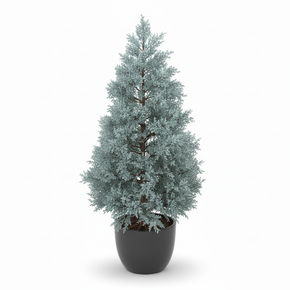




Create a premium entrance in minutes. Spiral Silver Cypress delivers a clean, modern vertical look with striking blue‑silver foliage that stays attractive all year. Tough, sun‑loving, and drought-tolerant once established—ideal for patios, gates, and commercial facades. A living sculpture that elevates any outdoor space with minimal upkeep.
Common Name: Arizona Cypress / Silver Cypress
Botanical Name: Cupressus arizonica
Variant: Spiral Form
Plant Color: Natural
Plant Country: Turkey
Arabic Name: سرو
Kingdom: Plantae
Order: Pinales
Family: Cupressaceae
Genus: Cupressus
Species: Cupressus arizonica
Native to the southwestern United States (Arizona, New Mexico, Texas) and northern Mexico. It has been widely introduced and cultivated across the Mediterranean and other temperate regions for ornamental use.
This evergreen tree features dense, scale-like foliage with a distinct blue-silver or glaucous-green hue. The "Spiral Form" is meticulously pruned into a vertical corkscrew shape, showcasing its architectural structure. The bark is reddish-brown and tends to peel in thin, vertical strips as the tree matures.
In its spiral topiary form, it is typically maintained at heights of 1.5 to 2.5 meters (5 to 8 feet) with a spread of approximately 0.5 to 0.8 meters. Without pruning, the species can grow much larger.
Full Sun. This plant requires at least 6 to 8 hours of direct sunlight daily to maintain its vibrant silver color and thick foliage density.
Low to Moderate. While it requires regular watering during its establishment phase, mature Arizona Cypress is highly drought-tolerant. In containers, allow the top few inches of soil to dry out completely before watering again.
Requires well-draining soil. It performs best in sandy, loamy, or rocky soils with a neutral to slightly acidic pH. Avoid heavy clay soils that retain excess moisture.
Extremely hardy. It can tolerate high summer heat and is frost-hardy (USDA zones 7-9). It prefers low to moderate humidity but is adaptable to various climates.
Apply a balanced, slow-release evergreen fertilizer once a year in early spring to support healthy foliage growth.
Easy to Medium. It is a low-maintenance plant in terms of water and pests, but the spiral shape requires regular pruning (once or twice a year) to maintain its sculpted appearance.
Features a moderate growth rate. Propagation is typically achieved through seeds or semi-hardwood cuttings, though architectural forms like the spiral are created through specialized pruning techniques.
Susceptible to root rot if kept in standing water or poorly drained soil. Occasionally affected by cypress aphids or bagworms, which can be managed with appropriate organic or chemical treatments.
Ideal as a focal point for entrances, gates, and patios. It provides year-round color and a sophisticated, modern aesthetic. Often used in xeriscaping and commercial landscaping due to its drought tolerance.
Generally considered non-toxic to humans, though the sap and foliage oils may cause mild skin irritation in sensitive individuals. It can be mildly toxic to pets if large quantities of foliage are ingested, potentially causing gastrointestinal upset.
Create a premium entrance in minutes. Spiral Silver Cypress delivers a clean, modern vertical look with striking blue‑silver foliage that stays attractive all year. Tough, sun‑loving, and drought-tolerant once established—ideal for patios, gates, and commercial facades. A living sculpture that elevates any outdoor space with minimal upkeep.
Common Name: Arizona Cypress / Silver Cypress
Botanical Name: Cupressus arizonica
Variant: Spiral Form
Plant Color: Natural
Plant Country: Turkey
Arabic Name: سرو
Kingdom: Plantae
Order: Pinales
Family: Cupressaceae
Genus: Cupressus
Species: Cupressus arizonica
Native to the southwestern United States (Arizona, New Mexico, Texas) and northern Mexico. It has been widely introduced and cultivated across the Mediterranean and other temperate regions for ornamental use.
This evergreen tree features dense, scale-like foliage with a distinct blue-silver or glaucous-green hue. The "Spiral Form" is meticulously pruned into a vertical corkscrew shape, showcasing its architectural structure. The bark is reddish-brown and tends to peel in thin, vertical strips as the tree matures.
In its spiral topiary form, it is typically maintained at heights of 1.5 to 2.5 meters (5 to 8 feet) with a spread of approximately 0.5 to 0.8 meters. Without pruning, the species can grow much larger.
Full Sun. This plant requires at least 6 to 8 hours of direct sunlight daily to maintain its vibrant silver color and thick foliage density.
Low to Moderate. While it requires regular watering during its establishment phase, mature Arizona Cypress is highly drought-tolerant. In containers, allow the top few inches of soil to dry out completely before watering again.
Requires well-draining soil. It performs best in sandy, loamy, or rocky soils with a neutral to slightly acidic pH. Avoid heavy clay soils that retain excess moisture.
Extremely hardy. It can tolerate high summer heat and is frost-hardy (USDA zones 7-9). It prefers low to moderate humidity but is adaptable to various climates.
Apply a balanced, slow-release evergreen fertilizer once a year in early spring to support healthy foliage growth.
Easy to Medium. It is a low-maintenance plant in terms of water and pests, but the spiral shape requires regular pruning (once or twice a year) to maintain its sculpted appearance.
Features a moderate growth rate. Propagation is typically achieved through seeds or semi-hardwood cuttings, though architectural forms like the spiral are created through specialized pruning techniques.
Susceptible to root rot if kept in standing water or poorly drained soil. Occasionally affected by cypress aphids or bagworms, which can be managed with appropriate organic or chemical treatments.
Ideal as a focal point for entrances, gates, and patios. It provides year-round color and a sophisticated, modern aesthetic. Often used in xeriscaping and commercial landscaping due to its drought tolerance.
Generally considered non-toxic to humans, though the sap and foliage oils may cause mild skin irritation in sensitive individuals. It can be mildly toxic to pets if large quantities of foliage are ingested, potentially causing gastrointestinal upset.


Take 20% off your first order
Enter the code below at checkout to get 20% off your first order


