


Dahlia
Unleash a riot of color in your garden with the Dahlia, the undisputed queen of the summer garden! From elegant, single-petaled varieties to giant, show-stopping dinnerplate blooms, there's a Dahlia for every taste. Easy to plant and rewarding to grow, these beauties will provide you with a continuous supply of breathtaking flowers from summer until the first frost. Perfect for creating stunning bouquets or a vibrant garden display that will be the envy of your neighborhood. Shop our curated collection of premium tubers and get ready to grow your dream garden!
1. Basic Identification
Common Name: Dahlia
Botanical Name: Dahlia pinnata
Arabic Name: داليا
Plant Variant: Standard
Plant Color: Multicolor
Plant Country: Netherlands
2. Taxonomy & Classification
Kingdom: Plantae
Order: Asterales
Family: Asteraceae
Genus: Dahlia
Species: Dahlia pinnata
3. Origin & Distribution
Dahlias are native to the high-altitude mountain regions of Mexico and Central America. They were declared the national flower of Mexico in 1963. Today, they are hybridized and cultivated extensively worldwide, with the Netherlands being a primary global producer of tubers.
4. Visual Characteristics
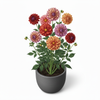
The Dahlia is known for its incredibly diverse floral structures, ranging from simple daisy-like singles to intricate pompons and massive "dinnerplate" blooms. The foliage is typically dark green and pinnate, growing on sturdy, hollow stems. Flowers come in nearly every color except true blue.
5. Size & Dimensions
Dahlia pinnata typically reaches heights of 60 cm to 120 cm (24 to 48 inches). The spread usually ranges between 45 cm to 60 cm, making it a "Medium Plant" suitable for garden beds and large containers.
6. Light Requirements
Full Sun. Dahlias require at least 6 to 8 hours of direct sunlight daily to produce high-quality blooms and strong stems. In very hot climates, partial afternoon shade can help prevent wilting.
7. Watering Needs
Moderate watering. Once established, Dahlias should be watered deeply 2-3 times a week. It is important to keep the soil moist but not soggy, as the tuberous roots are prone to rot in standing water.
8. Soil & Potting
Requires rich, well-draining soil with a pH of 6.5 to 7.0. They thrive in soil amended with compost or well-rotted manure. If potting, ensure the container has excellent drainage holes.
9. Temperature & Humidity
Dahlias thrive in warm summer temperatures but are not frost-tolerant. They should be planted outdoors only after the danger of frost has passed. In colder regions, tubers must be lifted and stored indoors for the winter. They prefer moderate humidity.
10. Fertilization
Feed with a low-nitrogen, high-phosphorus/potassium fertilizer (such as 5-10-10) every 3-4 weeks once the plant is about 30 cm tall. Avoid over-fertilizing with nitrogen, as this promotes foliage growth over flower production.
11. Maintenance & Care Level
Moderate. Regular deadheading (removing spent flowers) is necessary to encourage continuous blooming. Taller varieties may require staking to support the heavy weight of the flowers, especially during wind or rain.
12. Growth & Propagation
Dahlias are fast-growing perennials. They are primarily propagated through tuber division in the spring, though they can also be grown from seeds or basal cuttings.
13. Common Problems
Common pests include aphids, slugs, snails, and spider mites. They can also be susceptible to powdery mildew if air circulation is poor, and tuber rot if the soil is too wet.
14. Benefits & Uses
Primarily used as ornamental garden plants and highly prized as cut flowers for floral arrangements and bouquets. They attract pollinators such as bees and butterflies, enhancing garden biodiversity.
15. Toxicity & Safety
Dahlias are mildly toxic to dogs, cats, and horses if ingested, and the sap can cause minor skin irritation in some individuals. They are generally considered not pet-safe and not human-safe for consumption.
Dahlia

Unleash a riot of color in your garden with the Dahlia, the undisputed queen of the summer garden! From elegant, single-petaled varieties to giant, show-stopping dinnerplate blooms, there's a Dahlia for every taste. Easy to plant and rewarding to grow, these beauties will provide you with a continuous supply of breathtaking flowers from summer until the first frost. Perfect for creating stunning bouquets or a vibrant garden display that will be the envy of your neighborhood. Shop our curated collection of premium tubers and get ready to grow your dream garden!
1. Basic Identification
Common Name: Dahlia
Botanical Name: Dahlia pinnata
Arabic Name: داليا
Plant Variant: Standard
Plant Color: Multicolor
Plant Country: Netherlands
2. Taxonomy & Classification
Kingdom: Plantae
Order: Asterales
Family: Asteraceae
Genus: Dahlia
Species: Dahlia pinnata
3. Origin & Distribution
Dahlias are native to the high-altitude mountain regions of Mexico and Central America. They were declared the national flower of Mexico in 1963. Today, they are hybridized and cultivated extensively worldwide, with the Netherlands being a primary global producer of tubers.
4. Visual Characteristics
The Dahlia is known for its incredibly diverse floral structures, ranging from simple daisy-like singles to intricate pompons and massive "dinnerplate" blooms. The foliage is typically dark green and pinnate, growing on sturdy, hollow stems. Flowers come in nearly every color except true blue.
5. Size & Dimensions
Dahlia pinnata typically reaches heights of 60 cm to 120 cm (24 to 48 inches). The spread usually ranges between 45 cm to 60 cm, making it a "Medium Plant" suitable for garden beds and large containers.
6. Light Requirements
Full Sun. Dahlias require at least 6 to 8 hours of direct sunlight daily to produce high-quality blooms and strong stems. In very hot climates, partial afternoon shade can help prevent wilting.
7. Watering Needs
Moderate watering. Once established, Dahlias should be watered deeply 2-3 times a week. It is important to keep the soil moist but not soggy, as the tuberous roots are prone to rot in standing water.
8. Soil & Potting
Requires rich, well-draining soil with a pH of 6.5 to 7.0. They thrive in soil amended with compost or well-rotted manure. If potting, ensure the container has excellent drainage holes.
9. Temperature & Humidity
Dahlias thrive in warm summer temperatures but are not frost-tolerant. They should be planted outdoors only after the danger of frost has passed. In colder regions, tubers must be lifted and stored indoors for the winter. They prefer moderate humidity.
10. Fertilization
Feed with a low-nitrogen, high-phosphorus/potassium fertilizer (such as 5-10-10) every 3-4 weeks once the plant is about 30 cm tall. Avoid over-fertilizing with nitrogen, as this promotes foliage growth over flower production.
11. Maintenance & Care Level
Moderate. Regular deadheading (removing spent flowers) is necessary to encourage continuous blooming. Taller varieties may require staking to support the heavy weight of the flowers, especially during wind or rain.
12. Growth & Propagation
Dahlias are fast-growing perennials. They are primarily propagated through tuber division in the spring, though they can also be grown from seeds or basal cuttings.
13. Common Problems
Common pests include aphids, slugs, snails, and spider mites. They can also be susceptible to powdery mildew if air circulation is poor, and tuber rot if the soil is too wet.
14. Benefits & Uses
Primarily used as ornamental garden plants and highly prized as cut flowers for floral arrangements and bouquets. They attract pollinators such as bees and butterflies, enhancing garden biodiversity.
15. Toxicity & Safety
Dahlias are mildly toxic to dogs, cats, and horses if ingested, and the sap can cause minor skin irritation in some individuals. They are generally considered not pet-safe and not human-safe for consumption.