


Davalliaceae
Davallia fejeensis
Bring instant tropical texture to your space with the Rabbit’s Foot Fern. Its airy, lace-like fronds and charming fuzzy “feet” spill over the pot for a premium, layered look on shelves, counters, or hanging displays. With medium indirect light, steady moisture, and a touch of humidity, it stays fresh and full—an elegant, pet-friendly green statement for homes and offices.
1. Basic Identification
Common Name: Rabbit’s Foot Fern
Botanical Name: Davallia fejeensis
Arabic Name: فجير مائي
Plant Variant: Standard
Plant Color: Natural
Plant Country: إيطاليا
Stems: 1
Family: Davalliaceae
2. Taxonomy & Classification
Kingdom: Plantae
Clade: Tracheophytes
Class: Polypodiopsida
Order: Polypodiales
Family: Davalliaceae
Genus: Davallia
Species: Davallia fejeensis
3. Origin & Distribution
The Davallia fejeensis is native to the Fiji islands in the South Pacific. In its natural habitat, it thrives as an epiphytic plant, growing in the crevices of trees and rocks in tropical rainforest environments, drawing moisture and nutrients from the air and surrounding debris.
4. Visual Characteristics
This fern is celebrated for its delicate, finely-divided, lace-like green fronds that grow from a central point. Its most distinctive feature is its surface-creeping rhizomes, which are covered in a soft, furry, light-brown or silver-gray fuzz, strongly resembling the paws of a rabbit.
5. Size & Dimensions
The fronds typically grow between 12 to 18 inches (30–45 cm) in length. As the plant matures, the creeping rhizomes can trail significantly over the edges of containers, giving the plant a spread of up to 2 feet in a hanging basket.
6. Light Requirements
Prefers bright, indirect sunlight. Direct afternoon sun should be avoided as it can easily scorch the thin fronds. It can tolerate medium light levels but may grow more slowly and with less density.
7. Watering Needs
Maintain consistently moist soil during the growing season. Water when the surface of the soil feels dry to the touch. Unlike some ferns, the Rabbit’s Foot Fern has rhizomes that store some water, making it slightly more drought-tolerant, but it should never be allowed to dry out completely.
8. Soil & Potting
Requires a well-draining, porous potting medium. A mixture of peat moss with perlite, or a dedicated orchid/epiphyte mix with chopped bark, is ideal to ensure oxygen reaches the roots and rhizomes while retaining adequate moisture.
9. Temperature & Humidity
Ideal temperatures are between 60°F and 75°F (15°C to 24°C). It requires high humidity to thrive; if the indoor air is dry (especially in winter), use a humidifier, mist the rhizomes regularly, or place the pot on a tray filled with pebbles and water.
10. Fertilization
Feed with a balanced, water-soluble fertilizer diluted to half-strength once a month during the spring and summer. Avoid fertilizing during the dormant winter period.
11. Maintenance & Care Level
Maintenance level is moderate. Care involves the regular removal of any brown or dead fronds to keep the plant looking tidy. The fuzzy rhizomes should never be buried in soil; they should always crawl across the surface.
12. Growth & Propagation
It has a moderate growth rate. Propagation is easily achieved by dividing the rhizomes. Ensure each piece of rhizome has at least one or two fronds attached and pin it to the surface of moist potting soil until new roots establish.
13. Common Problems
Common issues include yellowing leaves (often due to overwatering or poor drainage) and brown, crispy tips (indicative of low humidity). It can occasionally be susceptible to scale insects or mealybugs hiding within the fuzzy rhizomes.
14. Benefits & Uses
As an air-purifying plant, it helps remove common household toxins from the air. Its unique texture makes it a favorite for home décor, hanging baskets, and office spaces. It provides a striking visual contrast when paired with broad-leafed plants.
15. Toxicity & Safety
The Davallia fejeensis is considered non-toxic to humans, cats, and dogs, making it an excellent choice for pet-owning households.

Davallia fejeensis
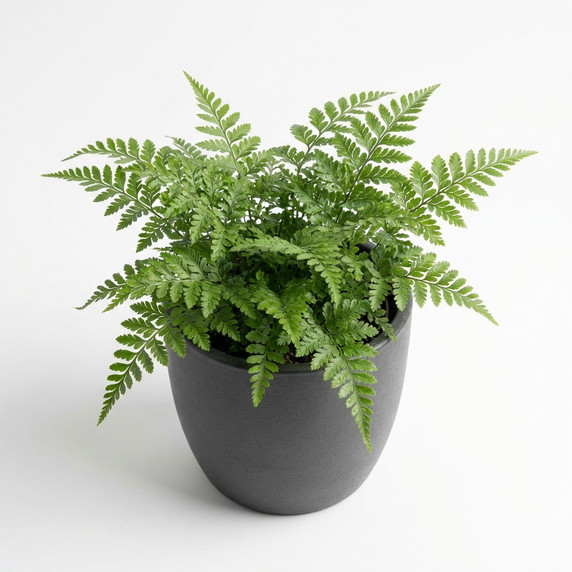
Bring instant tropical texture to your space with the Rabbit’s Foot Fern. Its airy, lace-like fronds and charming fuzzy “feet” spill over the pot for a premium, layered look on shelves, counters, or hanging displays. With medium indirect light, steady moisture, and a touch of humidity, it stays fresh and full—an elegant, pet-friendly green statement for homes and offices.
1. Basic Identification
Common Name: Rabbit’s Foot Fern
Botanical Name: Davallia fejeensis
Arabic Name: فجير مائي
Plant Variant: Standard
Plant Color: Natural
Plant Country: إيطاليا
Stems: 1
Family: Davalliaceae
2. Taxonomy & Classification
Kingdom: Plantae
Clade: Tracheophytes
Class: Polypodiopsida
Order: Polypodiales
Family: Davalliaceae
Genus: Davallia
Species: Davallia fejeensis
3. Origin & Distribution
The Davallia fejeensis is native to the Fiji islands in the South Pacific. In its natural habitat, it thrives as an epiphytic plant, growing in the crevices of trees and rocks in tropical rainforest environments, drawing moisture and nutrients from the air and surrounding debris.
4. Visual Characteristics
This fern is celebrated for its delicate, finely-divided, lace-like green fronds that grow from a central point. Its most distinctive feature is its surface-creeping rhizomes, which are covered in a soft, furry, light-brown or silver-gray fuzz, strongly resembling the paws of a rabbit.
5. Size & Dimensions
The fronds typically grow between 12 to 18 inches (30–45 cm) in length. As the plant matures, the creeping rhizomes can trail significantly over the edges of containers, giving the plant a spread of up to 2 feet in a hanging basket.
6. Light Requirements
Prefers bright, indirect sunlight. Direct afternoon sun should be avoided as it can easily scorch the thin fronds. It can tolerate medium light levels but may grow more slowly and with less density.
7. Watering Needs
Maintain consistently moist soil during the growing season. Water when the surface of the soil feels dry to the touch. Unlike some ferns, the Rabbit’s Foot Fern has rhizomes that store some water, making it slightly more drought-tolerant, but it should never be allowed to dry out completely.
8. Soil & Potting
Requires a well-draining, porous potting medium. A mixture of peat moss with perlite, or a dedicated orchid/epiphyte mix with chopped bark, is ideal to ensure oxygen reaches the roots and rhizomes while retaining adequate moisture.
9. Temperature & Humidity
Ideal temperatures are between 60°F and 75°F (15°C to 24°C). It requires high humidity to thrive; if the indoor air is dry (especially in winter), use a humidifier, mist the rhizomes regularly, or place the pot on a tray filled with pebbles and water.
10. Fertilization
Feed with a balanced, water-soluble fertilizer diluted to half-strength once a month during the spring and summer. Avoid fertilizing during the dormant winter period.
11. Maintenance & Care Level
Maintenance level is moderate. Care involves the regular removal of any brown or dead fronds to keep the plant looking tidy. The fuzzy rhizomes should never be buried in soil; they should always crawl across the surface.
12. Growth & Propagation
It has a moderate growth rate. Propagation is easily achieved by dividing the rhizomes. Ensure each piece of rhizome has at least one or two fronds attached and pin it to the surface of moist potting soil until new roots establish.
13. Common Problems
Common issues include yellowing leaves (often due to overwatering or poor drainage) and brown, crispy tips (indicative of low humidity). It can occasionally be susceptible to scale insects or mealybugs hiding within the fuzzy rhizomes.
14. Benefits & Uses
As an air-purifying plant, it helps remove common household toxins from the air. Its unique texture makes it a favorite for home décor, hanging baskets, and office spaces. It provides a striking visual contrast when paired with broad-leafed plants.
15. Toxicity & Safety
The Davallia fejeensis is considered non-toxic to humans, cats, and dogs, making it an excellent choice for pet-owning households.