


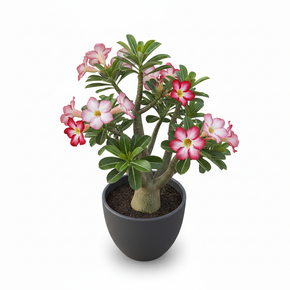




Bring instant resort-style structure to your space with Desert Spoon. Its perfectly rounded, blue‑green rosette looks designer-made, yet it thrives on neglect—sun, sharp drainage, and occasional deep watering. A premium choice for modern homes, entrances, and commercial lobbies where impact matters and maintenance must stay minimal.
Common Name: Desert Spoon / Wheeler's Sotol
Botanical Name: Dasylirion wheeleri
Plant Variant: Standard
Plant Color: Natural
Plant Country: Italy
Arabic Name: يوكا
Stems: 1
Family: Asparagaceae
Dasylirion wheeleri belongs to the family Asparagaceae and the subfamily Nolinoideae. It is an evergreen desert perennial, closely related to agaves and yuccas, though it is distinct for its serrated leaf margins and unique growth habit.
Native to the arid regions of the Southwestern United States (Arizona, New Mexico, Texas) and Northern Mexico. It is specifically adapted to the high-altitude desert grasslands and rocky slopes of the Sonoran and Chihuahuan deserts.
This plant features a stunning, symmetrical rosette of long, slender, blue-grey leaves. Each leaf is lined with sharp, curved teeth along the edges and terminates in a dried, tufted tip. As the plant matures, it may develop a thick, woody trunk.
Typically reaches 4 to 6 feet in height and width. When in bloom, it produces a towering, narrow flower spike that can reach 10 to 15 feet tall, carrying thousands of tiny, cream-colored flowers.
Thrives in full sun. To maintain its tight rosette shape and vibrant blue-green color, it requires high light intensity. It is suitable for bright outdoor spots or very sunny indoor commercial spaces like lobbies.
Highly drought-tolerant. It requires infrequent but deep watering. Allow the soil to dry out completely between watering sessions. In winter, reduce watering significantly to prevent root rot.
Requires excellent drainage. A cactus or succulent potting mix with added gravel, perlite, or coarse sand is ideal. It is sensitive to "wet feet" and must be planted in containers with adequate drainage holes.
Extremely hardy, it can withstand temperatures as low as 0°F (-18°C) once established. It thrives in low-humidity environments and is well-suited for hot, dry climates.
Low feeder. Apply a balanced, slow-release fertilizer at half strength once a year during the spring growing season to support steady growth.
Very low maintenance. Care is generally limited to removing dead lower leaves to reveal the trunk if desired. Always wear thick gloves when handling the plant due to its sharp leaf margins.
Slow-growing. It is primarily propagated by seeds. While it rarely produces offsets, older specimens may occasionally produce side shoots that can be carefully separated.
The primary concern is root or crown rot caused by overwatering or poor soil drainage. It is generally resistant to most pests, though scale insects may occasionally appear in low-airflow environments.
Used extensively in xeriscaping and modern architectural landscaping for its dramatic form. It serves as a striking focal point in rock gardens, large containers, and minimalist interior designs.
Not known to be chemically toxic, but the plant is physically hazardous. The leaves have very sharp, hooked spines that can cause painful cuts or skin irritation. It is not considered pet-safe or human-safe due to the risk of physical injury.
Bring instant resort-style structure to your space with Desert Spoon. Its perfectly rounded, blue‑green rosette looks designer-made, yet it thrives on neglect—sun, sharp drainage, and occasional deep watering. A premium choice for modern homes, entrances, and commercial lobbies where impact matters and maintenance must stay minimal.
Common Name: Desert Spoon / Wheeler's Sotol
Botanical Name: Dasylirion wheeleri
Plant Variant: Standard
Plant Color: Natural
Plant Country: Italy
Arabic Name: يوكا
Stems: 1
Family: Asparagaceae
Dasylirion wheeleri belongs to the family Asparagaceae and the subfamily Nolinoideae. It is an evergreen desert perennial, closely related to agaves and yuccas, though it is distinct for its serrated leaf margins and unique growth habit.
Native to the arid regions of the Southwestern United States (Arizona, New Mexico, Texas) and Northern Mexico. It is specifically adapted to the high-altitude desert grasslands and rocky slopes of the Sonoran and Chihuahuan deserts.
This plant features a stunning, symmetrical rosette of long, slender, blue-grey leaves. Each leaf is lined with sharp, curved teeth along the edges and terminates in a dried, tufted tip. As the plant matures, it may develop a thick, woody trunk.
Typically reaches 4 to 6 feet in height and width. When in bloom, it produces a towering, narrow flower spike that can reach 10 to 15 feet tall, carrying thousands of tiny, cream-colored flowers.
Thrives in full sun. To maintain its tight rosette shape and vibrant blue-green color, it requires high light intensity. It is suitable for bright outdoor spots or very sunny indoor commercial spaces like lobbies.
Highly drought-tolerant. It requires infrequent but deep watering. Allow the soil to dry out completely between watering sessions. In winter, reduce watering significantly to prevent root rot.
Requires excellent drainage. A cactus or succulent potting mix with added gravel, perlite, or coarse sand is ideal. It is sensitive to "wet feet" and must be planted in containers with adequate drainage holes.
Extremely hardy, it can withstand temperatures as low as 0°F (-18°C) once established. It thrives in low-humidity environments and is well-suited for hot, dry climates.
Low feeder. Apply a balanced, slow-release fertilizer at half strength once a year during the spring growing season to support steady growth.
Very low maintenance. Care is generally limited to removing dead lower leaves to reveal the trunk if desired. Always wear thick gloves when handling the plant due to its sharp leaf margins.
Slow-growing. It is primarily propagated by seeds. While it rarely produces offsets, older specimens may occasionally produce side shoots that can be carefully separated.
The primary concern is root or crown rot caused by overwatering or poor soil drainage. It is generally resistant to most pests, though scale insects may occasionally appear in low-airflow environments.
Used extensively in xeriscaping and modern architectural landscaping for its dramatic form. It serves as a striking focal point in rock gardens, large containers, and minimalist interior designs.
Not known to be chemically toxic, but the plant is physically hazardous. The leaves have very sharp, hooked spines that can cause painful cuts or skin irritation. It is not considered pet-safe or human-safe due to the risk of physical injury.


Take 20% off your first order
Enter the code below at checkout to get 20% off your first order