


Araceae
Dieffenbachia seguine
Bring instant tropical elegance to your space with Dieffenbachia. Its large, patterned leaves brighten corners and make receptions and living rooms feel lush and premium. Easy to maintain with simple watering and medium light—perfect for stylish interiors. (Keep away from pets and children due to irritating sap.)
1. Basic Identification
Common Name: Dieffenbachia, Dumb Cane
Botanical Name: Dieffenbachia seguine
Arabic Name: دفنباخ
Family: Araceae
Variant: Standard
Color: Colored
Country: Netherlands
2. Taxonomy & Classification
Dieffenbachia seguine is a member of the Araceae (Arum) family. It belongs to the genus Dieffenbachia, a group of tropical flowering plants known for their distinctive mottled leaves and monocotyledonous growth habit.
3. Origin & Distribution
Native to the tropical regions of the New World, specifically from the West Indies and the Caribbean south to Brazil. While it originated in the humid tropics of the Americas, it is now mass-produced in horticultural hubs like the Netherlands for the global indoor plant market.
4. Visual Characteristics
This plant features broad, ovate leaves with striking patterns of cream or white variegation against a deep green background. The leaves emerge from upright, succulent stems that resemble canes, giving the plant a structured yet lush appearance.
5. Size & Dimensions
In indoor environments, Dieffenbachia seguine typically reaches a height of 3 to 6 feet (0.9 to 1.8 meters). Its spread is usually around 1 to 3 feet, making it an ideal medium-to-large floor plant.
6. Light Requirements
Prefers bright, indirect light. While it can tolerate medium light conditions, its variegation may fade in lower light. Direct afternoon sun should be avoided as it can scorch the delicate foliage.
7. Watering Needs
Water thoroughly when the top 1–2 inches of soil feel dry to the touch. It prefers consistent moisture but is sensitive to overwatering; ensuring proper drainage is critical to prevent root rot.
8. Soil & Potting
Thrives in a well-draining, peat-based potting mix. A mixture of indoor potting soil with added perlite or bark works well to provide the aeration and drainage necessary for healthy root growth.
9. Temperature & Humidity
Maintains best health in temperatures between 18°C and 24°C (65°F-75°F). As a tropical plant, it appreciates high humidity. Misting leaves or placing it in a naturally humid room like a bathroom can prevent brown leaf tips.
10. Fertilization
Feed with a balanced, water-soluble liquid fertilizer every 4–6 weeks during the active growing season (spring and summer). Fertilization should be reduced or stopped during the dormant winter months.
11. Maintenance & Care Level
Maintenance Level: Low to Medium. Care involves occasional pruning of yellowing lower leaves and wiping the large leaves with a damp cloth to remove dust and prevent pest infestations.
12. Growth & Propagation
It is a relatively fast grower in optimal conditions. Propagation is most commonly achieved via stem cuttings or air layering. Cuttings can be rooted in water or directly in a moist soil medium.
13. Common Problems
Common issues include spider mites, mealybugs, and aphids. Yellowing leaves are often a sign of overwatering or cold drafts, while drooping leaves may indicate the plant is too dry or exposed to extreme temperature shifts.
14. Benefits & Uses
Highly valued as an air-purifying plant, it effectively filters common indoor toxins like formaldehyde and xylene. It is a popular choice for home décor, office lobbies, and corporate meeting rooms due to its lush, premium look.
15. Toxicity & Safety
Highly toxic. The plant contains raphides—needle-like calcium oxalate crystals—that cause immediate irritation, swelling of the mouth/throat, and loss of speech if ingested. It should be kept out of reach of pets and children.

Dieffenbachia seguine
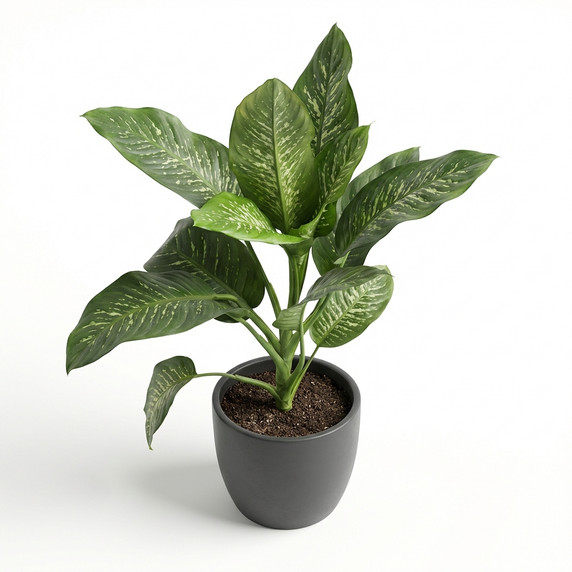
Bring instant tropical elegance to your space with Dieffenbachia. Its large, patterned leaves brighten corners and make receptions and living rooms feel lush and premium. Easy to maintain with simple watering and medium light—perfect for stylish interiors. (Keep away from pets and children due to irritating sap.)
1. Basic Identification
Common Name: Dieffenbachia, Dumb Cane
Botanical Name: Dieffenbachia seguine
Arabic Name: دفنباخ
Family: Araceae
Variant: Standard
Color: Colored
Country: Netherlands
2. Taxonomy & Classification
Dieffenbachia seguine is a member of the Araceae (Arum) family. It belongs to the genus Dieffenbachia, a group of tropical flowering plants known for their distinctive mottled leaves and monocotyledonous growth habit.
3. Origin & Distribution
Native to the tropical regions of the New World, specifically from the West Indies and the Caribbean south to Brazil. While it originated in the humid tropics of the Americas, it is now mass-produced in horticultural hubs like the Netherlands for the global indoor plant market.
4. Visual Characteristics
This plant features broad, ovate leaves with striking patterns of cream or white variegation against a deep green background. The leaves emerge from upright, succulent stems that resemble canes, giving the plant a structured yet lush appearance.
5. Size & Dimensions
In indoor environments, Dieffenbachia seguine typically reaches a height of 3 to 6 feet (0.9 to 1.8 meters). Its spread is usually around 1 to 3 feet, making it an ideal medium-to-large floor plant.
6. Light Requirements
Prefers bright, indirect light. While it can tolerate medium light conditions, its variegation may fade in lower light. Direct afternoon sun should be avoided as it can scorch the delicate foliage.
7. Watering Needs
Water thoroughly when the top 1–2 inches of soil feel dry to the touch. It prefers consistent moisture but is sensitive to overwatering; ensuring proper drainage is critical to prevent root rot.
8. Soil & Potting
Thrives in a well-draining, peat-based potting mix. A mixture of indoor potting soil with added perlite or bark works well to provide the aeration and drainage necessary for healthy root growth.
9. Temperature & Humidity
Maintains best health in temperatures between 18°C and 24°C (65°F-75°F). As a tropical plant, it appreciates high humidity. Misting leaves or placing it in a naturally humid room like a bathroom can prevent brown leaf tips.
10. Fertilization
Feed with a balanced, water-soluble liquid fertilizer every 4–6 weeks during the active growing season (spring and summer). Fertilization should be reduced or stopped during the dormant winter months.
11. Maintenance & Care Level
Maintenance Level: Low to Medium. Care involves occasional pruning of yellowing lower leaves and wiping the large leaves with a damp cloth to remove dust and prevent pest infestations.
12. Growth & Propagation
It is a relatively fast grower in optimal conditions. Propagation is most commonly achieved via stem cuttings or air layering. Cuttings can be rooted in water or directly in a moist soil medium.
13. Common Problems
Common issues include spider mites, mealybugs, and aphids. Yellowing leaves are often a sign of overwatering or cold drafts, while drooping leaves may indicate the plant is too dry or exposed to extreme temperature shifts.
14. Benefits & Uses
Highly valued as an air-purifying plant, it effectively filters common indoor toxins like formaldehyde and xylene. It is a popular choice for home décor, office lobbies, and corporate meeting rooms due to its lush, premium look.
15. Toxicity & Safety
Highly toxic. The plant contains raphides—needle-like calcium oxalate crystals—that cause immediate irritation, swelling of the mouth/throat, and loss of speech if ingested. It should be kept out of reach of pets and children.