


Dracaena Corn Plant
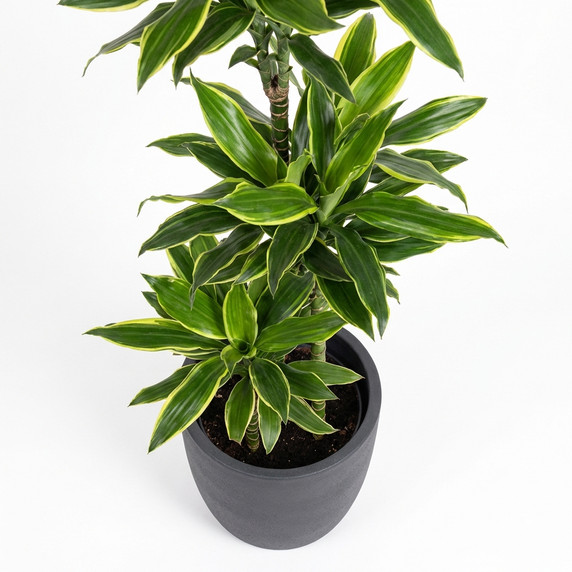
Make a breathtaking statement with our 250cm Multi-Stem Dracaena Corn Plant. This isn't just a plant; it's a living sculpture. With its robust, branched canes and vibrant crowns of lush, arching leaves, it brings architectural elegance and a powerful sense of nature indoors. Famous for its air-purifying prowess and forgiving nature, it's the ultimate hassle-free floor plant for creating a healthier, more beautiful living room, entryway, or office. Order now to instantly anchor your space with natural grandeur.
1. Basic Identification
Common Name: Corn Plant, Dracaena Corn Plant, False Palm
Botanical Name: Dracaena fragrans
Arabic Name: دراسينيا
Variant: Standard
Color: Green
2. Taxonomy & Classification
Kingdom: Plantae
Order: Asparagales
Family: Asparagaceae
Genus: Dracaena
Species: Dracaena fragrans
3. Origin & Distribution
The Dracaena fragrans is native to tropical Africa, ranging from Sudan south to Mozambique and west to Côte d'Ivoire and Angola. It has been naturalized in many other tropical regions and is a popular houseplant worldwide.
4. Visual Characteristics
This multi-stem variety features thick, woody canes (stems) that resemble corn stalks. From the top of these canes emerge clusters of glossy, lance-shaped leaves that arch gracefully downward. The foliage is a deep, rich green in the standard variety, creating a lush, tropical appearance.
5. Size & Dimensions
In its natural habitat, it can reach heights of 15 meters. As an indoor specimen, this specific product stands at 250cm (approximately 8.2 feet), making it a significant architectural statement piece. It maintains a relatively upright and narrow footprint.
6. Light Requirements
It performs best in bright, indirect light but is highly adaptable. It can tolerate lower light levels, though growth will be slower. Avoid direct afternoon sun, which can scorch the leaves.
7. Watering Needs
Allow the top 50% of the soil to dry out before watering. It is drought-tolerant and sensitive to overwatering. Reduce watering during the winter months. Using filtered water is recommended as it can be sensitive to fluoride in tap water.
8. Soil & Potting
Requires a well-draining potting mix rich in organic matter. A mix of peat, perlite, and pine bark is often ideal to ensure aeration and drainage.
9. Temperature & Humidity
Prefers temperatures between 16°C and 24°C (60°F–75°F). Keep it away from cold drafts and heat vents. It thrives in average to high humidity; if the air is very dry, leaf tips may turn brown.
10. Fertilization
Feed with a balanced, water-soluble fertilizer once a month during the spring and summer growing seasons. No fertilization is needed during autumn and winter.
11. Maintenance & Care Level
Level: Easy. Maintenance involves wiping leaves with a damp cloth to remove dust and occasionally trimming any brown leaf tips with sterilized scissors.
12. Growth & Propagation
It is a slow-growing plant. Propagation is typically achieved through stem cuttings or by air layering. Canes can be cut at the top to encourage new foliage clusters to sprout.
13. Common Problems
Watch for spider mites and mealybugs. Overwatering can lead to root rot. Brown leaf tips are often caused by low humidity or chemicals (fluoride/chlorine) in tap water.
14. Benefits & Uses
An excellent air-purifying plant, identified by NASA for its ability to remove toxins like formaldehyde, benzene, and trichloroethylene from the air. Its tall, multi-stem structure makes it ideal for corners, entryways, and office lobbies.
15. Toxicity & Safety
Toxic to pets. If ingested by cats or dogs, it can cause vomiting (sometimes with blood), salivation, and dilated pupils. It is generally considered non-toxic to humans but may cause mild stomach upset if ingested.

Dracaena Corn Plant
Make a breathtaking statement with our 250cm Multi-Stem Dracaena Corn Plant. This isn't just a plant; it's a living sculpture. With its robust, branched canes and vibrant crowns of lush, arching leaves, it brings architectural elegance and a powerful sense of nature indoors. Famous for its air-purifying prowess and forgiving nature, it's the ultimate hassle-free floor plant for creating a healthier, more beautiful living room, entryway, or office. Order now to instantly anchor your space with natural grandeur.
1. Basic Identification
Common Name: Corn Plant, Dracaena Corn Plant, False Palm
Botanical Name: Dracaena fragrans
Arabic Name: دراسينيا
Variant: Standard
Color: Green
2. Taxonomy & Classification
Kingdom: Plantae
Order: Asparagales
Family: Asparagaceae
Genus: Dracaena
Species: Dracaena fragrans
3. Origin & Distribution
The Dracaena fragrans is native to tropical Africa, ranging from Sudan south to Mozambique and west to Côte d'Ivoire and Angola. It has been naturalized in many other tropical regions and is a popular houseplant worldwide.
4. Visual Characteristics
This multi-stem variety features thick, woody canes (stems) that resemble corn stalks. From the top of these canes emerge clusters of glossy, lance-shaped leaves that arch gracefully downward. The foliage is a deep, rich green in the standard variety, creating a lush, tropical appearance.
5. Size & Dimensions
In its natural habitat, it can reach heights of 15 meters. As an indoor specimen, this specific product stands at 250cm (approximately 8.2 feet), making it a significant architectural statement piece. It maintains a relatively upright and narrow footprint.
6. Light Requirements
It performs best in bright, indirect light but is highly adaptable. It can tolerate lower light levels, though growth will be slower. Avoid direct afternoon sun, which can scorch the leaves.
7. Watering Needs
Allow the top 50% of the soil to dry out before watering. It is drought-tolerant and sensitive to overwatering. Reduce watering during the winter months. Using filtered water is recommended as it can be sensitive to fluoride in tap water.
8. Soil & Potting
Requires a well-draining potting mix rich in organic matter. A mix of peat, perlite, and pine bark is often ideal to ensure aeration and drainage.
9. Temperature & Humidity
Prefers temperatures between 16°C and 24°C (60°F–75°F). Keep it away from cold drafts and heat vents. It thrives in average to high humidity; if the air is very dry, leaf tips may turn brown.
10. Fertilization
Feed with a balanced, water-soluble fertilizer once a month during the spring and summer growing seasons. No fertilization is needed during autumn and winter.
11. Maintenance & Care Level
Level: Easy. Maintenance involves wiping leaves with a damp cloth to remove dust and occasionally trimming any brown leaf tips with sterilized scissors.
12. Growth & Propagation
It is a slow-growing plant. Propagation is typically achieved through stem cuttings or by air layering. Canes can be cut at the top to encourage new foliage clusters to sprout.
13. Common Problems
Watch for spider mites and mealybugs. Overwatering can lead to root rot. Brown leaf tips are often caused by low humidity or chemicals (fluoride/chlorine) in tap water.
14. Benefits & Uses
An excellent air-purifying plant, identified by NASA for its ability to remove toxins like formaldehyde, benzene, and trichloroethylene from the air. Its tall, multi-stem structure makes it ideal for corners, entryways, and office lobbies.
15. Toxicity & Safety
Toxic to pets. If ingested by cats or dogs, it can cause vomiting (sometimes with blood), salivation, and dilated pupils. It is generally considered non-toxic to humans but may cause mild stomach upset if ingested.