





Bring effortless greenery to your space with Dracaena Compacta—an elegant, upright indoor plant with dense, glossy foliage that looks premium in any room. It’s tolerant, tidy, and ideal for desks, corners, and reception areas. A perfect choice for busy plant owners who want a strong design statement with minimal care.
Common Name: Dracaena Compacta
Botanical Name: Dracaena fragrans 'Compacta'
Arabic Name: دراسينا
Variant: Compacta
Color: Natural
Country: Not mentioned
Kingdom: Plantae
Order: Asparagales
Family: Asparagaceae
Genus: Dracaena
Species: Dracaena fragrans
Cultivar: 'Compacta'
The Dracaena fragrans species is native to tropical Africa, spanning from Sudan and Ethiopia in the north down to Mozambique and Angola in the south. The 'Compacta' variety is a specifically cultivated form popular in the global indoor plant trade for its stunted growth habit.
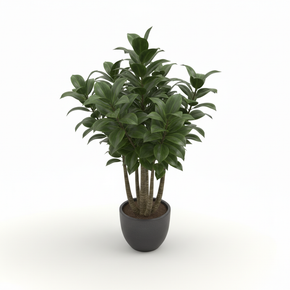
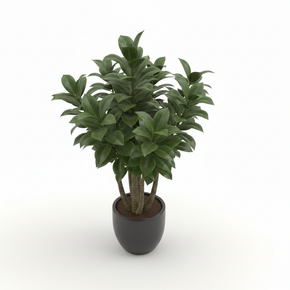
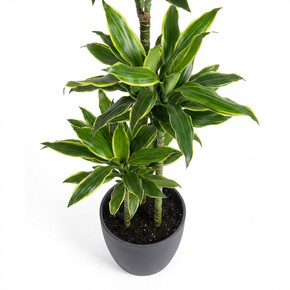
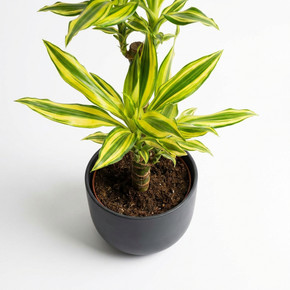
This cultivar features thick, woody stems topped with dense clusters of short, dark green, lance-shaped leaves. Unlike other Dracaenas, the leaves of the Compacta are much shorter (usually 2-4 inches) and grow in very tight rosettes, giving it a unique, architectural silhouette.
The Dracaena Compacta is a slow grower that usually reaches a height of 3 to 6 feet indoors over several years. Its spread is generally narrow, typically staying between 12 to 24 inches wide, making it perfect for corners or desks.
Prefers medium to bright indirect light but is famously tolerant of lower light conditions. Avoid placing it in direct sunlight, as the harsh rays can scorch the dark green leaves and cause permanent damage.
This plant is drought-tolerant and prefers to dry out significantly between waterings. Allow the top 50-75% of the soil to dry before watering thoroughly. It is sensitive to fluoride and salts often found in tap water, which can lead to brown tips.
Thrives in a well-draining, peat-based potting mix. Ensure the pot has drainage holes at the bottom to prevent water from sitting around the roots, as this can lead to rot.
Prefers stable indoor temperatures between 18°C and 24°C. While it can adapt to average household humidity, it enjoys higher humidity levels. Avoid placing it near air conditioning vents or heaters that can dry out the foliage.
Requires very little fertilizer. Feed with a balanced, diluted liquid fertilizer once or twice during the growing season (spring and summer). Do not fertilize during the autumn or winter months.
Considered a low-maintenance plant. Care involves wiping the glossy leaves with a damp cloth periodically to remove dust and maintain their shine. Trim away any yellowing lower leaves to keep the plant looking tidy.
This is a very slow-growing plant. Propagation is typically done via stem cuttings, though it requires patience as rooting can take several months. In professional settings, it is often propagated via air layering.
The most common issues are root rot from overwatering and brown leaf tips caused by dry air or chemicals in tap water. It can occasionally attract mealybugs or spider mites if the environment is too dry.
Highly valued as an air-purifying plant, it effectively removes common household toxins like formaldehyde, benzene, and trichloroethylene. Its upright, compact form makes it a favorite for modern interior design, offices, and apartments with limited space.
Toxic to pets. Like many Dracaena species, it contains saponins which can cause vomiting, drooling, and dilated pupils in cats and dogs if the leaves are ingested.
Bring effortless greenery to your space with Dracaena Compacta—an elegant, upright indoor plant with dense, glossy foliage that looks premium in any room. It’s tolerant, tidy, and ideal for desks, corners, and reception areas. A perfect choice for busy plant owners who want a strong design statement with minimal care.
Common Name: Dracaena Compacta
Botanical Name: Dracaena fragrans 'Compacta'
Arabic Name: دراسينا
Variant: Compacta
Color: Natural
Country: Not mentioned
Kingdom: Plantae
Order: Asparagales
Family: Asparagaceae
Genus: Dracaena
Species: Dracaena fragrans
Cultivar: 'Compacta'
The Dracaena fragrans species is native to tropical Africa, spanning from Sudan and Ethiopia in the north down to Mozambique and Angola in the south. The 'Compacta' variety is a specifically cultivated form popular in the global indoor plant trade for its stunted growth habit.
This cultivar features thick, woody stems topped with dense clusters of short, dark green, lance-shaped leaves. Unlike other Dracaenas, the leaves of the Compacta are much shorter (usually 2-4 inches) and grow in very tight rosettes, giving it a unique, architectural silhouette.
The Dracaena Compacta is a slow grower that usually reaches a height of 3 to 6 feet indoors over several years. Its spread is generally narrow, typically staying between 12 to 24 inches wide, making it perfect for corners or desks.
Prefers medium to bright indirect light but is famously tolerant of lower light conditions. Avoid placing it in direct sunlight, as the harsh rays can scorch the dark green leaves and cause permanent damage.
This plant is drought-tolerant and prefers to dry out significantly between waterings. Allow the top 50-75% of the soil to dry before watering thoroughly. It is sensitive to fluoride and salts often found in tap water, which can lead to brown tips.
Thrives in a well-draining, peat-based potting mix. Ensure the pot has drainage holes at the bottom to prevent water from sitting around the roots, as this can lead to rot.
Prefers stable indoor temperatures between 18°C and 24°C. While it can adapt to average household humidity, it enjoys higher humidity levels. Avoid placing it near air conditioning vents or heaters that can dry out the foliage.
Requires very little fertilizer. Feed with a balanced, diluted liquid fertilizer once or twice during the growing season (spring and summer). Do not fertilize during the autumn or winter months.
Considered a low-maintenance plant. Care involves wiping the glossy leaves with a damp cloth periodically to remove dust and maintain their shine. Trim away any yellowing lower leaves to keep the plant looking tidy.
This is a very slow-growing plant. Propagation is typically done via stem cuttings, though it requires patience as rooting can take several months. In professional settings, it is often propagated via air layering.
The most common issues are root rot from overwatering and brown leaf tips caused by dry air or chemicals in tap water. It can occasionally attract mealybugs or spider mites if the environment is too dry.
Highly valued as an air-purifying plant, it effectively removes common household toxins like formaldehyde, benzene, and trichloroethylene. Its upright, compact form makes it a favorite for modern interior design, offices, and apartments with limited space.
Toxic to pets. Like many Dracaena species, it contains saponins which can cause vomiting, drooling, and dilated pupils in cats and dogs if the leaves are ingested.




Take 20% off your first order
Enter the code below at checkout to get 20% off your first order