





Make a ghostly good impression with the Dieffenbachia 'Ghost'. This isn't your average houseplant; it's a living piece of art. With leaves so pale and luminous they almost glow, the 'Ghost' brings an unparalleled level of sophistication and drama to your interior. Perfect for brightening a corner or serving as a bold statement piece, its air-purifying qualities work silently to refresh your space. Dare to be different. Bring home the ethereal beauty of the Dieffenbachia 'Ghost' today.
Common Name: Dieffenbachia Ghost, Dumb Cane Ghost
Botanical Name: Dieffenbachia 'Ghost'
Arabic Name: دفن باخية
Plant Variant: Ghost
Plant Color: Multicolor (Creamy-white and Green)
Plant Country: Netherlands
Kingdom: Plantae
Order: Alismatales
Family: Araceae
Genus: Dieffenbachia
Species: Dieffenbachia seguine (Cultivar: 'Ghost')
The Dieffenbachia genus is native to the tropical regions of the Americas, specifically Central and South America. The 'Ghost' cultivar is a specially bred variety, often produced in high-quality nurseries in the Netherlands for the global houseplant market.
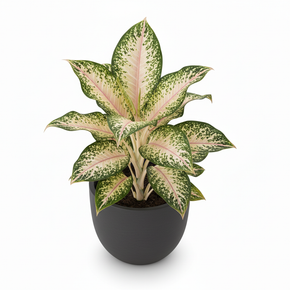
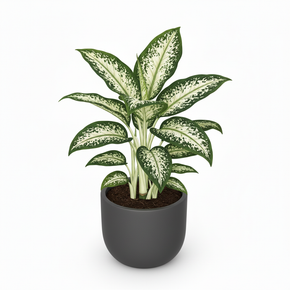
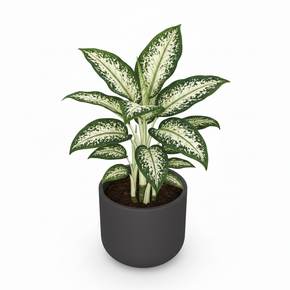
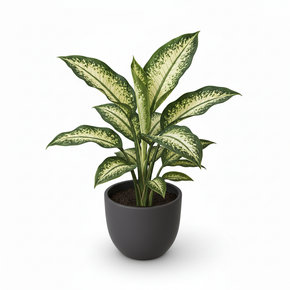
The 'Ghost' is celebrated for its striking, large leaves that exhibit an unusual pale, creamy-white variegation that covers most of the leaf surface, giving it a luminous or "ghostly" appearance. These pale centers are contrasted by thin, deep green margins and occasional green flecking along the veins.
In indoor conditions, Dieffenbachia 'Ghost' typically grows to a height of 2 to 4 feet (60-120 cm). It maintains a semi-upright, bushy habit with large leaves that can reach 10-12 inches in length.
Thrives in bright, indirect light. While it can tolerate medium light, its unique pale variegation is most prominent in brighter conditions. Avoid direct sunlight, as the pale leaves are highly susceptible to scorching.
Water when the top 1-2 inches of soil feel dry. It prefers consistent moisture but is sensitive to overwatering. Ensure the pot has excellent drainage to prevent root rot. Reduce watering frequency during the winter months.
Requires a well-aerated, peat-based potting mix that retains some moisture but drains quickly. A mix of potting soil, perlite, and orchid bark is often ideal for preventing soil compaction.
Prefers warm temperatures between 65°F and 80°F (18°C - 27°C). It is sensitive to cold drafts and temperatures below 60°F. High humidity (above 50%) is essential to prevent leaf edges from browning.
Feed with a balanced, water-soluble fertilizer every 4-6 weeks during the spring and summer growing season. Do not fertilize during the winter dormancy period.
Maintenance Level: Moderate. Care involves regular dusting of the large leaves to maintain photosynthesis and rotating the plant periodically to ensure even growth toward the light source.
A moderate grower. Propagation is typically achieved through stem cuttings or by air layering. It can also be propagated by separating offsets or "pups" from the base of a mature plant.
Susceptible to spider mites, mealybugs, and aphids. Physiological issues include root rot from overwatering and "leaf tip burn" caused by low humidity or the buildup of salts from tap water.
Highly effective air purifier known to remove indoor toxins such as xylene and toluene. Visually, it serves as a high-impact statement plant for modern interiors, reception areas, and living rooms.
Toxic to humans and pets. Like all Dieffenbachias, it contains calcium oxalate crystals. If ingested, it can cause severe swelling of the mouth, tongue, and throat, leading to temporary speech loss (hence the name "Dumb Cane"). The sap can also cause skin irritation.
Make a ghostly good impression with the Dieffenbachia 'Ghost'. This isn't your average houseplant; it's a living piece of art. With leaves so pale and luminous they almost glow, the 'Ghost' brings an unparalleled level of sophistication and drama to your interior. Perfect for brightening a corner or serving as a bold statement piece, its air-purifying qualities work silently to refresh your space. Dare to be different. Bring home the ethereal beauty of the Dieffenbachia 'Ghost' today.
Common Name: Dieffenbachia Ghost, Dumb Cane Ghost
Botanical Name: Dieffenbachia 'Ghost'
Arabic Name: دفن باخية
Plant Variant: Ghost
Plant Color: Multicolor (Creamy-white and Green)
Plant Country: Netherlands
Kingdom: Plantae
Order: Alismatales
Family: Araceae
Genus: Dieffenbachia
Species: Dieffenbachia seguine (Cultivar: 'Ghost')
The Dieffenbachia genus is native to the tropical regions of the Americas, specifically Central and South America. The 'Ghost' cultivar is a specially bred variety, often produced in high-quality nurseries in the Netherlands for the global houseplant market.
The 'Ghost' is celebrated for its striking, large leaves that exhibit an unusual pale, creamy-white variegation that covers most of the leaf surface, giving it a luminous or "ghostly" appearance. These pale centers are contrasted by thin, deep green margins and occasional green flecking along the veins.
In indoor conditions, Dieffenbachia 'Ghost' typically grows to a height of 2 to 4 feet (60-120 cm). It maintains a semi-upright, bushy habit with large leaves that can reach 10-12 inches in length.
Thrives in bright, indirect light. While it can tolerate medium light, its unique pale variegation is most prominent in brighter conditions. Avoid direct sunlight, as the pale leaves are highly susceptible to scorching.
Water when the top 1-2 inches of soil feel dry. It prefers consistent moisture but is sensitive to overwatering. Ensure the pot has excellent drainage to prevent root rot. Reduce watering frequency during the winter months.
Requires a well-aerated, peat-based potting mix that retains some moisture but drains quickly. A mix of potting soil, perlite, and orchid bark is often ideal for preventing soil compaction.
Prefers warm temperatures between 65°F and 80°F (18°C - 27°C). It is sensitive to cold drafts and temperatures below 60°F. High humidity (above 50%) is essential to prevent leaf edges from browning.
Feed with a balanced, water-soluble fertilizer every 4-6 weeks during the spring and summer growing season. Do not fertilize during the winter dormancy period.
Maintenance Level: Moderate. Care involves regular dusting of the large leaves to maintain photosynthesis and rotating the plant periodically to ensure even growth toward the light source.
A moderate grower. Propagation is typically achieved through stem cuttings or by air layering. It can also be propagated by separating offsets or "pups" from the base of a mature plant.
Susceptible to spider mites, mealybugs, and aphids. Physiological issues include root rot from overwatering and "leaf tip burn" caused by low humidity or the buildup of salts from tap water.
Highly effective air purifier known to remove indoor toxins such as xylene and toluene. Visually, it serves as a high-impact statement plant for modern interiors, reception areas, and living rooms.
Toxic to humans and pets. Like all Dieffenbachias, it contains calcium oxalate crystals. If ingested, it can cause severe swelling of the mouth, tongue, and throat, leading to temporary speech loss (hence the name "Dumb Cane"). The sap can also cause skin irritation.




Take 20% off your first order
Enter the code below at checkout to get 20% off your first order