


Dumb Cane
Transform your space with the bold, tropical beauty of the Dieffenbachia! With its magnificent, painterly leaves, this plant is a living work of art that instantly elevates any room. Not just a pretty face, it's also a powerful air purifier, working silently to create a healthier home or office. Perfect for both beginners and seasoned plant lovers, the Dumb Cane is a low-maintenance statement piece. Please note: keep this stunning plant away from curious pets and children. Order yours today and breathe in the fresh, vibrant energy!
1. Basic Identification
Common Name: Dumb Cane
Botanical Name: Dieffenbachia seguine
Arabic Name: دفن باغي
Variant: Standard
Plant Color: Multicolor
Plant Country: Netherlands
Family: Araceae
Stems: Not available
2. Taxonomy & Classification
Kingdom: Plantae
Clade: Tracheophytes
Clade: Angiosperms
Clade: Monocots
Order: Alismatales
Family: Araceae
Genus: Dieffenbachia
Species: Dieffenbachia seguine
3. Origin & Distribution
Dieffenbachia seguine is native to the tropical Americas, spanning from southern Mexico through Central America to northern South America and the West Indies. It has been widely naturalized in tropical regions worldwide, including parts of Asia and Africa.
4. Visual Characteristics
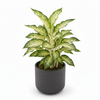
This plant features large, lush, ovate-oblong leaves that are remarkably patterned. The foliage typically displays a deep green border with a heavy variegation of creamy-white or light yellow spots and splashes radiating from the center. The stems are thick and succulent-like, supporting a dense, bushy growth habit.
5. Size & Dimensions
When grown indoors, Dieffenbachia seguine typically reaches a height of 3 to 6 feet (0.9 to 1.8 meters) and a spread of about 1 to 3 feet. Individual leaves can grow quite large, often reaching 10 to 18 inches in length.
6. Light Requirements
It thrives in bright, indirect light. While it can tolerate medium light levels, low light may cause the variegation to fade and the plant to become leggy. Direct, harsh sunlight should be avoided as it can scorch the delicate leaves.
7. Watering Needs
Water when the top inch of the soil feels dry to the touch. It prefers consistently moist but well-aerated soil. Overwatering or allowing the plant to sit in standing water can lead to root rot. During the winter months, reduce watering frequency.
8. Soil & Potting
Use a well-draining potting mix rich in organic matter, such as a peat-based commercial mix. Ensure the pot has adequate drainage holes to allow excess water to escape.
9. Temperature & Humidity
Prefers warm temperatures between 18°C and 24°C (65°F to 75°F). It is sensitive to cold drafts and temperatures below 15°C (60°F). As a tropical plant, it enjoys high humidity; misting the leaves regularly or using a humidity tray is beneficial.
10. Fertilization
Feed with a balanced, water-soluble fertilizer at half-strength every 4 to 6 weeks during the active growing season (spring and summer). Avoid fertilizing in late fall and winter when growth slows down.
11. Maintenance & Care Level
Maintenance is considered low to moderate. Care includes wiping the large leaves with a damp cloth to remove dust and maintain photosynthesis efficiency, as well as pruning any yellowing or damaged lower leaves to encourage new growth.
12. Growth & Propagation
It has a moderate growth rate. Propagation is commonly achieved through stem cuttings (either tip cuttings or mid-stem sections) or by air layering. It can also be propagated by separating offsets that grow from the base.
13. Common Problems
Potential issues include spider mites, mealybugs, and aphids. Physiological problems like brown leaf tips usually indicate low humidity or inconsistent watering. Yellowing leaves may be a sign of overwatering or nutrient deficiency.
14. Benefits & Uses
Primarily used as an ornamental indoor plant for its striking foliage. It is recognized by NASA for its air-purifying qualities, effectively removing indoor toxins such as formaldehyde, xylene, and toluene from the environment.
15. Toxicity & Safety
Highly toxic to both humans and pets. The plant contains raphides (needle-like calcium oxalate crystals) which, if chewed or swallowed, cause intense burning of the mouth and throat, significant swelling, and temporary loss of speech. Wear gloves when pruning to avoid skin irritation from the sap.
Dumb Cane

Transform your space with the bold, tropical beauty of the Dieffenbachia! With its magnificent, painterly leaves, this plant is a living work of art that instantly elevates any room. Not just a pretty face, it's also a powerful air purifier, working silently to create a healthier home or office. Perfect for both beginners and seasoned plant lovers, the Dumb Cane is a low-maintenance statement piece. Please note: keep this stunning plant away from curious pets and children. Order yours today and breathe in the fresh, vibrant energy!
1. Basic Identification
Common Name: Dumb Cane
Botanical Name: Dieffenbachia seguine
Arabic Name: دفن باغي
Variant: Standard
Plant Color: Multicolor
Plant Country: Netherlands
Family: Araceae
Stems: Not available
2. Taxonomy & Classification
Kingdom: Plantae
Clade: Tracheophytes
Clade: Angiosperms
Clade: Monocots
Order: Alismatales
Family: Araceae
Genus: Dieffenbachia
Species: Dieffenbachia seguine
3. Origin & Distribution
Dieffenbachia seguine is native to the tropical Americas, spanning from southern Mexico through Central America to northern South America and the West Indies. It has been widely naturalized in tropical regions worldwide, including parts of Asia and Africa.
4. Visual Characteristics
This plant features large, lush, ovate-oblong leaves that are remarkably patterned. The foliage typically displays a deep green border with a heavy variegation of creamy-white or light yellow spots and splashes radiating from the center. The stems are thick and succulent-like, supporting a dense, bushy growth habit.
5. Size & Dimensions
When grown indoors, Dieffenbachia seguine typically reaches a height of 3 to 6 feet (0.9 to 1.8 meters) and a spread of about 1 to 3 feet. Individual leaves can grow quite large, often reaching 10 to 18 inches in length.
6. Light Requirements
It thrives in bright, indirect light. While it can tolerate medium light levels, low light may cause the variegation to fade and the plant to become leggy. Direct, harsh sunlight should be avoided as it can scorch the delicate leaves.
7. Watering Needs
Water when the top inch of the soil feels dry to the touch. It prefers consistently moist but well-aerated soil. Overwatering or allowing the plant to sit in standing water can lead to root rot. During the winter months, reduce watering frequency.
8. Soil & Potting
Use a well-draining potting mix rich in organic matter, such as a peat-based commercial mix. Ensure the pot has adequate drainage holes to allow excess water to escape.
9. Temperature & Humidity
Prefers warm temperatures between 18°C and 24°C (65°F to 75°F). It is sensitive to cold drafts and temperatures below 15°C (60°F). As a tropical plant, it enjoys high humidity; misting the leaves regularly or using a humidity tray is beneficial.
10. Fertilization
Feed with a balanced, water-soluble fertilizer at half-strength every 4 to 6 weeks during the active growing season (spring and summer). Avoid fertilizing in late fall and winter when growth slows down.
11. Maintenance & Care Level
Maintenance is considered low to moderate. Care includes wiping the large leaves with a damp cloth to remove dust and maintain photosynthesis efficiency, as well as pruning any yellowing or damaged lower leaves to encourage new growth.
12. Growth & Propagation
It has a moderate growth rate. Propagation is commonly achieved through stem cuttings (either tip cuttings or mid-stem sections) or by air layering. It can also be propagated by separating offsets that grow from the base.
13. Common Problems
Potential issues include spider mites, mealybugs, and aphids. Physiological problems like brown leaf tips usually indicate low humidity or inconsistent watering. Yellowing leaves may be a sign of overwatering or nutrient deficiency.
14. Benefits & Uses
Primarily used as an ornamental indoor plant for its striking foliage. It is recognized by NASA for its air-purifying qualities, effectively removing indoor toxins such as formaldehyde, xylene, and toluene from the environment.
15. Toxicity & Safety
Highly toxic to both humans and pets. The plant contains raphides (needle-like calcium oxalate crystals) which, if chewed or swallowed, cause intense burning of the mouth and throat, significant swelling, and temporary loss of speech. Wear gloves when pruning to avoid skin irritation from the sap.