





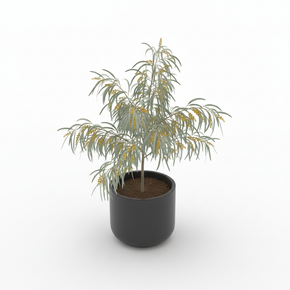
A sculptural, bonsai-look succulent that thrives on bright light and forgetful watering. Portulacaria afra brings clean, modern greenery to desks and living rooms, stays compact with simple pruning, and handles warm conditions with ease—an ideal gift and a dependable everyday plant.
Common Name: Elephant Bush, Dwarf Jade, Spekboom
Botanical Name: Portulacaria afra
Arabic Name: دمعة الطفل
Variant: Standard
Color: Natural
Stems: 19
Kingdom: Plantae
Order: Caryophyllales
Family: Didiereaceae
Genus: Portulacaria
Species: Portulacaria afra
Native to South Africa, specifically the semi-arid Karoo regions. It is widely distributed across the Eastern Cape and thrives in rocky, dry environments.
Features small, fleshy, emerald-green leaves that are circular to oval in shape. The stems are a distinctive reddish-brown color when young, turning grey and woody as the plant matures. It has a branching, shrub-like growth habit.
In indoor cultivation, it typically grows 6 to 12 inches tall but can reach much larger sizes if left unpruned. In its natural habitat, it can grow into a large shrub or small tree up to 15 feet tall.
Prefers bright, indirect light to full sun. It can tolerate some direct sunlight, which helps the plant maintain its compact structure and vibrant stem color.
Drought-tolerant. Water thoroughly only when the soil has completely dried out. Avoid overwatering as the plant stores moisture in its thick leaves and is susceptible to root rot.
Requires a very well-draining cactus or succulent potting mix. Use containers with drainage holes to ensure excess water can escape easily.
Thrives in warm temperatures between 18°C and 27°C. It is not frost-tolerant and should be protected from temperatures below 10°C. It handles low indoor humidity well.
Apply a balanced, water-soluble fertilizer diluted to half-strength once a month during the active growing season (spring and summer).
Low maintenance. It is very easy to care for and responds well to pruning, making it a popular choice for beginner bonsai enthusiasts.
Has a moderate to fast growth rate for a succulent. It is incredibly easy to propagate from stem cuttings; simply let the cut end callous for a few days before planting in soil.
Most common issues include root rot from overwatering, leaf drop due to insufficient light, and occasional pests such as mealybugs or spider mites.
Highly effective at carbon sequestration, absorbing high levels of CO2 from the atmosphere. It is used as an ornamental plant, for bonsai, and in its native range, the leaves are sometimes eaten for their sour flavor and high vitamin C content.
Considered non-toxic to humans. While it is often labeled as safe, it can be confused with the Crassula Jade plant which is toxic to pets, so caution is advised; many sources suggest it is safe for cats and dogs, but consult a vet if unsure.
A sculptural, bonsai-look succulent that thrives on bright light and forgetful watering. Portulacaria afra brings clean, modern greenery to desks and living rooms, stays compact with simple pruning, and handles warm conditions with ease—an ideal gift and a dependable everyday plant.
Common Name: Elephant Bush, Dwarf Jade, Spekboom
Botanical Name: Portulacaria afra
Arabic Name: دمعة الطفل
Variant: Standard
Color: Natural
Stems: 19
Kingdom: Plantae
Order: Caryophyllales
Family: Didiereaceae
Genus: Portulacaria
Species: Portulacaria afra
Native to South Africa, specifically the semi-arid Karoo regions. It is widely distributed across the Eastern Cape and thrives in rocky, dry environments.
Features small, fleshy, emerald-green leaves that are circular to oval in shape. The stems are a distinctive reddish-brown color when young, turning grey and woody as the plant matures. It has a branching, shrub-like growth habit.
In indoor cultivation, it typically grows 6 to 12 inches tall but can reach much larger sizes if left unpruned. In its natural habitat, it can grow into a large shrub or small tree up to 15 feet tall.
Prefers bright, indirect light to full sun. It can tolerate some direct sunlight, which helps the plant maintain its compact structure and vibrant stem color.
Drought-tolerant. Water thoroughly only when the soil has completely dried out. Avoid overwatering as the plant stores moisture in its thick leaves and is susceptible to root rot.
Requires a very well-draining cactus or succulent potting mix. Use containers with drainage holes to ensure excess water can escape easily.
Thrives in warm temperatures between 18°C and 27°C. It is not frost-tolerant and should be protected from temperatures below 10°C. It handles low indoor humidity well.
Apply a balanced, water-soluble fertilizer diluted to half-strength once a month during the active growing season (spring and summer).
Low maintenance. It is very easy to care for and responds well to pruning, making it a popular choice for beginner bonsai enthusiasts.
Has a moderate to fast growth rate for a succulent. It is incredibly easy to propagate from stem cuttings; simply let the cut end callous for a few days before planting in soil.
Most common issues include root rot from overwatering, leaf drop due to insufficient light, and occasional pests such as mealybugs or spider mites.
Highly effective at carbon sequestration, absorbing high levels of CO2 from the atmosphere. It is used as an ornamental plant, for bonsai, and in its native range, the leaves are sometimes eaten for their sour flavor and high vitamin C content.
Considered non-toxic to humans. While it is often labeled as safe, it can be confused with the Crassula Jade plant which is toxic to pets, so caution is advised; many sources suggest it is safe for cats and dogs, but consult a vet if unsure.




Take 20% off your first order
Enter the code below at checkout to get 20% off your first order