


Dwarf Lemon Tree 'Dwarf'
Imagine picking fresh, juicy lemons right from your own living room! Our Dwarf Lemon Tree makes it possible. This compact tree brings a touch of the Mediterranean to your space with its glossy green leaves and intensely fragrant white blossoms. Perfect for a sunny patio or a bright indoor corner, it not only beautifies your home but also rewards you with delicious, homegrown fruit. Elevate your home décor and enjoy the zesty flavor of fresh lemons anytime.
1. Basic Identification
Common Name: Dwarf Lemon Tree
Botanical Name: Citrus limon
Arabic Name: حمضيات ليمون قزم
Plant Variant: Dwarf
Plant Color: Natural
Plant Country: Spain
Family: Rutaceae
2. Taxonomy & Classification
Kingdom: Plantae
Clade: Tracheophytes
Order: Sapindales
Family: Rutaceae
Genus: Citrus
Species: Citrus limon
3. Origin & Distribution
Citrus limon is originally native to Asia, particularly Northeast India or China. This dwarf cultivar is widely grown across the Mediterranean, including Spain, and is popular globally as an ornamental and fruiting container plant.
4. Visual Characteristics
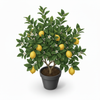
This tree features glossy, dark green, evergreen leaves that are oval in shape. It produces small, waxy, white flowers with a strong, sweet fragrance. The fruit is small to medium-sized, oval, and matures to a bright yellow with a zesty, acidic juice.
5. Size & Dimensions
As a dwarf variety, it typically reaches a height of 1 to 1.5 meters (3 to 5 feet) when grown in a container. It has a compact, bushy growth habit suitable for smaller spaces.
6. Light Requirements
Requires full sun or very bright indirect light. For optimal growth and fruit production, it needs at least 6 to 8 hours of direct sunlight per day. If kept indoors, a south-facing window or supplemental grow lights are recommended.
7. Watering Needs
Water thoroughly when the top 1–2 inches of soil feel dry. Citrus trees prefer consistent moisture but are sensitive to "wet feet." Ensure the pot has excellent drainage to prevent root rot.
8. Soil & Potting
Requires a well-draining, slightly acidic soil mix. A specific citrus or succulent potting mix is ideal to ensure proper aeration and drainage.
9. Temperature & Humidity
Thrives in temperatures between 18°C and 29°C (65-85°F). It is sensitive to frost and cold drafts. Prefers moderate to high humidity; misting the leaves or using a humidifier can help when grown in dry indoor air.
10. Fertilization
Apply a high-nitrogen citrus-specific fertilizer every 4–6 weeks during the active growing season (spring and summer). Reduce fertilization during the winter months.
11. Maintenance & Care Level
Moderate care level. Requires regular monitoring of light, water, and nutrient levels. Pruning can be done in late winter to maintain shape and encourage airflow within the canopy.
12. Growth & Propagation
Dwarf lemon trees are typically propagated by grafting a desired Citrus limon scion onto a dwarfing rootstock. They have a moderate growth rate and can begin fruiting within 1–2 years under ideal conditions.
13. Common Problems
Common pests include spider mites, scale, and aphids. Physiological issues like leaf drop can occur due to sudden changes in temperature or light. Yellowing leaves (chlorosis) often indicates a lack of nutrients or overwatering.
14. Benefits & Uses
Provides edible fruit, fragrant blossoms, and aesthetic beauty. It is also valued for its air-purifying properties and its ability to improve mood and wellness as an indoor-outdoor ornamental plant.
15. Toxicity & Safety
While the fruit is safe for human consumption, the leaves, stems, and peels contain essential oils and psoralens that can be toxic to dogs, cats, and horses if ingested.
Dwarf Lemon Tree 'Dwarf'

Imagine picking fresh, juicy lemons right from your own living room! Our Dwarf Lemon Tree makes it possible. This compact tree brings a touch of the Mediterranean to your space with its glossy green leaves and intensely fragrant white blossoms. Perfect for a sunny patio or a bright indoor corner, it not only beautifies your home but also rewards you with delicious, homegrown fruit. Elevate your home décor and enjoy the zesty flavor of fresh lemons anytime.
1. Basic Identification
Common Name: Dwarf Lemon Tree
Botanical Name: Citrus limon
Arabic Name: حمضيات ليمون قزم
Plant Variant: Dwarf
Plant Color: Natural
Plant Country: Spain
Family: Rutaceae
2. Taxonomy & Classification
Kingdom: Plantae
Clade: Tracheophytes
Order: Sapindales
Family: Rutaceae
Genus: Citrus
Species: Citrus limon
3. Origin & Distribution
Citrus limon is originally native to Asia, particularly Northeast India or China. This dwarf cultivar is widely grown across the Mediterranean, including Spain, and is popular globally as an ornamental and fruiting container plant.
4. Visual Characteristics
This tree features glossy, dark green, evergreen leaves that are oval in shape. It produces small, waxy, white flowers with a strong, sweet fragrance. The fruit is small to medium-sized, oval, and matures to a bright yellow with a zesty, acidic juice.
5. Size & Dimensions
As a dwarf variety, it typically reaches a height of 1 to 1.5 meters (3 to 5 feet) when grown in a container. It has a compact, bushy growth habit suitable for smaller spaces.
6. Light Requirements
Requires full sun or very bright indirect light. For optimal growth and fruit production, it needs at least 6 to 8 hours of direct sunlight per day. If kept indoors, a south-facing window or supplemental grow lights are recommended.
7. Watering Needs
Water thoroughly when the top 1–2 inches of soil feel dry. Citrus trees prefer consistent moisture but are sensitive to "wet feet." Ensure the pot has excellent drainage to prevent root rot.
8. Soil & Potting
Requires a well-draining, slightly acidic soil mix. A specific citrus or succulent potting mix is ideal to ensure proper aeration and drainage.
9. Temperature & Humidity
Thrives in temperatures between 18°C and 29°C (65-85°F). It is sensitive to frost and cold drafts. Prefers moderate to high humidity; misting the leaves or using a humidifier can help when grown in dry indoor air.
10. Fertilization
Apply a high-nitrogen citrus-specific fertilizer every 4–6 weeks during the active growing season (spring and summer). Reduce fertilization during the winter months.
11. Maintenance & Care Level
Moderate care level. Requires regular monitoring of light, water, and nutrient levels. Pruning can be done in late winter to maintain shape and encourage airflow within the canopy.
12. Growth & Propagation
Dwarf lemon trees are typically propagated by grafting a desired Citrus limon scion onto a dwarfing rootstock. They have a moderate growth rate and can begin fruiting within 1–2 years under ideal conditions.
13. Common Problems
Common pests include spider mites, scale, and aphids. Physiological issues like leaf drop can occur due to sudden changes in temperature or light. Yellowing leaves (chlorosis) often indicates a lack of nutrients or overwatering.
14. Benefits & Uses
Provides edible fruit, fragrant blossoms, and aesthetic beauty. It is also valued for its air-purifying properties and its ability to improve mood and wellness as an indoor-outdoor ornamental plant.
15. Toxicity & Safety
While the fruit is safe for human consumption, the leaves, stems, and peels contain essential oils and psoralens that can be toxic to dogs, cats, and horses if ingested.