


Elephant Bush
Meet the ultimate easy-care plant: the Elephant Bush! Resilient, beautiful, and pet-safe, this succulent powerhouse thrives on neglect and still looks stunning. Its lush green leaves and tree-like form bring a touch of the wild indoors, while secretly cleaning your air. Perfect for busy lives and small spaces. Add the durable charm of the Portulacaria afra to your cart and watch your space come alive!
1. Basic Identification
Common Name: Elephant Bush, Spekboom, Dwarf Jade
Botanical Name: Portulacaria afra
Arabic Name: حلق سبع
Plant Variant: Standard
Plant Color: Natural
Plant Country: Netherlands
2. Taxonomy & Classification
Kingdom: Plantae
Order: Caryophyllales
Family: Didiereaceae (formerly Portulacaceae)
Genus: Portulacaria
Species: P. afra
3. Origin & Distribution
Native to the dry rocky outcrops and Karoo regions of South Africa. It has been naturalized in various warm, arid climates worldwide and is a primary food source for elephants in its native habitat.
4. Visual Characteristics
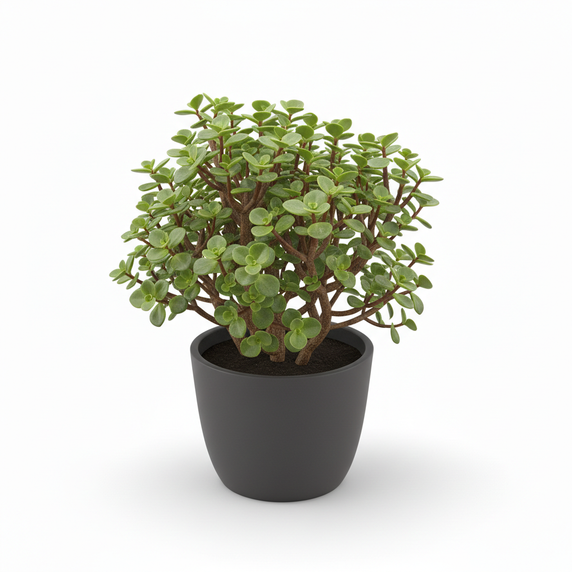
This succulent features small, fleshy, emerald-green leaves that grow along reddish-brown stems. The stems become woody and gray as they age, giving the plant a miniature, tree-like or bonsai-esque appearance.
5. Size & Dimensions
In its native environment, it can reach heights of 6 to 15 feet. As an indoor plant, it typically grows between 6 inches to 3 feet tall, depending on the container size and pruning practices.
6. Light Requirements
Thrives in bright, indirect light or full sun. Indoors, a south-facing or west-facing windowsill is ideal. While it can tolerate partial shade, insufficient light may cause the leaves to stretch or drop.
7. Watering Needs
Low maintenance watering. Allow the soil to dry out completely between waterings. During winter, reduce watering significantly. It is highly drought-tolerant but susceptible to root rot if overwatered.
8. Soil & Potting
Requires a very well-draining potting mix, such as a specialized cactus or succulent soil. Use pots with drainage holes to prevent moisture from sitting at the roots.
9. Temperature & Humidity
Prefers warm temperatures ranging from 65°F to 80°F (18°C-27°C). It is not frost-hardy and should be kept away from drafts and temperatures below 40°F (4°C). It thrives in low to average humidity.
10. Fertilization
Feed once a month during the active growing season (spring and summer) with a balanced liquid succulent fertilizer diluted to half strength. Do not fertilize during the winter dormancy period.
11. Maintenance & Care Level
Low maintenance. It is extremely resilient and ideal for beginners. Pruning is recommended to maintain its shape or to encourage a more bush-like growth habit.
12. Growth & Propagation
Relatively fast-growing for a succulent. It is exceptionally easy to propagate through stem cuttings; simply allow the cutting to callous for a few days before placing it in soil.
13. Common Problems
The most common issue is overwatering leading to root rot. It may also experience leaf drop if moved suddenly to a new environment or if light levels are too low. Common pests include mealybugs and spider mites.
14. Benefits & Uses
An excellent air-purifying plant known for high carbon sequestration rates. It is popular for bonsai enthusiasts, xeriscaping, and as a durable indoor decorative piece. In its native region, the leaves are also consumed for their tart flavor and high Vitamin C content.
15. Toxicity & Safety
Non-toxic and safe for both humans and pets (cats and dogs). It is a pet-safe alternative to the Crassula ovata (Jade Plant).
Elephant Bush
Meet the ultimate easy-care plant: the Elephant Bush! Resilient, beautiful, and pet-safe, this succulent powerhouse thrives on neglect and still looks stunning. Its lush green leaves and tree-like form bring a touch of the wild indoors, while secretly cleaning your air. Perfect for busy lives and small spaces. Add the durable charm of the Portulacaria afra to your cart and watch your space come alive!
1. Basic Identification
Common Name: Elephant Bush, Spekboom, Dwarf Jade
Botanical Name: Portulacaria afra
Arabic Name: حلق سبع
Plant Variant: Standard
Plant Color: Natural
Plant Country: Netherlands
2. Taxonomy & Classification
Kingdom: Plantae
Order: Caryophyllales
Family: Didiereaceae (formerly Portulacaceae)
Genus: Portulacaria
Species: P. afra
3. Origin & Distribution
Native to the dry rocky outcrops and Karoo regions of South Africa. It has been naturalized in various warm, arid climates worldwide and is a primary food source for elephants in its native habitat.
4. Visual Characteristics
This succulent features small, fleshy, emerald-green leaves that grow along reddish-brown stems. The stems become woody and gray as they age, giving the plant a miniature, tree-like or bonsai-esque appearance.
5. Size & Dimensions
In its native environment, it can reach heights of 6 to 15 feet. As an indoor plant, it typically grows between 6 inches to 3 feet tall, depending on the container size and pruning practices.
6. Light Requirements
Thrives in bright, indirect light or full sun. Indoors, a south-facing or west-facing windowsill is ideal. While it can tolerate partial shade, insufficient light may cause the leaves to stretch or drop.
7. Watering Needs
Low maintenance watering. Allow the soil to dry out completely between waterings. During winter, reduce watering significantly. It is highly drought-tolerant but susceptible to root rot if overwatered.
8. Soil & Potting
Requires a very well-draining potting mix, such as a specialized cactus or succulent soil. Use pots with drainage holes to prevent moisture from sitting at the roots.
9. Temperature & Humidity
Prefers warm temperatures ranging from 65°F to 80°F (18°C-27°C). It is not frost-hardy and should be kept away from drafts and temperatures below 40°F (4°C). It thrives in low to average humidity.
10. Fertilization
Feed once a month during the active growing season (spring and summer) with a balanced liquid succulent fertilizer diluted to half strength. Do not fertilize during the winter dormancy period.
11. Maintenance & Care Level
Low maintenance. It is extremely resilient and ideal for beginners. Pruning is recommended to maintain its shape or to encourage a more bush-like growth habit.
12. Growth & Propagation
Relatively fast-growing for a succulent. It is exceptionally easy to propagate through stem cuttings; simply allow the cutting to callous for a few days before placing it in soil.
13. Common Problems
The most common issue is overwatering leading to root rot. It may also experience leaf drop if moved suddenly to a new environment or if light levels are too low. Common pests include mealybugs and spider mites.
14. Benefits & Uses
An excellent air-purifying plant known for high carbon sequestration rates. It is popular for bonsai enthusiasts, xeriscaping, and as a durable indoor decorative piece. In its native region, the leaves are also consumed for their tart flavor and high Vitamin C content.
15. Toxicity & Safety
Non-toxic and safe for both humans and pets (cats and dogs). It is a pet-safe alternative to the Crassula ovata (Jade Plant).