


Eruca vesicaria
Taste the difference of homegrown! Add a zesty, peppery kick to your meals with our vibrant Arugula plant. Perfect for the modern foodie and health-conscious individual, this easy-to-grow herb delivers garden-to-table freshness in weeks. It's the simple way to elevate your cooking and add a touch of green to your kitchen or balcony. Don't just buy greens, cultivate your own flavor. Order your Arugula plant today!
1. Basic Identification
Common Name: Arugula
Botanical Name: Eruca vesicaria
Former Name: Eruca sativa (often used as a synonym or subspecies)
Plant Type: Edible Herb / Leafy Green
Plant Code / SKU: PLT-1748
Alternative Names:
Rocket
Roquette
Rucola
Rugula
Jarjeer (جرجير)
2. Taxonomy & Classification
Order: Brassicales
Family: Brassicaceae
Genus: Eruca
3. Origin & Distribution
Native to the Mediterranean region, from Morocco and Portugal in the west to Syria, Lebanon, and Turkey in the east. It has been naturalized and is cultivated worldwide.
4. Visual Characteristics
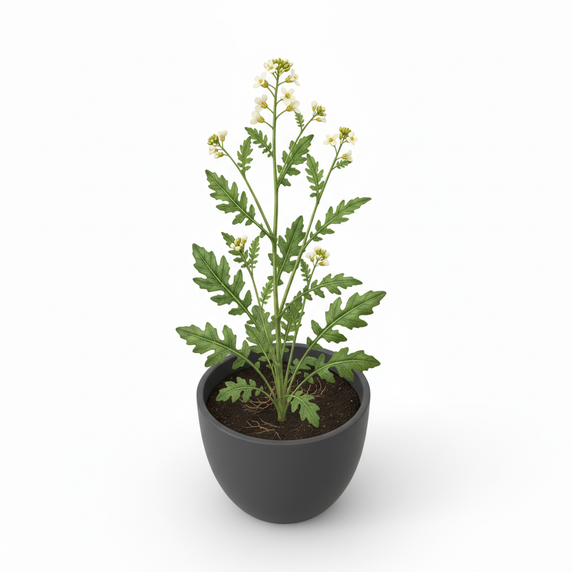
Leaves: The leaves are pinnate with 4 to 10 small, deep lateral lobes and a large terminal lobe. They are typically dark green and grow in a rosette at the base of the plant.
Flowers: Produces small, creamy-white flowers with four petals and distinctive purple veining. The flowers form a cross shape, typical of the Brassicaceae family.
Stems: Stems are erect, branching, and can grow up to 1 meter tall, especially when the plant begins to bolt (flower).
Overall Habit: An upright annual herb that is fast-growing and typically cultivated for its leaves.
5. Size & Dimensions
Height: 20-100 cm (8-40 inches)
Spread: 15-30 cm (6-12 inches)
6. Light Requirements
Prefers full sun (at least 6 hours of direct sunlight per day). In very hot climates, it benefits from partial afternoon shade to prevent bolting and keep the leaves tender.
7. Watering Needs
Requires consistent moisture for the best flavor and texture. Water regularly to keep the soil evenly moist but not waterlogged. Lack of water can lead to bitter-tasting leaves.
8. Soil & Potting
Grows best in well-draining, fertile soil rich in organic matter. A slightly acidic to neutral pH of 6.0 to 7.0 is ideal. It can be grown in garden beds, raised beds, or containers with good drainage.
9. Temperature & Humidity
Arugula is a cool-season crop. It thrives in cooler temperatures between 10-18°C (50-65°F). It will bolt (flower prematurely) in hot weather, which reduces leaf quality and flavor. Average humidity is sufficient.
10. Fertilization
Generally does not require heavy fertilization, especially if planted in rich soil. If the soil is poor, incorporate compost before planting or use a balanced, all-purpose liquid fertilizer at half-strength every few weeks during the growing season.
11. Maintenance & Care Level
Level: Easy.
Maintenance involves regular harvesting of leaves to encourage new growth, consistent watering, and removing flower stalks to prolong the leaf harvest period. Mulching can help retain soil moisture and keep roots cool.
12. Growth & Propagation
Growth Rate: Fast. Leaves can often be harvested within 20-40 days of sowing.
Propagation: Propagated from seed. Sow seeds directly into the soil in early spring or late summer/fall for a continuous harvest. Plant seeds about 1 cm (0.4 inches) deep.
13. Common Problems
Pests: Flea beetles are the most common pest, creating small, round "shot holes" in the leaves. Aphids and cabbage worms can also be occasional issues.
Diseases: Susceptible to fungal diseases like downy mildew and bacterial leaf spot, especially in overly wet and humid conditions.
Other Issues: Bolting (premature flowering) is a common issue in warm temperatures, causing the leaves to become tough and excessively bitter.
14. Benefits & Uses
Culinary: Widely used for its pungent, peppery flavor in salads, sandwiches, pasta dishes, and as a topping for pizza.
Nutritional: An excellent source of Vitamin K, Vitamin A, and Vitamin C. Also provides folate, calcium, and antioxidants.
Garden: Works well as a fast-growing crop for succession planting in vegetable gardens and containers.
15. Toxicity & Safety
Humans: Safe for human consumption.
Pets: Generally considered non-toxic and safe for cats, dogs, and other pets in moderation. It is not known to cause any adverse effects.
Eruca vesicaria
Taste the difference of homegrown! Add a zesty, peppery kick to your meals with our vibrant Arugula plant. Perfect for the modern foodie and health-conscious individual, this easy-to-grow herb delivers garden-to-table freshness in weeks. It's the simple way to elevate your cooking and add a touch of green to your kitchen or balcony. Don't just buy greens, cultivate your own flavor. Order your Arugula plant today!
1. Basic Identification
Common Name: Arugula
Botanical Name: Eruca vesicaria
Former Name: Eruca sativa (often used as a synonym or subspecies)
Plant Type: Edible Herb / Leafy Green
Plant Code / SKU: PLT-1748
Alternative Names:
Rocket
Roquette
Rucola
Rugula
Jarjeer (جرجير)
2. Taxonomy & Classification
Order: Brassicales
Family: Brassicaceae
Genus: Eruca
3. Origin & Distribution
Native to the Mediterranean region, from Morocco and Portugal in the west to Syria, Lebanon, and Turkey in the east. It has been naturalized and is cultivated worldwide.
4. Visual Characteristics
Leaves: The leaves are pinnate with 4 to 10 small, deep lateral lobes and a large terminal lobe. They are typically dark green and grow in a rosette at the base of the plant.
Flowers: Produces small, creamy-white flowers with four petals and distinctive purple veining. The flowers form a cross shape, typical of the Brassicaceae family.
Stems: Stems are erect, branching, and can grow up to 1 meter tall, especially when the plant begins to bolt (flower).
Overall Habit: An upright annual herb that is fast-growing and typically cultivated for its leaves.
5. Size & Dimensions
Height: 20-100 cm (8-40 inches)
Spread: 15-30 cm (6-12 inches)
6. Light Requirements
Prefers full sun (at least 6 hours of direct sunlight per day). In very hot climates, it benefits from partial afternoon shade to prevent bolting and keep the leaves tender.
7. Watering Needs
Requires consistent moisture for the best flavor and texture. Water regularly to keep the soil evenly moist but not waterlogged. Lack of water can lead to bitter-tasting leaves.
8. Soil & Potting
Grows best in well-draining, fertile soil rich in organic matter. A slightly acidic to neutral pH of 6.0 to 7.0 is ideal. It can be grown in garden beds, raised beds, or containers with good drainage.
9. Temperature & Humidity
Arugula is a cool-season crop. It thrives in cooler temperatures between 10-18°C (50-65°F). It will bolt (flower prematurely) in hot weather, which reduces leaf quality and flavor. Average humidity is sufficient.
10. Fertilization
Generally does not require heavy fertilization, especially if planted in rich soil. If the soil is poor, incorporate compost before planting or use a balanced, all-purpose liquid fertilizer at half-strength every few weeks during the growing season.
11. Maintenance & Care Level
Level: Easy.
Maintenance involves regular harvesting of leaves to encourage new growth, consistent watering, and removing flower stalks to prolong the leaf harvest period. Mulching can help retain soil moisture and keep roots cool.
12. Growth & Propagation
Growth Rate: Fast. Leaves can often be harvested within 20-40 days of sowing.
Propagation: Propagated from seed. Sow seeds directly into the soil in early spring or late summer/fall for a continuous harvest. Plant seeds about 1 cm (0.4 inches) deep.
13. Common Problems
Pests: Flea beetles are the most common pest, creating small, round "shot holes" in the leaves. Aphids and cabbage worms can also be occasional issues.
Diseases: Susceptible to fungal diseases like downy mildew and bacterial leaf spot, especially in overly wet and humid conditions.
Other Issues: Bolting (premature flowering) is a common issue in warm temperatures, causing the leaves to become tough and excessively bitter.
14. Benefits & Uses
Culinary: Widely used for its pungent, peppery flavor in salads, sandwiches, pasta dishes, and as a topping for pizza.
Nutritional: An excellent source of Vitamin K, Vitamin A, and Vitamin C. Also provides folate, calcium, and antioxidants.
Garden: Works well as a fast-growing crop for succession planting in vegetable gardens and containers.
15. Toxicity & Safety
Humans: Safe for human consumption.
Pets: Generally considered non-toxic and safe for cats, dogs, and other pets in moderation. It is not known to cause any adverse effects.