





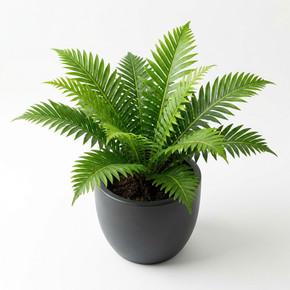
Escape to the Mediterranean coast without leaving your home. The European Fan Palm is the ultimate statement in resilience and style. Its bold, fan-shaped leaves and sculptural form create an instant focal point, while its easy-care nature means you can spend more time enjoying its beauty and less time worrying about its needs. Pet-safe, drought-tolerant, and impossibly chic—this is the hardy hero your space has been waiting for. Order now and bring home a living piece of European elegance.
Common Name: European Fan Palm
Botanical Name: Chamaerops humilis
Arabic Name: جاميروس
Plant Variant: Standard
Plant Color: Green
Plant Country: Spain
Stems: Multi-stemmed clumping habit
Family: Arecaceae
The European Fan Palm (Chamaerops humilis) belongs to the Arecaceae family. It is the only species in the genus Chamaerops and is notably the only palm tree native to continental Europe. It is classified under the subfamily Coryphoideae and the tribe Trachycarpeae.
This palm is native to the western Mediterranean region, including Spain, Italy, France, and North Africa (Morocco, Algeria, Tunisia). It thrives in rocky, dry, and coastal environments, making it exceptionally adaptable to varied climates.
It features distinctive fan-shaped fronds that range from silver-green to deep green. Each leaf is divided into stiff, linear segments. As it matures, it develops a multi-trunked, shrub-like appearance with textured bark and sharp spines along the petioles (leaf stems).
In outdoor settings, it can grow 6 to 15 feet tall and wide. When grown indoors or in containers, it is much slower-growing and typically reaches a manageable height of 3 to 4 feet, making it an ideal medium-sized floor plant.
This palm is highly versatile regarding light. While it prefers bright, indirect light, it can tolerate full sun once acclimated. It can also survive in medium-light conditions, though its growth will significantly slow down.
As a drought-tolerant species, it requires infrequent watering. Allow the top 50-75% of the soil to dry out before watering thoroughly. Overwatering or letting the plant sit in standing water can lead to root rot.
Requires well-draining soil to mimic its native rocky habitat. A mixture of standard potting soil with added perlite, coarse sand, or a specialized cactus and palm mix is recommended. Ensure the pot has adequate drainage holes.
Extremely hardy; it can withstand temperatures as low as -12°C (10°F) and as high as 40°C. It thrives in average room temperatures and handles low humidity better than most tropical palms, though it appreciates occasional misting.
Feed with a balanced liquid fertilizer or a specialized palm fertilizer during the active growing season (spring and summer). Do not fertilize during the winter months when the plant is dormant.
Maintenance is low. Care primarily involves removing dead or brown lower fronds to maintain its sculptural shape. Be cautious of the sharp spines on the stems when handling or pruning the plant.
It has a slow growth rate. Propagation is typically achieved through seeds or by carefully separating offshoots (suckers) from the base of a mature plant, though seed propagation is more common for commercial production.
While generally pest-resistant, it can occasionally be affected by spider mites or scale insects if the air is too dry. Brown leaf tips usually indicate overwatering or the buildup of salts from tap water.
Excellent for adding architectural structure to interiors or landscapes. It is a certified air-purifying plant that helps remove toxins from the air. Its extreme hardiness makes it perfect for entryways, balconies, or offices.
Chamaerops humilis is considered non-toxic to cats, dogs, and horses, according to the ASPCA. It is also safe for humans, making it an excellent choice for households with pets and children.
Escape to the Mediterranean coast without leaving your home. The European Fan Palm is the ultimate statement in resilience and style. Its bold, fan-shaped leaves and sculptural form create an instant focal point, while its easy-care nature means you can spend more time enjoying its beauty and less time worrying about its needs. Pet-safe, drought-tolerant, and impossibly chic—this is the hardy hero your space has been waiting for. Order now and bring home a living piece of European elegance.
Common Name: European Fan Palm
Botanical Name: Chamaerops humilis
Arabic Name: جاميروس
Plant Variant: Standard
Plant Color: Green
Plant Country: Spain
Stems: Multi-stemmed clumping habit
Family: Arecaceae
The European Fan Palm (Chamaerops humilis) belongs to the Arecaceae family. It is the only species in the genus Chamaerops and is notably the only palm tree native to continental Europe. It is classified under the subfamily Coryphoideae and the tribe Trachycarpeae.
This palm is native to the western Mediterranean region, including Spain, Italy, France, and North Africa (Morocco, Algeria, Tunisia). It thrives in rocky, dry, and coastal environments, making it exceptionally adaptable to varied climates.
It features distinctive fan-shaped fronds that range from silver-green to deep green. Each leaf is divided into stiff, linear segments. As it matures, it develops a multi-trunked, shrub-like appearance with textured bark and sharp spines along the petioles (leaf stems).
In outdoor settings, it can grow 6 to 15 feet tall and wide. When grown indoors or in containers, it is much slower-growing and typically reaches a manageable height of 3 to 4 feet, making it an ideal medium-sized floor plant.
This palm is highly versatile regarding light. While it prefers bright, indirect light, it can tolerate full sun once acclimated. It can also survive in medium-light conditions, though its growth will significantly slow down.
As a drought-tolerant species, it requires infrequent watering. Allow the top 50-75% of the soil to dry out before watering thoroughly. Overwatering or letting the plant sit in standing water can lead to root rot.
Requires well-draining soil to mimic its native rocky habitat. A mixture of standard potting soil with added perlite, coarse sand, or a specialized cactus and palm mix is recommended. Ensure the pot has adequate drainage holes.
Extremely hardy; it can withstand temperatures as low as -12°C (10°F) and as high as 40°C. It thrives in average room temperatures and handles low humidity better than most tropical palms, though it appreciates occasional misting.
Feed with a balanced liquid fertilizer or a specialized palm fertilizer during the active growing season (spring and summer). Do not fertilize during the winter months when the plant is dormant.
Maintenance is low. Care primarily involves removing dead or brown lower fronds to maintain its sculptural shape. Be cautious of the sharp spines on the stems when handling or pruning the plant.
It has a slow growth rate. Propagation is typically achieved through seeds or by carefully separating offshoots (suckers) from the base of a mature plant, though seed propagation is more common for commercial production.
While generally pest-resistant, it can occasionally be affected by spider mites or scale insects if the air is too dry. Brown leaf tips usually indicate overwatering or the buildup of salts from tap water.
Excellent for adding architectural structure to interiors or landscapes. It is a certified air-purifying plant that helps remove toxins from the air. Its extreme hardiness makes it perfect for entryways, balconies, or offices.
Chamaerops humilis is considered non-toxic to cats, dogs, and horses, according to the ASPCA. It is also safe for humans, making it an excellent choice for households with pets and children.




Take 20% off your first order
Enter the code below at checkout to get 20% off your first order