


Ficus benjamina 'Pyramid (Topiary Form)'
Bring instant greenery and a polished look to any space with the Benjamin Pyramid Ficus. Its dense, glossy foliage and elegant form make it a top choice for receptions, living rooms, and modern offices. With bright filtered light and sensible watering, it stays beautiful year-round and can be pruned to maintain a clean, architectural silhouette.
1. Basic Identification
Common Name: Benjamin Pyramid Ficus, Weeping Fig
Botanical Name: Ficus benjamina
Arabic Name: بنجامين
Plant Variant: Pyramid (Topiary Form)
Plant Color: Natural
Family: Moraceae
2. Taxonomy & Classification
Ficus benjamina is a species of flowering plant in the family Moraceae, which also includes figs, mulberries, and breadfruit. It belongs to the subgenus Urostigma and is one of the most common species of the Ficus genus used as an ornamental plant worldwide.
3. Origin & Distribution
Native to South and Southeast Asia, as well as Australia. It is found naturally in tropical and subtropical climates, though it has been widely naturalized in other warm regions including Florida and the West Indies.
4. Visual Characteristics
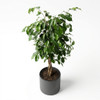
Characterized by glossy, leathery, oval-shaped leaves with a sharp "drip tip" to allow water to run off. In this specific topiary form, the plant is expertly pruned into a formal pyramid shape, featuring a central trunk with dense, overlapping foliage that creates a clean, geometric silhouette.
5. Size & Dimensions
When grown indoors as a pyramid topiary, it is typically maintained at a height of 3 to 6 feet (90-180 cm). In its natural habitat, it can reach massive heights, but its growth in indoor containers is significantly restricted by pot size and regular pruning.
6. Light Requirements
Requires bright, indirect light to thrive. It can tolerate some direct morning sunlight, but harsh, direct afternoon sun may cause leaf scorch. If the light is too low, the plant will respond by dropping its leaves.
7. Watering Needs
Water when the top 1 to 2 inches of soil have dried out. It prefers consistent moisture but is highly sensitive to "wet feet." Ensure the pot has excellent drainage to prevent root rot. Reduce watering frequency during the winter months.
8. Soil & Potting
Prefers a well-draining, fertile, and loamy potting mix. A standard high-quality indoor potting soil with added perlite or sand for drainage works best.
9. Temperature & Humidity
Thrives in temperatures between 65°F and 85°F (18°C - 29°C). It is very sensitive to cold drafts and sudden temperature fluctuations. It prefers high humidity; consider misting the leaves regularly or using a humidifier in dry indoor environments.
10. Fertilization
Apply a balanced, water-soluble fertilizer every month during the active growing season (spring and summer). Do not fertilize in the winter when the plant's growth slows down.
11. Maintenance & Care Level
Moderate. The plant is known for being "fussy" regarding movement; it may drop leaves if moved to a new location. Regular pruning is necessary to maintain the formal pyramid shape and encourage dense growth.
12. Growth & Propagation
A relatively fast grower in ideal conditions. Propagation is typically achieved through stem cuttings or air layering during the spring or summer.
13. Common Problems
The most frequent problem is "leaf drop," often caused by changes in light, temperature, or watering habits. It is also susceptible to pests such as scale, mealybugs, and spider mites, particularly if the air is too dry.
14. Benefits & Uses
An excellent air-purifying plant, Ficus benjamina is known for removing airborne toxins like formaldehyde, xylene, and toluene. Its structured pyramid form makes it a perfect decorative element for entryways, lobbies, and corners of large rooms.
15. Toxicity & Safety
Toxic to dogs, cats, and humans if ingested. The plant contains a milky sap (latex) that can cause skin irritation or allergic reactions in sensitive individuals upon contact.
Ficus benjamina 'Pyramid (Topiary Form)'

Bring instant greenery and a polished look to any space with the Benjamin Pyramid Ficus. Its dense, glossy foliage and elegant form make it a top choice for receptions, living rooms, and modern offices. With bright filtered light and sensible watering, it stays beautiful year-round and can be pruned to maintain a clean, architectural silhouette.
1. Basic Identification
Common Name: Benjamin Pyramid Ficus, Weeping Fig
Botanical Name: Ficus benjamina
Arabic Name: بنجامين
Plant Variant: Pyramid (Topiary Form)
Plant Color: Natural
Family: Moraceae
2. Taxonomy & Classification
Ficus benjamina is a species of flowering plant in the family Moraceae, which also includes figs, mulberries, and breadfruit. It belongs to the subgenus Urostigma and is one of the most common species of the Ficus genus used as an ornamental plant worldwide.
3. Origin & Distribution
Native to South and Southeast Asia, as well as Australia. It is found naturally in tropical and subtropical climates, though it has been widely naturalized in other warm regions including Florida and the West Indies.
4. Visual Characteristics
Characterized by glossy, leathery, oval-shaped leaves with a sharp "drip tip" to allow water to run off. In this specific topiary form, the plant is expertly pruned into a formal pyramid shape, featuring a central trunk with dense, overlapping foliage that creates a clean, geometric silhouette.
5. Size & Dimensions
When grown indoors as a pyramid topiary, it is typically maintained at a height of 3 to 6 feet (90-180 cm). In its natural habitat, it can reach massive heights, but its growth in indoor containers is significantly restricted by pot size and regular pruning.
6. Light Requirements
Requires bright, indirect light to thrive. It can tolerate some direct morning sunlight, but harsh, direct afternoon sun may cause leaf scorch. If the light is too low, the plant will respond by dropping its leaves.
7. Watering Needs
Water when the top 1 to 2 inches of soil have dried out. It prefers consistent moisture but is highly sensitive to "wet feet." Ensure the pot has excellent drainage to prevent root rot. Reduce watering frequency during the winter months.
8. Soil & Potting
Prefers a well-draining, fertile, and loamy potting mix. A standard high-quality indoor potting soil with added perlite or sand for drainage works best.
9. Temperature & Humidity
Thrives in temperatures between 65°F and 85°F (18°C - 29°C). It is very sensitive to cold drafts and sudden temperature fluctuations. It prefers high humidity; consider misting the leaves regularly or using a humidifier in dry indoor environments.
10. Fertilization
Apply a balanced, water-soluble fertilizer every month during the active growing season (spring and summer). Do not fertilize in the winter when the plant's growth slows down.
11. Maintenance & Care Level
Moderate. The plant is known for being "fussy" regarding movement; it may drop leaves if moved to a new location. Regular pruning is necessary to maintain the formal pyramid shape and encourage dense growth.
12. Growth & Propagation
A relatively fast grower in ideal conditions. Propagation is typically achieved through stem cuttings or air layering during the spring or summer.
13. Common Problems
The most frequent problem is "leaf drop," often caused by changes in light, temperature, or watering habits. It is also susceptible to pests such as scale, mealybugs, and spider mites, particularly if the air is too dry.
14. Benefits & Uses
An excellent air-purifying plant, Ficus benjamina is known for removing airborne toxins like formaldehyde, xylene, and toluene. Its structured pyramid form makes it a perfect decorative element for entryways, lobbies, and corners of large rooms.
15. Toxicity & Safety
Toxic to dogs, cats, and humans if ingested. The plant contains a milky sap (latex) that can cause skin irritation or allergic reactions in sensitive individuals upon contact.