


Moraceae
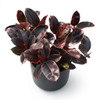
Ficus elastica 'Ruby'
Bring a premium designer look to your space with the Rubber Plant 'Ruby'—bold, glossy leaves with rich burgundy and pink-red variegation that stands out instantly. It’s a dependable, low-maintenance indoor plant that rewards you with steady growth and a clean, modern silhouette. Place it in bright indirect light, water when the top soil dries, and enjoy a long-lasting statement plant for living rooms, entrances, and offices.
1. Basic Identification
Common Name: Rubber Plant 'Ruby', Variegated Rubber Tree
Botanical Name: Ficus elastica 'Ruby'
Arabic Name: مطاط
Family: Moraceae
2. Taxonomy & Classification
The Ficus elastica 'Ruby' belongs to the Moraceae (mulberry) family. It is a cultivar of the species Ficus elastica, known for its latex-containing sap which was historically used to produce rubber.
3. Origin & Distribution
The parent species is native to tropical regions of South and Southeast Asia, including India, Malaysia, and Indonesia (Java and Sumatra). The 'Ruby' cultivar is a commercially developed variety prized for its specific pink variegation.
4. Visual Characteristics
The 'Ruby' is distinguished by its large, thick, leathery leaves with a glossy finish. The foliage features a striking tricolor variegation consisting of dark green, creamy white, and vibrant pink or ruby-red highlights. New leaves emerge from a colorful pink-red sheath (stipule).
5. Size & Dimensions
In an indoor setting, it typically grows between 6 to 10 feet tall if not pruned, with a spread of 2 to 3 feet. It can be kept smaller through regular pruning or by maintaining it in a smaller pot.
6. Light Requirements
Requires bright, indirect light to maintain its vibrant variegation. While it can tolerate lower light, the pink and cream colors will fade and the plant may become leggy. Avoid direct midday sun, which can scorch the leaves.
7. Watering Needs
Allow the top 50-75% of the soil to dry out before watering thoroughly. It is sensitive to overwatering; ensure the pot has excellent drainage to prevent root rot. Reduce watering frequency during the winter months.
8. Soil & Potting
Thrives in a well-draining, aerated potting mix. A combination of standard potting soil with perlite and pine bark is ideal to ensure proper drainage while retaining some moisture.
9. Temperature & Humidity
Prefers temperatures between 60°F and 80°F (15°C - 27°C). It can tolerate average home humidity but will grow more vigorously in higher humidity environments. Protect the plant from cold drafts and sudden temperature fluctuations.
10. Fertilization
Feed with a balanced liquid houseplant fertilizer diluted to half-strength once a month during the spring and summer growing season. Do not fertilize in the winter.
11. Maintenance & Care Level
Maintenance is considered easy to moderate. To keep the plant healthy, wipe the large leaves regularly with a damp cloth to remove dust. Pruning can be done to encourage branching and control size.
12. Growth & Propagation
The plant has a moderate growth rate. It can be propagated through stem tip cuttings or air layering, though propagation can be challenging due to the latex sap. Cuttings should be allowed to callus before planting.
13. Common Problems
Common issues include leaf drop (caused by sudden changes in light or temperature), mealybugs, spider mites, and scale. Overwatering is the most frequent cause of yellowing leaves and root rot.
14. Benefits & Uses
Known for its air-purifying qualities, it is effective at removing toxins such as formaldehyde from the air. Its striking colors make it a popular choice for modern interior design, office reception areas, and living rooms.
15. Toxicity & Safety
The plant is toxic to humans and pets if ingested. The milky white sap contains latex and can cause skin irritation or allergic reactions in sensitive individuals. Keep out of reach of children and animals.
Ficus elastica 'Ruby'

Bring a premium designer look to your space with the Rubber Plant 'Ruby'—bold, glossy leaves with rich burgundy and pink-red variegation that stands out instantly. It’s a dependable, low-maintenance indoor plant that rewards you with steady growth and a clean, modern silhouette. Place it in bright indirect light, water when the top soil dries, and enjoy a long-lasting statement plant for living rooms, entrances, and offices.
1. Basic Identification
Common Name: Rubber Plant 'Ruby', Variegated Rubber Tree
Botanical Name: Ficus elastica 'Ruby'
Arabic Name: مطاط
Family: Moraceae
2. Taxonomy & Classification
The Ficus elastica 'Ruby' belongs to the Moraceae (mulberry) family. It is a cultivar of the species Ficus elastica, known for its latex-containing sap which was historically used to produce rubber.
3. Origin & Distribution
The parent species is native to tropical regions of South and Southeast Asia, including India, Malaysia, and Indonesia (Java and Sumatra). The 'Ruby' cultivar is a commercially developed variety prized for its specific pink variegation.
4. Visual Characteristics
The 'Ruby' is distinguished by its large, thick, leathery leaves with a glossy finish. The foliage features a striking tricolor variegation consisting of dark green, creamy white, and vibrant pink or ruby-red highlights. New leaves emerge from a colorful pink-red sheath (stipule).
5. Size & Dimensions
In an indoor setting, it typically grows between 6 to 10 feet tall if not pruned, with a spread of 2 to 3 feet. It can be kept smaller through regular pruning or by maintaining it in a smaller pot.
6. Light Requirements
Requires bright, indirect light to maintain its vibrant variegation. While it can tolerate lower light, the pink and cream colors will fade and the plant may become leggy. Avoid direct midday sun, which can scorch the leaves.
7. Watering Needs
Allow the top 50-75% of the soil to dry out before watering thoroughly. It is sensitive to overwatering; ensure the pot has excellent drainage to prevent root rot. Reduce watering frequency during the winter months.
8. Soil & Potting
Thrives in a well-draining, aerated potting mix. A combination of standard potting soil with perlite and pine bark is ideal to ensure proper drainage while retaining some moisture.
9. Temperature & Humidity
Prefers temperatures between 60°F and 80°F (15°C - 27°C). It can tolerate average home humidity but will grow more vigorously in higher humidity environments. Protect the plant from cold drafts and sudden temperature fluctuations.
10. Fertilization
Feed with a balanced liquid houseplant fertilizer diluted to half-strength once a month during the spring and summer growing season. Do not fertilize in the winter.
11. Maintenance & Care Level
Maintenance is considered easy to moderate. To keep the plant healthy, wipe the large leaves regularly with a damp cloth to remove dust. Pruning can be done to encourage branching and control size.
12. Growth & Propagation
The plant has a moderate growth rate. It can be propagated through stem tip cuttings or air layering, though propagation can be challenging due to the latex sap. Cuttings should be allowed to callus before planting.
13. Common Problems
Common issues include leaf drop (caused by sudden changes in light or temperature), mealybugs, spider mites, and scale. Overwatering is the most frequent cause of yellowing leaves and root rot.
14. Benefits & Uses
Known for its air-purifying qualities, it is effective at removing toxins such as formaldehyde from the air. Its striking colors make it a popular choice for modern interior design, office reception areas, and living rooms.
15. Toxicity & Safety
The plant is toxic to humans and pets if ingested. The milky white sap contains latex and can cause skin irritation or allergic reactions in sensitive individuals. Keep out of reach of children and animals.