


Moraceae
Ficus elastica
Bring a premium, modern look to your space with the Rubber Plant. Its thick, glossy, dark leaves create an instant statement in reception areas, living rooms, and meeting rooms—without demanding constant care. Give it bright indirect light, water when the soil partially dries, and enjoy a strong, upright plant that looks expensive and stays stylish year-round.
1. Basic Identification
Common Name: Rubber Plant
Botanical Name: Ficus elastica
Arabic Name: مطاط
Variety: Standard
Color: Natural
Country: Not mentioned
Family: Moraceae
2. Taxonomy & Classification
Kingdom: Plantae
Clade: Tracheophytes
Order: Rosales
Family: Moraceae
Genus: Ficus
Species: Ficus elastica
3. Origin & Distribution
Native to eastern parts of South Asia and Southeast Asia, including countries like India, Nepal, Bhutan, Myanmar, Malaysia, and Indonesia. It has become naturalized in various tropical regions such as Sri Lanka, the West Indies, and parts of Florida.
4. Visual Characteristics
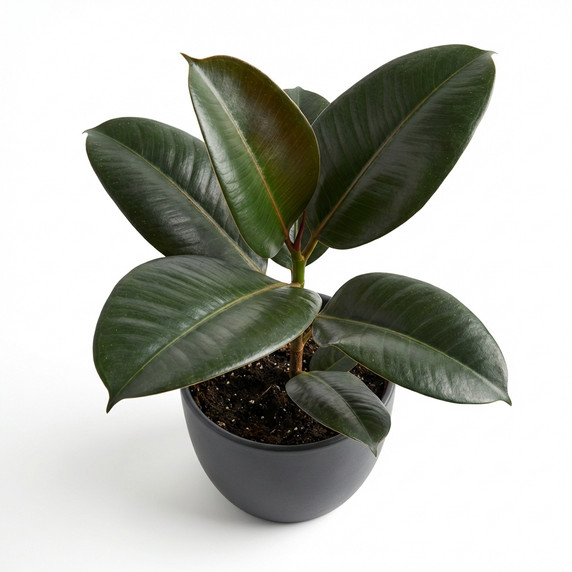
The Rubber Plant features large, oval, leathery leaves with a deep glossy finish. In the "Standard" or natural variety, the leaves are typically a dark, rich green. New foliage emerges from within a decorative pinkish or red sheath called a stipule, which falls away as the leaf unfurls.
5. Size & Dimensions
In its natural habitat, it can reach heights of 100 feet or more. As an indoor plant, it is typically maintained between 6 to 10 feet tall. Leaves usually measure between 8 to 12 inches long and 4 to 6 inches wide.
6. Light Requirements
Prefers bright, indirect light to maintain its glossy appearance and growth. It can tolerate some direct morning sun, but harsh afternoon sun may scorch the leaves. It can adapt to lower light conditions, though growth will be significantly slower.
7. Watering Needs
Water once the top 50-75% of the soil has dried out. Ensure thorough watering until excess drains out, but do not allow the plant to sit in standing water. Water less frequently during the dormant winter months.
8. Soil & Potting
Requires a well-draining, aerated potting mix. A combination of high-quality potting soil, peat moss, and perlite or pine bark is ideal to prevent root rot while retaining sufficient moisture.
9. Temperature & Humidity
Thrives in temperatures between 65°F to 85°F (18°C–29°C). It is sensitive to sudden temperature drops and cold drafts. While it tolerates average household humidity, it appreciates higher humidity levels, which can be provided by misting or a humidifier.
10. Fertilization
Apply a balanced liquid fertilizer diluted to half strength every 4-6 weeks during the active growing season (spring and summer). Avoid fertilizing in the autumn and winter.
11. Maintenance & Care Level
Low to Moderate care level. The large leaves collect dust easily, so wiping them regularly with a damp cloth is necessary for photosynthesis and aesthetic appeal. Pruning can be done to control size and encourage branching.
12. Growth & Propagation
A relatively fast-growing plant under ideal light conditions. Propagation is most successful via stem cuttings or air layering, though it produces a milky sap that can be messy during the process.
13. Common Problems
Vulnerable to overwatering which causes leaf drop and root rot. Common pests include scale, mealybugs, and spider mites. Sudden changes in light or temperature can also trigger leaf loss.
14. Benefits & Uses
Highly valued for its air-purifying capabilities, specifically its efficiency in removing formaldehyde from indoor air. It serves as a striking structural element in interior design, perfect for home offices and living spaces.
15. Toxicity & Safety
The plant is toxic to cats, dogs, and horses if ingested. The milky white latex sap can also cause skin irritation or allergic reactions in humans, so handling with gloves is recommended if pruning.
Ficus elastica
Bring a premium, modern look to your space with the Rubber Plant. Its thick, glossy, dark leaves create an instant statement in reception areas, living rooms, and meeting rooms—without demanding constant care. Give it bright indirect light, water when the soil partially dries, and enjoy a strong, upright plant that looks expensive and stays stylish year-round.
1. Basic Identification
Common Name: Rubber Plant
Botanical Name: Ficus elastica
Arabic Name: مطاط
Variety: Standard
Color: Natural
Country: Not mentioned
Family: Moraceae
2. Taxonomy & Classification
Kingdom: Plantae
Clade: Tracheophytes
Order: Rosales
Family: Moraceae
Genus: Ficus
Species: Ficus elastica
3. Origin & Distribution
Native to eastern parts of South Asia and Southeast Asia, including countries like India, Nepal, Bhutan, Myanmar, Malaysia, and Indonesia. It has become naturalized in various tropical regions such as Sri Lanka, the West Indies, and parts of Florida.
4. Visual Characteristics
The Rubber Plant features large, oval, leathery leaves with a deep glossy finish. In the "Standard" or natural variety, the leaves are typically a dark, rich green. New foliage emerges from within a decorative pinkish or red sheath called a stipule, which falls away as the leaf unfurls.
5. Size & Dimensions
In its natural habitat, it can reach heights of 100 feet or more. As an indoor plant, it is typically maintained between 6 to 10 feet tall. Leaves usually measure between 8 to 12 inches long and 4 to 6 inches wide.
6. Light Requirements
Prefers bright, indirect light to maintain its glossy appearance and growth. It can tolerate some direct morning sun, but harsh afternoon sun may scorch the leaves. It can adapt to lower light conditions, though growth will be significantly slower.
7. Watering Needs
Water once the top 50-75% of the soil has dried out. Ensure thorough watering until excess drains out, but do not allow the plant to sit in standing water. Water less frequently during the dormant winter months.
8. Soil & Potting
Requires a well-draining, aerated potting mix. A combination of high-quality potting soil, peat moss, and perlite or pine bark is ideal to prevent root rot while retaining sufficient moisture.
9. Temperature & Humidity
Thrives in temperatures between 65°F to 85°F (18°C–29°C). It is sensitive to sudden temperature drops and cold drafts. While it tolerates average household humidity, it appreciates higher humidity levels, which can be provided by misting or a humidifier.
10. Fertilization
Apply a balanced liquid fertilizer diluted to half strength every 4-6 weeks during the active growing season (spring and summer). Avoid fertilizing in the autumn and winter.
11. Maintenance & Care Level
Low to Moderate care level. The large leaves collect dust easily, so wiping them regularly with a damp cloth is necessary for photosynthesis and aesthetic appeal. Pruning can be done to control size and encourage branching.
12. Growth & Propagation
A relatively fast-growing plant under ideal light conditions. Propagation is most successful via stem cuttings or air layering, though it produces a milky sap that can be messy during the process.
13. Common Problems
Vulnerable to overwatering which causes leaf drop and root rot. Common pests include scale, mealybugs, and spider mites. Sudden changes in light or temperature can also trigger leaf loss.
14. Benefits & Uses
Highly valued for its air-purifying capabilities, specifically its efficiency in removing formaldehyde from indoor air. It serves as a striking structural element in interior design, perfect for home offices and living spaces.
15. Toxicity & Safety
The plant is toxic to cats, dogs, and horses if ingested. The milky white latex sap can also cause skin irritation or allergic reactions in humans, so handling with gloves is recommended if pruning.