

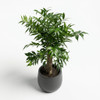


Bring instant, upscale greenery to your space with Alii Ficus—an elegant, narrow-leaf ficus that looks curated and architectural without feeling heavy. Perfect as a floor statement plant for living rooms, reception areas, and meeting rooms, it rewards simple routines: bright filtered light and smart watering. A premium choice for modern interiors that want a calm, professional look year-round.
Common Name: Alii Ficus
Botanical Name: Ficus maclellandii
Former Name: Not available
Plant Type: Not available
Plant Code / SKU: PLT-0651
Alternative Names:
فيكس علي
Order: Rosales
Family: Moraceae
Genus: Ficus
Native to the Western Ghats of India and parts of Southeast Asia. Widely cultivated and naturalized in tropical and subtropical regions worldwide as a popular indoor and shade-tolerant ornamental.
Slender, erect woody stems bear long, narrow lanceolate leaves 8–15 cm long and 1–3 cm wide. Leaves are glossy dark green, occasionally with a subtle variegation or bronze-tinged new growth. Habit is upright and architectural with an airy canopy.
Indoors typically reaches 1.2–1.8 m tall with a 0.6–0.9 m spread. Stem diameter up to 3 cm. Leaves measure approximately 8–15 cm in length and 1–3 cm in width.
Best in bright, indirect light. Tolerates medium light but growth may slow. Avoid prolonged direct afternoon sun to prevent leaf scorch; morning or filtered light is ideal.
Keep soil evenly moist but not waterlogged. Allow the top 2–3 cm of soil to dry between waterings. Reduce frequency in winter when growth slows.
Use a well-draining potting mix—peat or coco coir–based media amended with perlite or bark. Ensure pots have drainage holes. Repot every 2–3 years or when root-bound.
Optimal temperature range 18–27 °C; avoid drops below 15 °C. Prefers moderate to high humidity (40–60%+); benefits from occasional misting or placement on a humidity tray.
Feed monthly during spring and summer with a balanced (10-10-10 or 20-20-20) water-soluble fertilizer at half the label rate. Suspend feeding in autumn and winter.
Moderate care level. Requires regular dusting of leaves, routine monitoring of moisture, and occasional pruning to maintain shape and remove dead material.
Propagate via semi-hardwood stem cuttings: trim a 10–15 cm shoot with several leaves, dip in rooting hormone, and root in moist soil or water. Air layering is also effective for larger specimens.
Pests: spider mites, mealybugs, scale insects.
Physiological: leaf yellowing and drop from overwatering or underwatering, leaf scorch from direct sun, root rot in poorly drained soil.
Striking architectural form makes it an excellent floor specimen. Improves indoor air quality by filtering formaldehyde and benzene. Enhances modern interiors with a calm, professional aesthetic.
All parts contain milky sap (ficin) that can irritate skin and mucous membranes. Toxic if ingested by pets or humans, causing oral irritation, drooling, vomiting, or diarrhea. Keep out of reach of children and animals.
Bring instant, upscale greenery to your space with Alii Ficus—an elegant, narrow-leaf ficus that looks curated and architectural without feeling heavy. Perfect as a floor statement plant for living rooms, reception areas, and meeting rooms, it rewards simple routines: bright filtered light and smart watering. A premium choice for modern interiors that want a calm, professional look year-round.
Common Name: Alii Ficus
Botanical Name: Ficus maclellandii
Former Name: Not available
Plant Type: Not available
Plant Code / SKU: PLT-0651
Alternative Names:
فيكس علي
Order: Rosales
Family: Moraceae
Genus: Ficus
Native to the Western Ghats of India and parts of Southeast Asia. Widely cultivated and naturalized in tropical and subtropical regions worldwide as a popular indoor and shade-tolerant ornamental.
Slender, erect woody stems bear long, narrow lanceolate leaves 8–15 cm long and 1–3 cm wide. Leaves are glossy dark green, occasionally with a subtle variegation or bronze-tinged new growth. Habit is upright and architectural with an airy canopy.
Indoors typically reaches 1.2–1.8 m tall with a 0.6–0.9 m spread. Stem diameter up to 3 cm. Leaves measure approximately 8–15 cm in length and 1–3 cm in width.
Best in bright, indirect light. Tolerates medium light but growth may slow. Avoid prolonged direct afternoon sun to prevent leaf scorch; morning or filtered light is ideal.
Keep soil evenly moist but not waterlogged. Allow the top 2–3 cm of soil to dry between waterings. Reduce frequency in winter when growth slows.
Use a well-draining potting mix—peat or coco coir–based media amended with perlite or bark. Ensure pots have drainage holes. Repot every 2–3 years or when root-bound.
Optimal temperature range 18–27 °C; avoid drops below 15 °C. Prefers moderate to high humidity (40–60%+); benefits from occasional misting or placement on a humidity tray.
Feed monthly during spring and summer with a balanced (10-10-10 or 20-20-20) water-soluble fertilizer at half the label rate. Suspend feeding in autumn and winter.
Moderate care level. Requires regular dusting of leaves, routine monitoring of moisture, and occasional pruning to maintain shape and remove dead material.
Propagate via semi-hardwood stem cuttings: trim a 10–15 cm shoot with several leaves, dip in rooting hormone, and root in moist soil or water. Air layering is also effective for larger specimens.
Pests: spider mites, mealybugs, scale insects.
Physiological: leaf yellowing and drop from overwatering or underwatering, leaf scorch from direct sun, root rot in poorly drained soil.
Striking architectural form makes it an excellent floor specimen. Improves indoor air quality by filtering formaldehyde and benzene. Enhances modern interiors with a calm, professional aesthetic.
All parts contain milky sap (ficin) that can irritate skin and mucous membranes. Toxic if ingested by pets or humans, causing oral irritation, drooling, vomiting, or diarrhea. Keep out of reach of children and animals.


Take 20% off your first order
Enter the code below at checkout to get 20% off your first order