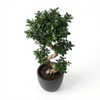
Add instant greenery with Ficus microcarpa—an elegant, glossy-leaved fig that stays full, shapes beautifully with pruning, and thrives in bright indoor light. Ideal for receptions, meeting rooms, and stylish living spaces, it delivers a clean, tropical look with minimal effort. Place it, water when the soil partly dries, and enjoy a resilient statement plant all year.
Common Name: Chinese banyan
Botanical Name: Ficus microcarpa
Former Name: Not available
Plant Type: Foliage houseplant (Fig)
Plant Code / SKU: PLT-0034
Alternative Names:
Indian laurel fig
Malayan banyan
Curtain fig
Ginseng ficus
Order: Rosales
Family: Moraceae
Genus: Ficus
Species: F. microcarpa
Native to tropical and subtropical Asia, from India through southern China, Southeast Asia and Malaysia to northern Australia. Widely cultivated and naturalized in tropical and subtropical regions worldwide, including Florida, Hawaii, and parts of Africa and South America.
Evergreen tree or large shrub with smooth, gray bark and a dense, rounded crown. Leaves are glossy, leathery, elliptic to ovate (6–13 cm long), dark green with smooth margins. Aerial roots often develop along branches and trunk. Produces small, round fig-like fruit (syconia) that mature from green to yellow‐orange.
In habitat, can reach 10–15 m tall; under container culture typically maintained at 2–5 m. Trunk diameter up to 1 m in mature specimens outdoors. Indoor growth rate is moderate to fast; height and spread controlled by pruning.
Prefers bright, indirect light. Tolerates some direct morning or late afternoon sun if acclimated. Survives in moderate light but with slower growth and sparser foliage. Avoid prolonged exposure to harsh midday sun to prevent leaf scorch.
Maintain evenly moist soil; water thoroughly when the top 2–3 cm of medium feels dry. Do not allow the plant to sit in waterlogged conditions. Reduce frequency in winter but do not let soil dry out completely.
Use a well-draining, aerated potting mix rich in organic matter (for example, equal parts peat moss, pine bark and perlite). Ideal pH is 6.0–7.0. Repot every 2–3 years or when root bound, choosing a container only one size larger to avoid excess moisture retention.
Thrives at 18–29 °C (65–85 °F). Minimum safe temperature is 13 °C (55 °F). Prefers high humidity (50–70%); average indoor humidity is acceptable but benefits from occasional misting or a humidity tray.
Feed with a balanced, water-soluble fertilizer (e.g. 20-20-20 NPK) every 4–6 weeks during the active growing season (spring through early autumn). Halt or reduce feeding in winter when growth slows.
Moderate care. Prune regularly to maintain desired shape and size; remove unwanted aerial roots or suckers. Wipe leaves periodically to remove dust and improve light absorption. Monitor for pests and adjust care as needed.
Propagate by semi-hardwood stem cuttings (10–15 cm) taken in spring or early summer; root in moist, well-draining medium under high humidity. Air-layering yields larger, faster-establishing plants. Seed propagation is possible but uncommon in cultivation.
Pests: scale insects, mealybugs, spider mites. Diseases: root rot from overwatering, leaf spot fungi in poor air circulation. Cultural issues: leaf drop due to sudden light or temperature changes, yellowing leaves from nutrient deficiencies or overwatering.
Valued as an ornamental indoor and landscape plant for its dense, glossy foliage. Effective at improving indoor air quality by removing pollutants such as formaldehyde. Commonly used in offices, lobbies, and as a bonsai specimen.
All parts contain ficin and latex, which can cause skin irritation on contact. Toxic if ingested by pets (cats, dogs) or humans, leading to oral irritation, vomiting and diarrhea. Keep out of reach of children and animals.
Add instant greenery with Ficus microcarpa—an elegant, glossy-leaved fig that stays full, shapes beautifully with pruning, and thrives in bright indoor light. Ideal for receptions, meeting rooms, and stylish living spaces, it delivers a clean, tropical look with minimal effort. Place it, water when the soil partly dries, and enjoy a resilient statement plant all year.
Common Name: Chinese banyan
Botanical Name: Ficus microcarpa
Former Name: Not available
Plant Type: Foliage houseplant (Fig)
Plant Code / SKU: PLT-0034
Alternative Names:
Indian laurel fig
Malayan banyan
Curtain fig
Ginseng ficus
Order: Rosales
Family: Moraceae
Genus: Ficus
Species: F. microcarpa
Native to tropical and subtropical Asia, from India through southern China, Southeast Asia and Malaysia to northern Australia. Widely cultivated and naturalized in tropical and subtropical regions worldwide, including Florida, Hawaii, and parts of Africa and South America.
Evergreen tree or large shrub with smooth, gray bark and a dense, rounded crown. Leaves are glossy, leathery, elliptic to ovate (6–13 cm long), dark green with smooth margins. Aerial roots often develop along branches and trunk. Produces small, round fig-like fruit (syconia) that mature from green to yellow‐orange.
In habitat, can reach 10–15 m tall; under container culture typically maintained at 2–5 m. Trunk diameter up to 1 m in mature specimens outdoors. Indoor growth rate is moderate to fast; height and spread controlled by pruning.
Prefers bright, indirect light. Tolerates some direct morning or late afternoon sun if acclimated. Survives in moderate light but with slower growth and sparser foliage. Avoid prolonged exposure to harsh midday sun to prevent leaf scorch.
Maintain evenly moist soil; water thoroughly when the top 2–3 cm of medium feels dry. Do not allow the plant to sit in waterlogged conditions. Reduce frequency in winter but do not let soil dry out completely.
Use a well-draining, aerated potting mix rich in organic matter (for example, equal parts peat moss, pine bark and perlite). Ideal pH is 6.0–7.0. Repot every 2–3 years or when root bound, choosing a container only one size larger to avoid excess moisture retention.
Thrives at 18–29 °C (65–85 °F). Minimum safe temperature is 13 °C (55 °F). Prefers high humidity (50–70%); average indoor humidity is acceptable but benefits from occasional misting or a humidity tray.
Feed with a balanced, water-soluble fertilizer (e.g. 20-20-20 NPK) every 4–6 weeks during the active growing season (spring through early autumn). Halt or reduce feeding in winter when growth slows.
Moderate care. Prune regularly to maintain desired shape and size; remove unwanted aerial roots or suckers. Wipe leaves periodically to remove dust and improve light absorption. Monitor for pests and adjust care as needed.
Propagate by semi-hardwood stem cuttings (10–15 cm) taken in spring or early summer; root in moist, well-draining medium under high humidity. Air-layering yields larger, faster-establishing plants. Seed propagation is possible but uncommon in cultivation.
Pests: scale insects, mealybugs, spider mites. Diseases: root rot from overwatering, leaf spot fungi in poor air circulation. Cultural issues: leaf drop due to sudden light or temperature changes, yellowing leaves from nutrient deficiencies or overwatering.
Valued as an ornamental indoor and landscape plant for its dense, glossy foliage. Effective at improving indoor air quality by removing pollutants such as formaldehyde. Commonly used in offices, lobbies, and as a bonsai specimen.
All parts contain ficin and latex, which can cause skin irritation on contact. Toxic if ingested by pets (cats, dogs) or humans, leading to oral irritation, vomiting and diarrhea. Keep out of reach of children and animals.