


Acanthaceae
Fittonia albivenis
Bring instant texture to your space with the Nerve Plant—compact, eye-catching, and made for desktops. Its crisp white-veined foliage looks premium in any pot, and it stays beautifully low and bushy with simple pinching. Ideal for offices, receptions, and terrariums where humidity is higher. If you want a statement plant that fits anywhere, Fittonia delivers.
1. Basic Identification
Common Name: Nerve Plant
Botanical Name: Fittonia albivenis
Former Name: Not available
Plant Type: Foliage houseplant
Plant Code / SKU: PLT-0291
Alternative Names:
White Vein (Albivenis Group)
Multicolor
اللون/الألوان: ذهبي | النوع/الشكل: سبراي
Arabic Name: دراسينا
2. Taxonomy & Classification
Order: Lamiales
Family: Acanthaceae
Genus: Fittonia
Species: F. albivenis
3. Origin & Distribution
Native to the tropical rainforests of South America, particularly Peru and Colombia. Widely cultivated as an ornamental houseplant worldwide.
4. Visual Characteristics
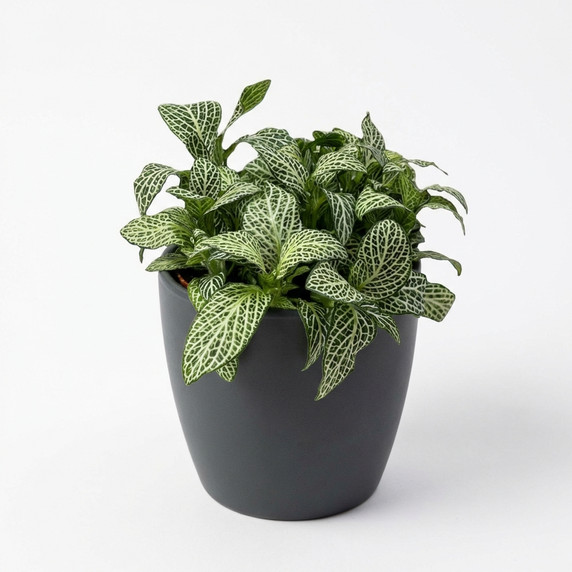
Habit: Low, bushy, creeping perennial with fibrous roots.
Leaves: Opposite, ovate (2–5 cm long), dark green with prominent white veins; new growth may exhibit pinkish hues.
Stems: Thin, reddish-green, branching, forming dense mats.
5. Size & Dimensions
Height: 5–15 cm (2–6 inches)
Spread: 15–30 cm (6–12 inches)
Growth Rate: Moderate under optimal conditions.
6. Light Requirements
Prefers bright, indirect light; tolerates lower light levels but with reduced vigor.
Avoid direct midday sun to prevent leaf scorch.
7. Watering Needs
Keep soil consistently moist but not waterlogged.
Water when the top 1–2 cm of soil begins to dry; slightly reduce frequency in winter.
High ambient humidity helps maintain leaf health.
8. Soil & Potting
Use a well-draining, peat-based potting mix amended with perlite or orchid bark.
Repot every 1–2 years or when root-bound, selecting a container with drainage holes.
9. Temperature & Humidity
Ideal temperature: 18–24 °C (65–75 °F); do not allow below 15 °C (59 °F).
Humidity: High (60–90%); benefits from regular misting, pebble trays, or terrarium culture.
10. Fertilization
Apply a balanced liquid fertilizer (e.g., 20-20-20) at half strength every 4–6 weeks during spring and summer.
Hold fertilization in fall and winter when growth slows.
11. Maintenance & Care Level
Care Level: Moderate.
Pinch back stems regularly to maintain a compact habit and encourage branching.
Monitor for pests and remove any yellowing or dead foliage promptly.
12. Growth & Propagation
Propagate via stem cuttings: take 5–8 cm segments just below a node, strip lower leaves, and root in water or moist potting mix.
Division: Gently separate clumps during repotting and replant individual sections.
13. Common Problems
Brown leaf edges: often due to low humidity or underwatering.
Yellowing leaves or root rot: overwatering or poor drainage.
Pests: susceptible to spider mites, aphids, mealybugs—treat with insecticidal soap or neem oil.
14. Benefits & Uses
Decorative accent plant ideal for terrariums, desktops, and small‐space displays.
Enhances indoor humidity; can contribute to improved air quality.
Provides striking leaf contrast in mixed foliage arrangements.
15. Toxicity & Safety
Non-toxic to humans, cats, and dogs (per ASPCA); safe for homes with pets and children.
Fittonia albivenis
Bring instant texture to your space with the Nerve Plant—compact, eye-catching, and made for desktops. Its crisp white-veined foliage looks premium in any pot, and it stays beautifully low and bushy with simple pinching. Ideal for offices, receptions, and terrariums where humidity is higher. If you want a statement plant that fits anywhere, Fittonia delivers.
1. Basic Identification
Common Name: Nerve Plant
Botanical Name: Fittonia albivenis
Former Name: Not available
Plant Type: Foliage houseplant
Plant Code / SKU: PLT-0291
Alternative Names:
White Vein (Albivenis Group)
Multicolor
اللون/الألوان: ذهبي | النوع/الشكل: سبراي
Arabic Name: دراسينا
2. Taxonomy & Classification
Order: Lamiales
Family: Acanthaceae
Genus: Fittonia
Species: F. albivenis
3. Origin & Distribution
Native to the tropical rainforests of South America, particularly Peru and Colombia. Widely cultivated as an ornamental houseplant worldwide.
4. Visual Characteristics
Habit: Low, bushy, creeping perennial with fibrous roots.
Leaves: Opposite, ovate (2–5 cm long), dark green with prominent white veins; new growth may exhibit pinkish hues.
Stems: Thin, reddish-green, branching, forming dense mats.
5. Size & Dimensions
Height: 5–15 cm (2–6 inches)
Spread: 15–30 cm (6–12 inches)
Growth Rate: Moderate under optimal conditions.
6. Light Requirements
Prefers bright, indirect light; tolerates lower light levels but with reduced vigor.
Avoid direct midday sun to prevent leaf scorch.
7. Watering Needs
Keep soil consistently moist but not waterlogged.
Water when the top 1–2 cm of soil begins to dry; slightly reduce frequency in winter.
High ambient humidity helps maintain leaf health.
8. Soil & Potting
Use a well-draining, peat-based potting mix amended with perlite or orchid bark.
Repot every 1–2 years or when root-bound, selecting a container with drainage holes.
9. Temperature & Humidity
Ideal temperature: 18–24 °C (65–75 °F); do not allow below 15 °C (59 °F).
Humidity: High (60–90%); benefits from regular misting, pebble trays, or terrarium culture.
10. Fertilization
Apply a balanced liquid fertilizer (e.g., 20-20-20) at half strength every 4–6 weeks during spring and summer.
Hold fertilization in fall and winter when growth slows.
11. Maintenance & Care Level
Care Level: Moderate.
Pinch back stems regularly to maintain a compact habit and encourage branching.
Monitor for pests and remove any yellowing or dead foliage promptly.
12. Growth & Propagation
Propagate via stem cuttings: take 5–8 cm segments just below a node, strip lower leaves, and root in water or moist potting mix.
Division: Gently separate clumps during repotting and replant individual sections.
13. Common Problems
Brown leaf edges: often due to low humidity or underwatering.
Yellowing leaves or root rot: overwatering or poor drainage.
Pests: susceptible to spider mites, aphids, mealybugs—treat with insecticidal soap or neem oil.
14. Benefits & Uses
Decorative accent plant ideal for terrariums, desktops, and small‐space displays.
Enhances indoor humidity; can contribute to improved air quality.
Provides striking leaf contrast in mixed foliage arrangements.
15. Toxicity & Safety
Non-toxic to humans, cats, and dogs (per ASPCA); safe for homes with pets and children.