


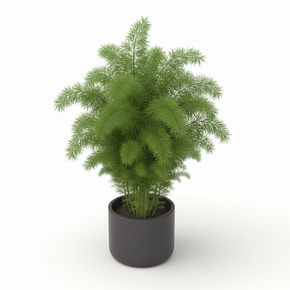



Bring instant lush texture to any space with the Foxtail Fern. Its dense green plumes look soft and luxurious, yet the plant is impressively tough—ideal for busy homes and modern offices. Place it in bright filtered light, water when the top soil dries, and enjoy a full, sculptural accent that elevates shelves, desks, and entryways all year long.
Common Name: Foxtail Fern, Meyersii Fern
Botanical Name: Asparagus densiflorus
Arabic Name: نبات الأسبارغس
Plant Variant: Standard
Plant Color: Green
Kingdom: Plantae
Clade: Tracheophytes
Order: Asparagales
Family: Asparagaceae
Genus: Asparagus
Species: A. densiflorus
The Foxtail Fern is native to the Cape Provinces and the Northern Provinces of South Africa. It has been widely introduced to other subtropical and tropical regions as an ornamental plant.
Despite its name, it is not a true fern but a member of the asparagus family. It features unique, plume-like stems that are densely packed with tiny, needle-like cladodes (modified stems), giving it a fluffy, bottle-brush or foxtail appearance. It produces small, inconspicuous white or pinkish flowers followed by bright red berries.
Typically grows 1 to 3 feet (30–90 cm) in height and spreads about 3 to 4 feet (90–120 cm) wide. Its clumping growth habit makes it look full and sculptural.
Thrives in bright, indirect light or filtered sunlight. While it can tolerate some direct morning sun, harsh afternoon sun may scorch the delicate-looking foliage. It can adapt to moderate light but may become leggy.
Water regularly during the growing season, allowing the top inch of soil to dry out between waterings. The plant possesses tuberous roots that store water, making it somewhat drought-tolerant once established, but it prefers consistent moisture.
Prefers a well-draining, rich potting mix. A standard high-quality indoor potting soil with added perlite or sand works well to ensure adequate drainage and prevent root rot.
Prefers temperatures between 65°F and 75°F (18°C–24°C). It is not frost-tolerant and should be kept away from cold drafts. It appreciates average to high humidity but manages well in standard household humidity levels.
Feed monthly during the spring and summer growing season with a balanced, water-soluble liquid fertilizer diluted to half strength. Reduce feeding in autumn and winter when growth slows.
Maintenance level is low to moderate. Care involves occasional pruning of yellowing or dead stems at the base to maintain its shape and encourage new growth. It is a vigorous grower and may need repotting every couple of years.
Propagated primarily through division of its tuberous root clump during the spring. It can also be grown from seeds found within its red berries, though this is a slower process.
Yellowing "needles" are often a sign of either overwatering or extreme underwatering. It is susceptible to common pests like spider mites, mealybugs, and scale, especially in dry indoor environments.
Highly valued for its ornamental texture in landscaping and interior design. It is listed as an air-purifying plant that helps improve indoor air quality. It works beautifully in hanging baskets, containers, or as a focal point on desks and tabletops.
The Foxtail Fern is toxic to dogs and cats. Ingestion of the berries can cause gastrointestinal upset (vomiting, diarrhea), and repeated dermal contact with the sap can cause skin irritation or dermatitis.
Bring instant lush texture to any space with the Foxtail Fern. Its dense green plumes look soft and luxurious, yet the plant is impressively tough—ideal for busy homes and modern offices. Place it in bright filtered light, water when the top soil dries, and enjoy a full, sculptural accent that elevates shelves, desks, and entryways all year long.
Common Name: Foxtail Fern, Meyersii Fern
Botanical Name: Asparagus densiflorus
Arabic Name: نبات الأسبارغس
Plant Variant: Standard
Plant Color: Green
Kingdom: Plantae
Clade: Tracheophytes
Order: Asparagales
Family: Asparagaceae
Genus: Asparagus
Species: A. densiflorus
The Foxtail Fern is native to the Cape Provinces and the Northern Provinces of South Africa. It has been widely introduced to other subtropical and tropical regions as an ornamental plant.
Despite its name, it is not a true fern but a member of the asparagus family. It features unique, plume-like stems that are densely packed with tiny, needle-like cladodes (modified stems), giving it a fluffy, bottle-brush or foxtail appearance. It produces small, inconspicuous white or pinkish flowers followed by bright red berries.
Typically grows 1 to 3 feet (30–90 cm) in height and spreads about 3 to 4 feet (90–120 cm) wide. Its clumping growth habit makes it look full and sculptural.
Thrives in bright, indirect light or filtered sunlight. While it can tolerate some direct morning sun, harsh afternoon sun may scorch the delicate-looking foliage. It can adapt to moderate light but may become leggy.
Water regularly during the growing season, allowing the top inch of soil to dry out between waterings. The plant possesses tuberous roots that store water, making it somewhat drought-tolerant once established, but it prefers consistent moisture.
Prefers a well-draining, rich potting mix. A standard high-quality indoor potting soil with added perlite or sand works well to ensure adequate drainage and prevent root rot.
Prefers temperatures between 65°F and 75°F (18°C–24°C). It is not frost-tolerant and should be kept away from cold drafts. It appreciates average to high humidity but manages well in standard household humidity levels.
Feed monthly during the spring and summer growing season with a balanced, water-soluble liquid fertilizer diluted to half strength. Reduce feeding in autumn and winter when growth slows.
Maintenance level is low to moderate. Care involves occasional pruning of yellowing or dead stems at the base to maintain its shape and encourage new growth. It is a vigorous grower and may need repotting every couple of years.
Propagated primarily through division of its tuberous root clump during the spring. It can also be grown from seeds found within its red berries, though this is a slower process.
Yellowing "needles" are often a sign of either overwatering or extreme underwatering. It is susceptible to common pests like spider mites, mealybugs, and scale, especially in dry indoor environments.
Highly valued for its ornamental texture in landscaping and interior design. It is listed as an air-purifying plant that helps improve indoor air quality. It works beautifully in hanging baskets, containers, or as a focal point on desks and tabletops.
The Foxtail Fern is toxic to dogs and cats. Ingestion of the berries can cause gastrointestinal upset (vomiting, diarrhea), and repeated dermal contact with the sap can cause skin irritation or dermatitis.





Take 20% off your first order
Enter the code below at checkout to get 20% off your first order