


Gerbera jamesonii
Brighten any room instantly with the cheerful charm of the Gerbera Daisy! Famous for its large, vibrant, daisy-like flowers, this plant is a living bouquet that works hard to purify your air. It's the perfect, pet-safe gift to lift spirits, decorate a desk, or add a pop of long-lasting color to your living space. Easy to love and beautiful to behold, bring home a Gerbera and let the sunshine in.
1. Basic Identification
Common Name: Gerbera Daisy
Botanical Name: Gerbera jamesonii
Former Name: Not available
Plant Type: Flowering Perennial Houseplant
Plant Code / SKU: PLT-1746
Alternative Names:
Transvaal Daisy
Barberton Daisy
جربرا
2. Taxonomy & Classification
Order: Asterales
Family: Asteraceae
Genus: Gerbera
3. Origin & Distribution
Native to the Transvaal region of South-Eastern Africa, specifically South Africa. It is now widely cultivated and naturalized in many warm regions around the world.
4. Visual Characteristics
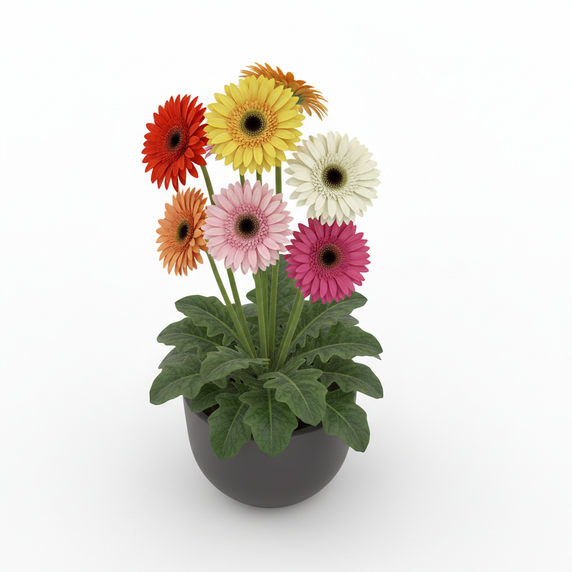
Leaves: The leaves are dark green, long, deeply lobed, and slightly fuzzy. They grow in a basal rosette, close to the soil.
Flowers: The plant is famous for its large, daisy-like composite flower heads (capitula) that sit atop long, leafless stems. The flowers consist of outer ray florets (in shades of red, orange, yellow, pink, and white) surrounding a central disk of tiny inner florets, which are often yellow or dark brown.
Stem: The flower stems, known as scapes, are leafless, thick, and rise directly from the crown of the plant, holding the blooms high above the foliage.
5. Size & Dimensions
Height: Typically 20 cm to 45 cm (8 to 18 inches).
Width: The foliage can spread to about 20 cm to 30 cm (8 to 12 inches).
Flower Size: Flower heads are generally 7 cm to 12 cm (3 to 5 inches) in diameter.
6. Light Requirements
Indoors, a Gerbera Daisy thrives in bright, indirect light. Placing it near an east-facing window where it can receive gentle morning sun is ideal. Avoid intense, direct afternoon sun which can scorch the leaves and flowers.
7. Watering Needs
Keep the soil consistently moist but never waterlogged. Water thoroughly when the top 2-3 cm (1 inch) of soil feels dry to the touch. It is crucial to water the soil directly and avoid getting water on the leaves or in the crown of the plant, as this can lead to crown rot and fungal diseases. Reduce watering during the dormant winter period.
8. Soil & Potting
Soil Type: Use a rich, well-draining potting mix. A commercial mix designed for flowering houseplants or one with added perlite or sand for improved drainage is suitable.
Potting: Ensure the pot has excellent drainage holes. When potting, make sure the crown of the plant (where stems emerge from the roots) is slightly above the soil line to prevent rot.
9. Temperature & Humidity
Temperature: Prefers moderate daytime temperatures between 18°C and 24°C (65°F to 75°F). It is not frost-tolerant and should be protected from temperatures below 7°C (45°F).
Humidity: Average household humidity is generally sufficient. Good air circulation is important to prevent fungal issues.
10. Fertilization
Feed every 2-4 weeks during the active growing and blooming season (spring and summer) with a balanced, water-soluble fertilizer. A fertilizer with a higher phosphorus content (the middle number in N-P-K) can help promote more vibrant blooms. Do not fertilize during the fall and winter.
11. Maintenance & Care Level
Care Level: Moderate. It requires consistent attention to watering, light, and deadheading to thrive and continue flowering.
Maintenance: Regularly remove spent flowers by cutting the stem back to the base. This practice, called deadheading, encourages the plant to produce more blooms. Also, remove any yellowing or dead leaves to maintain plant health and improve air circulation.
12. Growth & Propagation
Growth Rate: Moderate.
Propagation: Gerbera daisies can be propagated by seed, basal cuttings, or, most commonly for home gardeners, by dividing mature clumps in the spring. Carefully separate the crowns, ensuring each division has a healthy set of roots.
13. Common Problems
Pests: Susceptible to aphids, spider mites, thrips, and whiteflies, especially when grown indoors.
Diseases: Prone to crown rot if overwatered or planted too deeply. Powdery mildew and other fungal leaf spots can occur, particularly in conditions of high humidity and poor air circulation.
14. Benefits & Uses
Ornamental: A highly popular plant for adding vibrant, long-lasting color to indoor spaces, desktops, and outdoor containers or garden beds.
Air Purifying: It is renowned for its air-purifying qualities. According to NASA's Clean Air Study, Gerbera daisies are effective at removing formaldehyde, benzene, and trichloroethylene from the air.
Cut Flowers: The long-stemmed, cheerful blooms are a staple in the cut flower industry and are widely used in bouquets and floral arrangements.
15. Toxicity & Safety
Human: Gerbera jamesonii is considered non-toxic to humans.
Pets: According to the ASPCA, Gerbera daisies are non-toxic to dogs, cats, and horses, making them a safe choice for households with pets.
Gerbera jamesonii
Brighten any room instantly with the cheerful charm of the Gerbera Daisy! Famous for its large, vibrant, daisy-like flowers, this plant is a living bouquet that works hard to purify your air. It's the perfect, pet-safe gift to lift spirits, decorate a desk, or add a pop of long-lasting color to your living space. Easy to love and beautiful to behold, bring home a Gerbera and let the sunshine in.
1. Basic Identification
Common Name: Gerbera Daisy
Botanical Name: Gerbera jamesonii
Former Name: Not available
Plant Type: Flowering Perennial Houseplant
Plant Code / SKU: PLT-1746
Alternative Names:
Transvaal Daisy
Barberton Daisy
جربرا
2. Taxonomy & Classification
Order: Asterales
Family: Asteraceae
Genus: Gerbera
3. Origin & Distribution
Native to the Transvaal region of South-Eastern Africa, specifically South Africa. It is now widely cultivated and naturalized in many warm regions around the world.
4. Visual Characteristics
Leaves: The leaves are dark green, long, deeply lobed, and slightly fuzzy. They grow in a basal rosette, close to the soil.
Flowers: The plant is famous for its large, daisy-like composite flower heads (capitula) that sit atop long, leafless stems. The flowers consist of outer ray florets (in shades of red, orange, yellow, pink, and white) surrounding a central disk of tiny inner florets, which are often yellow or dark brown.
Stem: The flower stems, known as scapes, are leafless, thick, and rise directly from the crown of the plant, holding the blooms high above the foliage.
5. Size & Dimensions
Height: Typically 20 cm to 45 cm (8 to 18 inches).
Width: The foliage can spread to about 20 cm to 30 cm (8 to 12 inches).
Flower Size: Flower heads are generally 7 cm to 12 cm (3 to 5 inches) in diameter.
6. Light Requirements
Indoors, a Gerbera Daisy thrives in bright, indirect light. Placing it near an east-facing window where it can receive gentle morning sun is ideal. Avoid intense, direct afternoon sun which can scorch the leaves and flowers.
7. Watering Needs
Keep the soil consistently moist but never waterlogged. Water thoroughly when the top 2-3 cm (1 inch) of soil feels dry to the touch. It is crucial to water the soil directly and avoid getting water on the leaves or in the crown of the plant, as this can lead to crown rot and fungal diseases. Reduce watering during the dormant winter period.
8. Soil & Potting
Soil Type: Use a rich, well-draining potting mix. A commercial mix designed for flowering houseplants or one with added perlite or sand for improved drainage is suitable.
Potting: Ensure the pot has excellent drainage holes. When potting, make sure the crown of the plant (where stems emerge from the roots) is slightly above the soil line to prevent rot.
9. Temperature & Humidity
Temperature: Prefers moderate daytime temperatures between 18°C and 24°C (65°F to 75°F). It is not frost-tolerant and should be protected from temperatures below 7°C (45°F).
Humidity: Average household humidity is generally sufficient. Good air circulation is important to prevent fungal issues.
10. Fertilization
Feed every 2-4 weeks during the active growing and blooming season (spring and summer) with a balanced, water-soluble fertilizer. A fertilizer with a higher phosphorus content (the middle number in N-P-K) can help promote more vibrant blooms. Do not fertilize during the fall and winter.
11. Maintenance & Care Level
Care Level: Moderate. It requires consistent attention to watering, light, and deadheading to thrive and continue flowering.
Maintenance: Regularly remove spent flowers by cutting the stem back to the base. This practice, called deadheading, encourages the plant to produce more blooms. Also, remove any yellowing or dead leaves to maintain plant health and improve air circulation.
12. Growth & Propagation
Growth Rate: Moderate.
Propagation: Gerbera daisies can be propagated by seed, basal cuttings, or, most commonly for home gardeners, by dividing mature clumps in the spring. Carefully separate the crowns, ensuring each division has a healthy set of roots.
13. Common Problems
Pests: Susceptible to aphids, spider mites, thrips, and whiteflies, especially when grown indoors.
Diseases: Prone to crown rot if overwatered or planted too deeply. Powdery mildew and other fungal leaf spots can occur, particularly in conditions of high humidity and poor air circulation.
14. Benefits & Uses
Ornamental: A highly popular plant for adding vibrant, long-lasting color to indoor spaces, desktops, and outdoor containers or garden beds.
Air Purifying: It is renowned for its air-purifying qualities. According to NASA's Clean Air Study, Gerbera daisies are effective at removing formaldehyde, benzene, and trichloroethylene from the air.
Cut Flowers: The long-stemmed, cheerful blooms are a staple in the cut flower industry and are widely used in bouquets and floral arrangements.
15. Toxicity & Safety
Human: Gerbera jamesonii is considered non-toxic to humans.
Pets: According to the ASPCA, Gerbera daisies are non-toxic to dogs, cats, and horses, making them a safe choice for households with pets.