


Bromeliaceae
Guzmania lingulata
Add an instant tropical focal point to any room with Guzmania. Its sleek green rosette and upright bloom spike stay attractive for weeks, making it an ideal gift and a reliable statement plant for home or office. Simple care—bright indirect light, a refreshed central cup, and an airy mix—keeps it looking fresh and vibrant.
1. Basic Identification
Common Name: Guzmania (Scarlet Star)
Botanical Name: Guzmania lingulata
Arabic Name: كوزمانياء
Plant Variant: Standard
Plant Color: Natural
Plant Country: Netherlands
2. Taxonomy & Classification
Kingdom: Plantae
Clade: Tracheophytes
Order: Poales
Family: Bromeliaceae
Subfamily: Tillandsioideae
Genus: Guzmania
Species: G. lingulata
3. Origin & Distribution
Guzmania lingulata is native to the tropical rainforests of Central America, the Caribbean, and South America. It grows as an epiphyte on trees in humid, shaded environments.
4. Visual Characteristics
This plant features a star-shaped rosette of smooth, glossy green leaves. The center of the rosette produces a tall flower spike topped with vibrant, long-lasting bracts (modified leaves) usually in shades of red, orange, or yellow. The actual flowers are small and white, tucked within the bracts.
5. Size & Dimensions
Standard varieties typically reach 12 to 24 inches (30–60 cm) in height and width. Its compact rosette form makes it suitable for tabletops and desks.
6. Light Requirements
Thrives in bright, indirect light. It should be protected from harsh, direct afternoon sun, which can scorch the foliage, but needs sufficient light to maintain the vibrant color of its bracts.
7. Watering Needs
Water should be poured into the central "cup" or "tank" formed by the leaves. Keep this cup filled with fresh water and flush it out weekly to prevent stagnation. The soil should be kept slightly moist but never waterlogged.
8. Soil & Potting
Requires a very well-draining, airy potting medium. An orchid mix or a blend of peat moss, perlite, and pine bark is ideal to mimic its natural epiphytic growing conditions.
9. Temperature & Humidity
Prefers warm temperatures between 65°F and 80°F (18°C–27°C). As a tropical plant, it loves high humidity; misting the leaves or using a humidity tray is beneficial, especially in dry indoor environments.
10. Fertilization
Apply a balanced, water-soluble fertilizer diluted to half-strength once a month during the growing season. The fertilizer can be added to the soil or sprayed onto the leaves; avoid putting high concentrations in the central cup.
11. Maintenance & Care Level
Maintenance level is low. Once the central bloom eventually fades (after several months), the parent plant will slowly die back, which is a natural part of its life cycle.
12. Growth & Propagation
Before the parent plant dies, it typically produces "pups" or offsets at the base. These can be removed and repotted once they reach about one-third the size of the parent plant to grow into new individuals.
13. Common Problems
The most common issues are root rot caused by overwatering the soil and "heart rot" caused by dirty water sitting in the cup for too long. Pests like mealybugs or scale can occasionally occur but are easily managed.
14. Benefits & Uses
Highly valued for its long-lasting, colorful display. It is an excellent choice for home decor, office spaces, and as a centerpiece. While not its primary feature, it does contribute to indoor air quality by absorbing carbon dioxide.
15. Toxicity & Safety
Guzmania lingulata is considered non-toxic to both humans and pets (cats and dogs), making it a safe choice for households with curious animals.

Guzmania lingulata
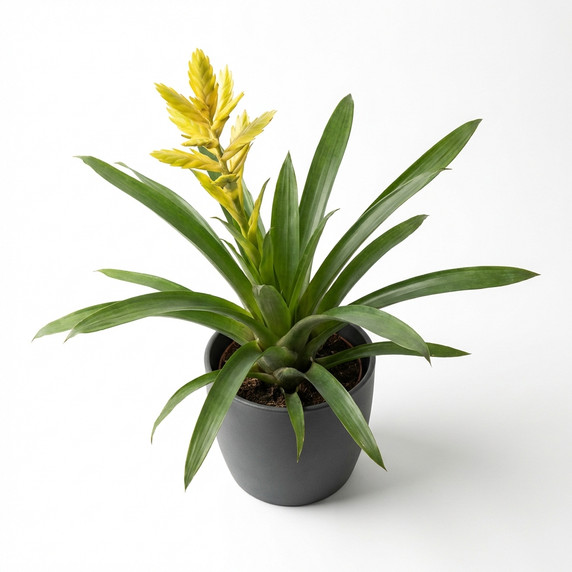
Add an instant tropical focal point to any room with Guzmania. Its sleek green rosette and upright bloom spike stay attractive for weeks, making it an ideal gift and a reliable statement plant for home or office. Simple care—bright indirect light, a refreshed central cup, and an airy mix—keeps it looking fresh and vibrant.
1. Basic Identification
Common Name: Guzmania (Scarlet Star)
Botanical Name: Guzmania lingulata
Arabic Name: كوزمانياء
Plant Variant: Standard
Plant Color: Natural
Plant Country: Netherlands
2. Taxonomy & Classification
Kingdom: Plantae
Clade: Tracheophytes
Order: Poales
Family: Bromeliaceae
Subfamily: Tillandsioideae
Genus: Guzmania
Species: G. lingulata
3. Origin & Distribution
Guzmania lingulata is native to the tropical rainforests of Central America, the Caribbean, and South America. It grows as an epiphyte on trees in humid, shaded environments.
4. Visual Characteristics
This plant features a star-shaped rosette of smooth, glossy green leaves. The center of the rosette produces a tall flower spike topped with vibrant, long-lasting bracts (modified leaves) usually in shades of red, orange, or yellow. The actual flowers are small and white, tucked within the bracts.
5. Size & Dimensions
Standard varieties typically reach 12 to 24 inches (30–60 cm) in height and width. Its compact rosette form makes it suitable for tabletops and desks.
6. Light Requirements
Thrives in bright, indirect light. It should be protected from harsh, direct afternoon sun, which can scorch the foliage, but needs sufficient light to maintain the vibrant color of its bracts.
7. Watering Needs
Water should be poured into the central "cup" or "tank" formed by the leaves. Keep this cup filled with fresh water and flush it out weekly to prevent stagnation. The soil should be kept slightly moist but never waterlogged.
8. Soil & Potting
Requires a very well-draining, airy potting medium. An orchid mix or a blend of peat moss, perlite, and pine bark is ideal to mimic its natural epiphytic growing conditions.
9. Temperature & Humidity
Prefers warm temperatures between 65°F and 80°F (18°C–27°C). As a tropical plant, it loves high humidity; misting the leaves or using a humidity tray is beneficial, especially in dry indoor environments.
10. Fertilization
Apply a balanced, water-soluble fertilizer diluted to half-strength once a month during the growing season. The fertilizer can be added to the soil or sprayed onto the leaves; avoid putting high concentrations in the central cup.
11. Maintenance & Care Level
Maintenance level is low. Once the central bloom eventually fades (after several months), the parent plant will slowly die back, which is a natural part of its life cycle.
12. Growth & Propagation
Before the parent plant dies, it typically produces "pups" or offsets at the base. These can be removed and repotted once they reach about one-third the size of the parent plant to grow into new individuals.
13. Common Problems
The most common issues are root rot caused by overwatering the soil and "heart rot" caused by dirty water sitting in the cup for too long. Pests like mealybugs or scale can occasionally occur but are easily managed.
14. Benefits & Uses
Highly valued for its long-lasting, colorful display. It is an excellent choice for home decor, office spaces, and as a centerpiece. While not its primary feature, it does contribute to indoor air quality by absorbing carbon dioxide.
15. Toxicity & Safety
Guzmania lingulata is considered non-toxic to both humans and pets (cats and dogs), making it a safe choice for households with curious animals.