


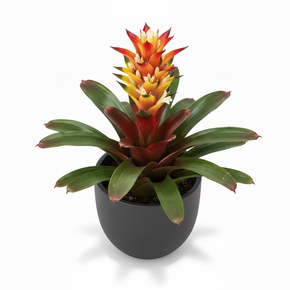




Ignite your interior with the fiery elegance of the Guzmania 'Ostara'! With its brilliant red star-shaped bloom and lush green leaves, this plant isn't just a decoration—it's a statement. Perfectly sized for any desk or tabletop, it's incredibly easy to care for and completely safe for pets. Gift a splash of the tropics or transform your own space. The Guzmania doesn't just look good; it works hard, purifying your air day and night. Shop now for a touch of effortless, living art.
Common Name: Guzmania, Scarlet Star, Orange Star
Botanical Name: Guzmania lingulata
Arabic Name: جزمانية
Variant: Ostara
Plant Color: Glossy green foliage with vibrant red floral bracts
Country of Origin: Netherlands (Cultivar origin); native to Central and South America
Kingdom: Plantae
Order: Poales
Family: Bromeliaceae
Genus: Guzmania
Species: G. lingulata
Guzmania lingulata is native to the tropical rainforests of Central America, the West Indies, and South America. They are epiphytic plants, meaning they naturally grow on trees in their native habitat. The 'Ostara' cultivar is widely produced in the Netherlands for the global indoor plant market.
The 'Ostara' features a rosette of smooth, dark green, strap-like leaves. From the center of the rosette emerges a tall, stunning floral spike consisting of star-shaped, brilliant red bracts that protect the small, short-lived white flowers within. The visual appeal lasts for several months due to the longevity of the colorful bracts.
Height: 30–45 cm (12–18 inches)
Width: 30–40 cm (12–16 inches)
This medium-sized plant is ideal for desks, side tables, and decorative shelving.
Prefers bright, indirect sunlight. Avoid direct afternoon sun, which can scorch the leaves. It can tolerate lower light levels, but the color of the bracts may be less intense and the plant may not bloom as long.
Guzmanias have a central "cup" or "tank" formed by their leaves. Keep this cup filled with clean water (preferably filtered or rainwater) at all times. Flush the cup every few weeks to prevent stagnation. Keep the potting soil lightly moist but never soggy; allow the top inch of soil to dry before watering the roots.
Requires a very well-draining potting medium. An orchid mix or a blend of peat moss, perlite, and pine bark is ideal to mimic its natural epiphytic growing conditions and prevent root rot.
Temperature: Prefers warm environments between 18°C and 27°C (65°F–80°F).
Humidity: High humidity is essential. Mist the leaves regularly or place the plant near a humidifier or on a pebble tray to maintain moisture levels.
Use a balanced, water-soluble fertilizer diluted to half or quarter strength. Apply to the soil or mist onto the leaves during the growing season (spring and summer) once a month. Avoid putting fertilizer directly into the central cup as it can cause salt buildup and burn the plant.
Care Level: Easy. Maintenance involves wiping the leaves occasionally to remove dust and ensuring the central cup remains filled with fresh water. Once the flower bract eventually fades and turns brown, it can be pruned away at the base.
Guzmanias are monocarpic, meaning the main plant blooms once and then slowly dies. However, it will produce "pups" (offsets) at the base. Once these pups are about one-third the size of the mother plant, they can be separated and repotted to grow into new individual plants.
Root Rot: Caused by overwatering the soil or poor drainage.
Brown Leaf Tips: Often a sign of low humidity or using tap water with high mineral/chlorine content.
Pests: Occasionally susceptible to mealybugs or scale, which can be treated with insecticidal soap or neem oil.
Air Purifying: Excellent at removing toxins from the air, including formaldehyde and benzene.
Aesthetic: Provides a long-lasting, tropical pop of color for home and office interiors.
Psychological: Improves mood and reduces stress through its vibrant visual presence.
Guzmania lingulata is considered non-toxic to humans, cats, and dogs, making it an excellent choice for pet-friendly households.
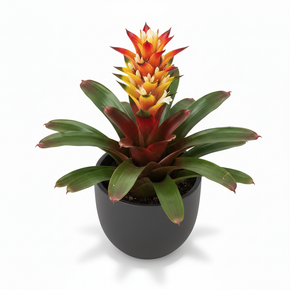
Ignite your interior with the fiery elegance of the Guzmania 'Ostara'! With its brilliant red star-shaped bloom and lush green leaves, this plant isn't just a decoration—it's a statement. Perfectly sized for any desk or tabletop, it's incredibly easy to care for and completely safe for pets. Gift a splash of the tropics or transform your own space. The Guzmania doesn't just look good; it works hard, purifying your air day and night. Shop now for a touch of effortless, living art.
Common Name: Guzmania, Scarlet Star, Orange Star
Botanical Name: Guzmania lingulata
Arabic Name: جزمانية
Variant: Ostara
Plant Color: Glossy green foliage with vibrant red floral bracts
Country of Origin: Netherlands (Cultivar origin); native to Central and South America
Kingdom: Plantae
Order: Poales
Family: Bromeliaceae
Genus: Guzmania
Species: G. lingulata
Guzmania lingulata is native to the tropical rainforests of Central America, the West Indies, and South America. They are epiphytic plants, meaning they naturally grow on trees in their native habitat. The 'Ostara' cultivar is widely produced in the Netherlands for the global indoor plant market.
The 'Ostara' features a rosette of smooth, dark green, strap-like leaves. From the center of the rosette emerges a tall, stunning floral spike consisting of star-shaped, brilliant red bracts that protect the small, short-lived white flowers within. The visual appeal lasts for several months due to the longevity of the colorful bracts.
Height: 30–45 cm (12–18 inches)
Width: 30–40 cm (12–16 inches)
This medium-sized plant is ideal for desks, side tables, and decorative shelving.
Prefers bright, indirect sunlight. Avoid direct afternoon sun, which can scorch the leaves. It can tolerate lower light levels, but the color of the bracts may be less intense and the plant may not bloom as long.
Guzmanias have a central "cup" or "tank" formed by their leaves. Keep this cup filled with clean water (preferably filtered or rainwater) at all times. Flush the cup every few weeks to prevent stagnation. Keep the potting soil lightly moist but never soggy; allow the top inch of soil to dry before watering the roots.
Requires a very well-draining potting medium. An orchid mix or a blend of peat moss, perlite, and pine bark is ideal to mimic its natural epiphytic growing conditions and prevent root rot.
Temperature: Prefers warm environments between 18°C and 27°C (65°F–80°F).
Humidity: High humidity is essential. Mist the leaves regularly or place the plant near a humidifier or on a pebble tray to maintain moisture levels.
Use a balanced, water-soluble fertilizer diluted to half or quarter strength. Apply to the soil or mist onto the leaves during the growing season (spring and summer) once a month. Avoid putting fertilizer directly into the central cup as it can cause salt buildup and burn the plant.
Care Level: Easy. Maintenance involves wiping the leaves occasionally to remove dust and ensuring the central cup remains filled with fresh water. Once the flower bract eventually fades and turns brown, it can be pruned away at the base.
Guzmanias are monocarpic, meaning the main plant blooms once and then slowly dies. However, it will produce "pups" (offsets) at the base. Once these pups are about one-third the size of the mother plant, they can be separated and repotted to grow into new individual plants.
Root Rot: Caused by overwatering the soil or poor drainage.
Brown Leaf Tips: Often a sign of low humidity or using tap water with high mineral/chlorine content.
Pests: Occasionally susceptible to mealybugs or scale, which can be treated with insecticidal soap or neem oil.
Air Purifying: Excellent at removing toxins from the air, including formaldehyde and benzene.
Aesthetic: Provides a long-lasting, tropical pop of color for home and office interiors.
Psychological: Improves mood and reduces stress through its vibrant visual presence.
Guzmania lingulata is considered non-toxic to humans, cats, and dogs, making it an excellent choice for pet-friendly households.




Take 20% off your first order
Enter the code below at checkout to get 20% off your first order