


Heartleaf Philodendron
Bring effortless jungle vibes to your space with the Heartleaf Philodendron. Its cascading vines and heart-shaped leaves instantly soften corners, brighten workspaces, and look stunning in hanging planters or trained up a pole. Tough, adaptable, and beginner-friendly—this is the go-to indoor plant for stylish greenery with minimal fuss.
1. Basic Identification
Common Name: Heartleaf Philodendron, Sweetheart Plant
Botanical Name: Philodendron hederaceum
Arabic Name: فيلودندرون قلب
Family: Araceae
Color: Multicolor
Stems: 5
2. Taxonomy & Classification
Kingdom: Plantae
Clade: Tracheophytes
Order: Alismatales
Family: Araceae
Genus: Philodendron
Species: P. hederaceum
3. Origin & Distribution
The Heartleaf Philodendron is native to the tropical regions of Central America and the Caribbean, where it typically grows as an epiphyte, climbing trees in humid rainforest environments.
4. Visual Characteristics
Known for its glossy, heart-shaped leaves that emerge in a deep green hue. The vines are flexible and can trail downwards or climb upwards. New foliage may occasionally have a slight bronze or reddish tint before maturing to dark green.
5. Size & Dimensions
Indoors, the vines can reach lengths of 10 to 20 feet if left unpruned. Individual leaves typically measure between 2 to 4 inches in width, though they can grow much larger in their natural tropical habitat.
6. Light Requirements
Thrives in bright, indirect light but is highly adaptable. It is one of the best plants for low-light conditions, though growth may be slower. Avoid direct sunlight, which can burn the delicate foliage.
7. Watering Needs
Allow the top 50% to 75% of the soil to dry out between waterings. The plant is relatively drought-tolerant; if the leaves begin to wilt or droop, it is usually a sign that it needs water.
8. Soil & Potting
Requires a well-draining potting medium. A mixture of standard potting soil, perlite, and a bit of orchid bark or peat moss works best to ensure aeration and prevent root rot.
9. Temperature & Humidity
Prefers temperatures between 65°F and 85°F (18°C–29°C). While it enjoys high humidity consistent with its tropical origins, it adapts very well to standard household humidity levels.
10. Fertilization
Feed with a balanced, water-soluble liquid fertilizer every 4-6 weeks during the active growing season (spring and summer). Reduce feeding in the winter months.
11. Maintenance & Care Level
Easy/Low Maintenance. Regular care includes wiping the leaves with a damp cloth to remove dust and occasional pruning to maintain the desired shape or to encourage bushier growth.
12. Growth & Propagation
A fast-growing species. It is easily propagated via stem cuttings. Simply place a cutting with at least one node in water or moist soil, and it will develop roots within a few weeks.
13. Common Problems
Watch for yellow leaves, which often indicate overwatering. Brown leaf tips may suggest low humidity. While generally hardy, it can occasionally be affected by common pests like mealybugs or spider mites.
14. Benefits & Uses
Highly effective as an air-purifying plant; NASA studies have shown it helps remove toxins like formaldehyde from the air. Its trailing habit makes it perfect for bookshelves, hanging baskets, or office desks.
15. Toxicity & Safety
Toxic to both humans and pets (cats and dogs) if ingested. The plant contains calcium oxalate crystals, which can cause swelling, irritation, and respiratory distress if chewed or swallowed.
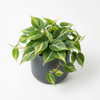
Heartleaf Philodendron

Bring effortless jungle vibes to your space with the Heartleaf Philodendron. Its cascading vines and heart-shaped leaves instantly soften corners, brighten workspaces, and look stunning in hanging planters or trained up a pole. Tough, adaptable, and beginner-friendly—this is the go-to indoor plant for stylish greenery with minimal fuss.
1. Basic Identification
Common Name: Heartleaf Philodendron, Sweetheart Plant
Botanical Name: Philodendron hederaceum
Arabic Name: فيلودندرون قلب
Family: Araceae
Color: Multicolor
Stems: 5
2. Taxonomy & Classification
Kingdom: Plantae
Clade: Tracheophytes
Order: Alismatales
Family: Araceae
Genus: Philodendron
Species: P. hederaceum
3. Origin & Distribution
The Heartleaf Philodendron is native to the tropical regions of Central America and the Caribbean, where it typically grows as an epiphyte, climbing trees in humid rainforest environments.
4. Visual Characteristics
Known for its glossy, heart-shaped leaves that emerge in a deep green hue. The vines are flexible and can trail downwards or climb upwards. New foliage may occasionally have a slight bronze or reddish tint before maturing to dark green.
5. Size & Dimensions
Indoors, the vines can reach lengths of 10 to 20 feet if left unpruned. Individual leaves typically measure between 2 to 4 inches in width, though they can grow much larger in their natural tropical habitat.
6. Light Requirements
Thrives in bright, indirect light but is highly adaptable. It is one of the best plants for low-light conditions, though growth may be slower. Avoid direct sunlight, which can burn the delicate foliage.
7. Watering Needs
Allow the top 50% to 75% of the soil to dry out between waterings. The plant is relatively drought-tolerant; if the leaves begin to wilt or droop, it is usually a sign that it needs water.
8. Soil & Potting
Requires a well-draining potting medium. A mixture of standard potting soil, perlite, and a bit of orchid bark or peat moss works best to ensure aeration and prevent root rot.
9. Temperature & Humidity
Prefers temperatures between 65°F and 85°F (18°C–29°C). While it enjoys high humidity consistent with its tropical origins, it adapts very well to standard household humidity levels.
10. Fertilization
Feed with a balanced, water-soluble liquid fertilizer every 4-6 weeks during the active growing season (spring and summer). Reduce feeding in the winter months.
11. Maintenance & Care Level
Easy/Low Maintenance. Regular care includes wiping the leaves with a damp cloth to remove dust and occasional pruning to maintain the desired shape or to encourage bushier growth.
12. Growth & Propagation
A fast-growing species. It is easily propagated via stem cuttings. Simply place a cutting with at least one node in water or moist soil, and it will develop roots within a few weeks.
13. Common Problems
Watch for yellow leaves, which often indicate overwatering. Brown leaf tips may suggest low humidity. While generally hardy, it can occasionally be affected by common pests like mealybugs or spider mites.
14. Benefits & Uses
Highly effective as an air-purifying plant; NASA studies have shown it helps remove toxins like formaldehyde from the air. Its trailing habit makes it perfect for bookshelves, hanging baskets, or office desks.
15. Toxicity & Safety
Toxic to both humans and pets (cats and dogs) if ingested. The plant contains calcium oxalate crystals, which can cause swelling, irritation, and respiratory distress if chewed or swallowed.