


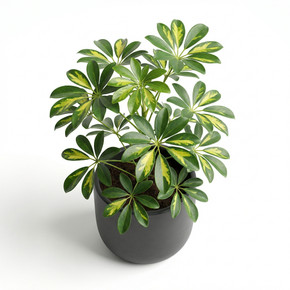
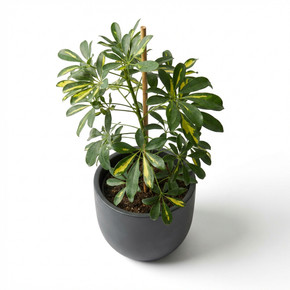


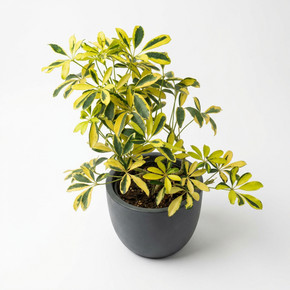
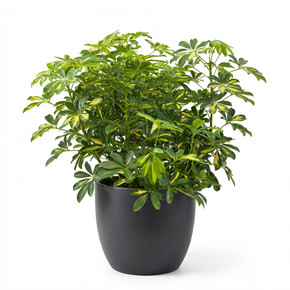
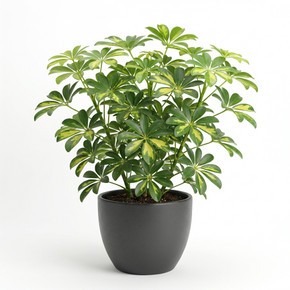
Bring instant greenery to your space with the Variegated Aralia (Dwarf Umbrella Tree). Its glossy, patterned leaves look premium in reception areas and living rooms, yet it’s forgiving and easy to maintain. With bright indirect light and sensible watering, it stays full, vibrant, and photo-ready all year—an ideal choice for modern interiors and thoughtful gifting.
Common Name: Variegated Aralia (Dwarf Umbrella Tree)
Botanical Name: Heptapleurum arboricola ‘Variegata’
Former Name: Schefflera arboricola
Plant Type: Foliage houseplant
Plant Code / SKU: PLT-0344
Alternative Names:
Dwarf Umbrella Tree
Schefflera arboricola
Arabic: اراليا
Order: Apiales
Family: Araliaceae
Genus: Heptapleurum (formerly Schefflera)
Species: H. arboricola
Native to the understory forests of Taiwan and Hainan Island. Widely cultivated as an ornamental indoor and outdoor plant in tropical and subtropical regions worldwide.
Glossy, palmately compound leaves with 7–16 narrow leaflets. Variegated cultivars display irregular creamy-white margins with green centers. Leaflets measure 4–12 cm in length, borne on slender, often reddish petioles. Growth habit is upright and bushy, with an arching form when mature.
Indoors typically reaches 0.6–1.2 m in height and width. In optimal outdoor conditions can grow up to 2–3 m. Leaflet length 4–12 cm; petiole length 10–20 cm. Pot size recommendation: 20–30 cm diameter for mature specimens.
Thrives in bright, indirect light or filtered sun. Tolerates moderate shade, though variegation may fade in low light. Avoid direct midday sun to prevent leaf scorch.
Keep soil evenly moist but not waterlogged. Allow the top 2–3 cm of soil to dry between waterings. Reduce frequency in cooler months; avoid letting plant sit in standing water.
Use a well-draining, peat-based potting mix enriched with perlite or bark chips for aeration. Repot every 2–3 years or when roots become pot-bound, choosing a container only one size larger.
Optimal temperature range 18–24 °C (65–75 °F); minimum 15 °C (59 °F). Prefers high humidity (50–70%). Increase ambient humidity with regular misting, pebble trays, or humidifiers.
Apply a balanced liquid fertilizer (e.g., 20-20-20 NPK) monthly during spring and summer at half the recommended strength. Suspend feeding in autumn and winter when growth slows.
Care level: Low to moderate. Prune to maintain desired shape and encourage branching. Remove yellowing or damaged leaves. Rotate the plant periodically for even light exposure.
Moderate grower. Propagate by semi-hardwood stem cuttings: trim 10–15 cm lengths, remove lower leaves, and root in water or a light propagation mix under high humidity. Air layering is also effective for larger specimens.
Overwatering can cause root rot and yellowing leaves. Sudden shifts in light or temperature may trigger leaf drop. Pests include spider mites, scale insects, and mealybugs. Low light can lead to loss of variegation.
Popular as an ornamental indoor plant in homes, offices, and reception areas. Helps improve indoor air quality by removing pollutants. Adds a tropical aesthetic and elevates humidity levels in dry interiors.
Contains insoluble calcium oxalates; ingestion may cause oral irritation, drooling, and gastrointestinal upset in pets and humans. Handle with care and keep out of reach of children and animals.
Bring instant greenery to your space with the Variegated Aralia (Dwarf Umbrella Tree). Its glossy, patterned leaves look premium in reception areas and living rooms, yet it’s forgiving and easy to maintain. With bright indirect light and sensible watering, it stays full, vibrant, and photo-ready all year—an ideal choice for modern interiors and thoughtful gifting.
Common Name: Variegated Aralia (Dwarf Umbrella Tree)
Botanical Name: Heptapleurum arboricola ‘Variegata’
Former Name: Schefflera arboricola
Plant Type: Foliage houseplant
Plant Code / SKU: PLT-0344
Alternative Names:
Dwarf Umbrella Tree
Schefflera arboricola
Arabic: اراليا
Order: Apiales
Family: Araliaceae
Genus: Heptapleurum (formerly Schefflera)
Species: H. arboricola
Native to the understory forests of Taiwan and Hainan Island. Widely cultivated as an ornamental indoor and outdoor plant in tropical and subtropical regions worldwide.
Glossy, palmately compound leaves with 7–16 narrow leaflets. Variegated cultivars display irregular creamy-white margins with green centers. Leaflets measure 4–12 cm in length, borne on slender, often reddish petioles. Growth habit is upright and bushy, with an arching form when mature.
Indoors typically reaches 0.6–1.2 m in height and width. In optimal outdoor conditions can grow up to 2–3 m. Leaflet length 4–12 cm; petiole length 10–20 cm. Pot size recommendation: 20–30 cm diameter for mature specimens.
Thrives in bright, indirect light or filtered sun. Tolerates moderate shade, though variegation may fade in low light. Avoid direct midday sun to prevent leaf scorch.
Keep soil evenly moist but not waterlogged. Allow the top 2–3 cm of soil to dry between waterings. Reduce frequency in cooler months; avoid letting plant sit in standing water.
Use a well-draining, peat-based potting mix enriched with perlite or bark chips for aeration. Repot every 2–3 years or when roots become pot-bound, choosing a container only one size larger.
Optimal temperature range 18–24 °C (65–75 °F); minimum 15 °C (59 °F). Prefers high humidity (50–70%). Increase ambient humidity with regular misting, pebble trays, or humidifiers.
Apply a balanced liquid fertilizer (e.g., 20-20-20 NPK) monthly during spring and summer at half the recommended strength. Suspend feeding in autumn and winter when growth slows.
Care level: Low to moderate. Prune to maintain desired shape and encourage branching. Remove yellowing or damaged leaves. Rotate the plant periodically for even light exposure.
Moderate grower. Propagate by semi-hardwood stem cuttings: trim 10–15 cm lengths, remove lower leaves, and root in water or a light propagation mix under high humidity. Air layering is also effective for larger specimens.
Overwatering can cause root rot and yellowing leaves. Sudden shifts in light or temperature may trigger leaf drop. Pests include spider mites, scale insects, and mealybugs. Low light can lead to loss of variegation.
Popular as an ornamental indoor plant in homes, offices, and reception areas. Helps improve indoor air quality by removing pollutants. Adds a tropical aesthetic and elevates humidity levels in dry interiors.
Contains insoluble calcium oxalates; ingestion may cause oral irritation, drooling, and gastrointestinal upset in pets and humans. Handle with care and keep out of reach of children and animals.





Take 20% off your first order
Enter the code below at checkout to get 20% off your first order