


Hyacinthus orientalis
Fill your space with true spring fragrance. Our Hyacinthus orientalis arrives as a healthy, bloom-ready bulb plant with dense flower spikes and lush green leaves—perfect for desks, entrances, and gift occasions. Place it in bright light, keep it lightly moist, and enjoy weeks of color and perfume. Ideal for seasonal décor, event styling, and premium bouquet alternatives—hyacinths deliver maximum impact in a compact pot.
1. Basic Identification
Common Name: Hyacinth
Botanical Name: Hyacinthus orientalis
Former Name: Not available
Plant Type: Bloom-ready bulb plant
Plant Code / SKU: PLT-0614
Alternative Names:
Arabic: الزنبق
2. Taxonomy & Classification
Order: Asparagales
Family: Asparagaceae
Genus: Hyacinthus
3. Origin & Distribution
Native to the eastern Mediterranean region (Turkey, Syria, Lebanon). Widely cultivated in Europe since the 16th century and naturalized in gardens worldwide. Commonly grown in the Netherlands for cut flowers and bulb production.
4. Visual Characteristics
Each plant produces a single erect stem bearing a dense spike of 20–40 star-shaped, strongly fragrant florets. Flower colors include blue, pink, purple, white, and multicolor hybrids. Leaves are 4–6 strap-shaped, glossy green, emerging from the base and reaching up to 20 cm long.
5. Size & Dimensions
Height: 15–25 cm (including flower spike)
Flower Spike Length: 5–10 cm
Leaf Length: up to 20 cm
Recommended Pot Size: 10–12 cm diameter
Stems/Bulbs per Pot: 1 (standard variety)
6. Light Requirements
Requires bright light to full sun. Indoors, place in a bright location with indirect sunlight. Outdoors, protect from intense midday sun in warmer climates.
7. Watering Needs
Keep soil evenly moist but not waterlogged. Water when the top 2–3 cm of soil feels dry. Reduce watering slightly once flowering ends and foliage begins to yellow.
8. Soil & Potting
Use a well-draining, nutrient-rich potting mix with good organic content. A bulb or general-purpose mix amended with perlite or coarse sand is ideal. Ensure pots have drainage holes to prevent standing water.
9. Temperature & Humidity
Optimal daytime temperatures: 13–18 °C; cooler nights around 10–13 °C enhance flowering. Requires pre-forcing chill period of 8–12 °C for 10–14 weeks. Prefers moderate humidity; avoid excessively humid conditions to reduce fungal risk.
10. Fertilization
Apply a balanced, water-soluble fertilizer (e.g., 10-10-10 NPK) once every 2–4 weeks during active growth and flowering. A light feeding at planting and after flowering supports bulb development.
11. Maintenance & Care Level
Care level: Low to medium. Remove spent flower spikes to direct energy back to the bulb. Allow foliage to die back naturally before lifting or discarding bulbs. Minimal ongoing maintenance required.
12. Growth & Propagation
Propagated primarily by bulb division. After foliage senescence, lift bulbs and separate offsets (bulblets). Replant or store bulbs in a cool, dry place. Seed propagation possible but not common due to hybrid variability.
13. Common Problems
Overwatering can lead to bulb and root rot (Pythium, Fusarium). Watch for Botrytis blight (gray mold) in high humidity. Pests: aphids, thrips, bulb mites. Remove diseased tissue and maintain good air circulation.
14. Benefits & Uses
Ornamental indoor and outdoor spring displays. Highly prized for cut flowers and event styling due to strong fragrance and vivid colors. Ideal for container forcing, mass plantings, and premium floral arrangements.
15. Toxicity & Safety
All parts toxic if ingested; compounds (alkaloids, resins) can cause nausea, vomiting, diarrhea. Handling bulbs may cause skin irritation; wear gloves. Keep away from pets and children.

Hyacinthus orientalis
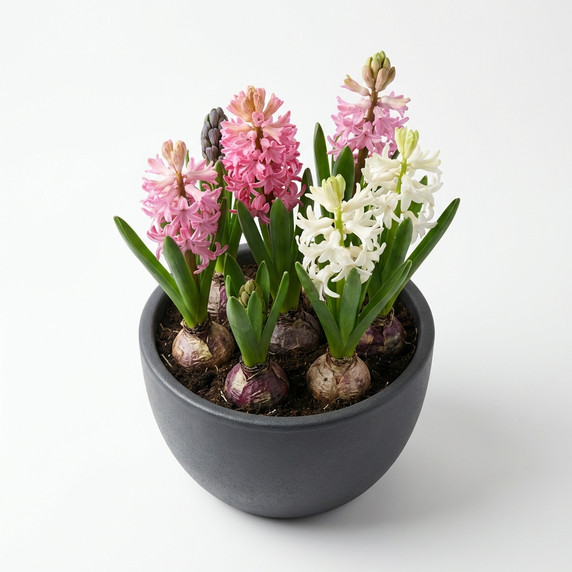
Fill your space with true spring fragrance. Our Hyacinthus orientalis arrives as a healthy, bloom-ready bulb plant with dense flower spikes and lush green leaves—perfect for desks, entrances, and gift occasions. Place it in bright light, keep it lightly moist, and enjoy weeks of color and perfume. Ideal for seasonal décor, event styling, and premium bouquet alternatives—hyacinths deliver maximum impact in a compact pot.
1. Basic Identification
Common Name: Hyacinth
Botanical Name: Hyacinthus orientalis
Former Name: Not available
Plant Type: Bloom-ready bulb plant
Plant Code / SKU: PLT-0614
Alternative Names:
Arabic: الزنبق
2. Taxonomy & Classification
Order: Asparagales
Family: Asparagaceae
Genus: Hyacinthus
3. Origin & Distribution
Native to the eastern Mediterranean region (Turkey, Syria, Lebanon). Widely cultivated in Europe since the 16th century and naturalized in gardens worldwide. Commonly grown in the Netherlands for cut flowers and bulb production.
4. Visual Characteristics
Each plant produces a single erect stem bearing a dense spike of 20–40 star-shaped, strongly fragrant florets. Flower colors include blue, pink, purple, white, and multicolor hybrids. Leaves are 4–6 strap-shaped, glossy green, emerging from the base and reaching up to 20 cm long.
5. Size & Dimensions
Height: 15–25 cm (including flower spike)
Flower Spike Length: 5–10 cm
Leaf Length: up to 20 cm
Recommended Pot Size: 10–12 cm diameter
Stems/Bulbs per Pot: 1 (standard variety)
6. Light Requirements
Requires bright light to full sun. Indoors, place in a bright location with indirect sunlight. Outdoors, protect from intense midday sun in warmer climates.
7. Watering Needs
Keep soil evenly moist but not waterlogged. Water when the top 2–3 cm of soil feels dry. Reduce watering slightly once flowering ends and foliage begins to yellow.
8. Soil & Potting
Use a well-draining, nutrient-rich potting mix with good organic content. A bulb or general-purpose mix amended with perlite or coarse sand is ideal. Ensure pots have drainage holes to prevent standing water.
9. Temperature & Humidity
Optimal daytime temperatures: 13–18 °C; cooler nights around 10–13 °C enhance flowering. Requires pre-forcing chill period of 8–12 °C for 10–14 weeks. Prefers moderate humidity; avoid excessively humid conditions to reduce fungal risk.
10. Fertilization
Apply a balanced, water-soluble fertilizer (e.g., 10-10-10 NPK) once every 2–4 weeks during active growth and flowering. A light feeding at planting and after flowering supports bulb development.
11. Maintenance & Care Level
Care level: Low to medium. Remove spent flower spikes to direct energy back to the bulb. Allow foliage to die back naturally before lifting or discarding bulbs. Minimal ongoing maintenance required.
12. Growth & Propagation
Propagated primarily by bulb division. After foliage senescence, lift bulbs and separate offsets (bulblets). Replant or store bulbs in a cool, dry place. Seed propagation possible but not common due to hybrid variability.
13. Common Problems
Overwatering can lead to bulb and root rot (Pythium, Fusarium). Watch for Botrytis blight (gray mold) in high humidity. Pests: aphids, thrips, bulb mites. Remove diseased tissue and maintain good air circulation.
14. Benefits & Uses
Ornamental indoor and outdoor spring displays. Highly prized for cut flowers and event styling due to strong fragrance and vivid colors. Ideal for container forcing, mass plantings, and premium floral arrangements.
15. Toxicity & Safety
All parts toxic if ingested; compounds (alkaloids, resins) can cause nausea, vomiting, diarrhea. Handling bulbs may cause skin irritation; wear gloves. Keep away from pets and children.