


Arecaceae
Hyophorbe lagenicaulis
Make a bold tropical statement with the Bottle Palm. Its sculptural, bottle-shaped trunk and sweeping fronds instantly elevate living rooms, patios, and business receptions. Slow-growing, long-lived, and surprisingly easy with bright light and good drainage—this is the premium palm that looks like a resort centerpiece all year round.
1. Basic Identification
Common Name: نخيل الزجاجة (Bottle Palm)
Botanical Name: Hyophorbe lagenicaulis
Scientific Family: Arecaceae
Air-Purifying: No
Care Ease: Yes
Hardiness: No
Best Sellers: Yes
Desk Plants: No
Flowering Indoor: No
Hanging Plants: No
Low Maintenance: Yes
Medium Plants: Yes
New Arrivals: No
Pet-Safe: No
Human-Safe: Yes
Rare / Collector: Yes
2. Taxonomy & Classification
The Bottle Palm belongs to the Kingdom Plantae and the family Arecaceae (the palm family). It is part of the genus Hyophorbe, which consists of five species of palms native to the Mascarene Islands in the Indian Ocean. Its specific epithet, lagenicaulis, comes from the Latin 'lagena' (bottle) and 'caulis' (stem/trunk), referring to its distinctive shape.
3. Origin & Distribution
This palm is endemic to Round Island, Mauritius. While it is critically endangered in its original wild habitat, it has become one of the most popular ornamental palms worldwide, widely cultivated in tropical and subtropical regions such as Thailand, Florida, and the Caribbean.
4. Visual Characteristics
The Bottle Palm is famous for its unique trunk, which is noticeably swollen at the base and tapers toward the top, resembling an antique bottle. It features a small number (usually 4 to 8) of upward-arching, pinnate (feather-like) fronds that can grow up to 10 feet long. The crownshaft is smooth and green, while new emerging leaves may have a reddish tint.
5. Size & Dimensions
It is a slow-growing palm that typically reaches heights of 10 to 12 feet (3 to 3.5 meters) when planted in the ground. When grown in containers, it remains much smaller, usually staying between 5 and 7 feet tall. The trunk can eventually reach a diameter of about 2 feet at its widest point.
6. Light Requirements
The Bottle Palm thrives in bright light. It prefers full sun to high-intensity indirect light. While it can tolerate some partial shade, its growth will slow significantly and the trunk may not develop its characteristic "bottle" shape as robustly.
7. Watering Needs
It requires moderate watering. The soil should be kept consistently moist but never soggy. It is important to allow the top inch of soil to dry out before watering again. Established plants have moderate drought tolerance, but container-bound palms require more frequent attention.
8. Soil & Potting
A well-draining soil mix is essential to prevent root rot. A combination of potting soil, coarse sand, and peat moss or a specialized palm/cactus mix works best. Ensure the container has ample drainage holes to allow excess water to escape.
9. Temperature & Humidity
As a tropical plant, it prefers temperatures between 65°F and 85°F (18°C - 29°C). It is very sensitive to cold and should be protected from temperatures below 32°F (0°C). It enjoys moderate to high humidity levels, making it suitable for humid climates or misted indoor environments.
10. Fertilization
Feed with a high-quality, slow-release palm fertilizer during the growing season (spring and summer). Look for a formula that includes micronutrients like potassium, manganese, and magnesium to prevent leaf yellowing and maintain trunk health.
11. Maintenance & Care Level
The care level is considered easy to moderate. Maintenance is minimal; only prune fronds that are completely brown and dead. Do not remove leaves that are still green or partially yellow, as the palm is still drawing nutrients from them.
12. Growth & Propagation
The growth rate is very slow, which makes it an excellent choice for containers and indoor spaces for many years. Propagation is exclusively through seeds, which can take anywhere from 4 to 6 months to germinate in warm, moist conditions.
13. Common Problems
The most common issues are spider mites and mealybugs, especially when kept indoors. Overwatering can lead to lethal root rot. Nutritional deficiencies, particularly potassium or manganese deficiency, can cause spotting or frizzling of the leaf tips.
14. Benefits & Uses
Highly valued for its architectural beauty, it serves as a spectacular specimen plant or focal point in landscaping. Its salt tolerance makes it ideal for coastal gardens. Indoors, it acts as a premium decorative element for spacious rooms, lobbies, and bright offices.
15. Toxicity & Safety
Hyophorbe lagenicaulis is generally considered non-toxic to humans. While many palm species are non-toxic to pets, according to the provided data, care should be taken as it is marked as not pet-safe. Always prevent pets from chewing on the fronds to avoid digestive upset.
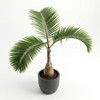
Hyophorbe lagenicaulis

Make a bold tropical statement with the Bottle Palm. Its sculptural, bottle-shaped trunk and sweeping fronds instantly elevate living rooms, patios, and business receptions. Slow-growing, long-lived, and surprisingly easy with bright light and good drainage—this is the premium palm that looks like a resort centerpiece all year round.
1. Basic Identification
Common Name: نخيل الزجاجة (Bottle Palm)
Botanical Name: Hyophorbe lagenicaulis
Scientific Family: Arecaceae
Air-Purifying: No
Care Ease: Yes
Hardiness: No
Best Sellers: Yes
Desk Plants: No
Flowering Indoor: No
Hanging Plants: No
Low Maintenance: Yes
Medium Plants: Yes
New Arrivals: No
Pet-Safe: No
Human-Safe: Yes
Rare / Collector: Yes
2. Taxonomy & Classification
The Bottle Palm belongs to the Kingdom Plantae and the family Arecaceae (the palm family). It is part of the genus Hyophorbe, which consists of five species of palms native to the Mascarene Islands in the Indian Ocean. Its specific epithet, lagenicaulis, comes from the Latin 'lagena' (bottle) and 'caulis' (stem/trunk), referring to its distinctive shape.
3. Origin & Distribution
This palm is endemic to Round Island, Mauritius. While it is critically endangered in its original wild habitat, it has become one of the most popular ornamental palms worldwide, widely cultivated in tropical and subtropical regions such as Thailand, Florida, and the Caribbean.
4. Visual Characteristics
The Bottle Palm is famous for its unique trunk, which is noticeably swollen at the base and tapers toward the top, resembling an antique bottle. It features a small number (usually 4 to 8) of upward-arching, pinnate (feather-like) fronds that can grow up to 10 feet long. The crownshaft is smooth and green, while new emerging leaves may have a reddish tint.
5. Size & Dimensions
It is a slow-growing palm that typically reaches heights of 10 to 12 feet (3 to 3.5 meters) when planted in the ground. When grown in containers, it remains much smaller, usually staying between 5 and 7 feet tall. The trunk can eventually reach a diameter of about 2 feet at its widest point.
6. Light Requirements
The Bottle Palm thrives in bright light. It prefers full sun to high-intensity indirect light. While it can tolerate some partial shade, its growth will slow significantly and the trunk may not develop its characteristic "bottle" shape as robustly.
7. Watering Needs
It requires moderate watering. The soil should be kept consistently moist but never soggy. It is important to allow the top inch of soil to dry out before watering again. Established plants have moderate drought tolerance, but container-bound palms require more frequent attention.
8. Soil & Potting
A well-draining soil mix is essential to prevent root rot. A combination of potting soil, coarse sand, and peat moss or a specialized palm/cactus mix works best. Ensure the container has ample drainage holes to allow excess water to escape.
9. Temperature & Humidity
As a tropical plant, it prefers temperatures between 65°F and 85°F (18°C - 29°C). It is very sensitive to cold and should be protected from temperatures below 32°F (0°C). It enjoys moderate to high humidity levels, making it suitable for humid climates or misted indoor environments.
10. Fertilization
Feed with a high-quality, slow-release palm fertilizer during the growing season (spring and summer). Look for a formula that includes micronutrients like potassium, manganese, and magnesium to prevent leaf yellowing and maintain trunk health.
11. Maintenance & Care Level
The care level is considered easy to moderate. Maintenance is minimal; only prune fronds that are completely brown and dead. Do not remove leaves that are still green or partially yellow, as the palm is still drawing nutrients from them.
12. Growth & Propagation
The growth rate is very slow, which makes it an excellent choice for containers and indoor spaces for many years. Propagation is exclusively through seeds, which can take anywhere from 4 to 6 months to germinate in warm, moist conditions.
13. Common Problems
The most common issues are spider mites and mealybugs, especially when kept indoors. Overwatering can lead to lethal root rot. Nutritional deficiencies, particularly potassium or manganese deficiency, can cause spotting or frizzling of the leaf tips.
14. Benefits & Uses
Highly valued for its architectural beauty, it serves as a spectacular specimen plant or focal point in landscaping. Its salt tolerance makes it ideal for coastal gardens. Indoors, it acts as a premium decorative element for spacious rooms, lobbies, and bright offices.
15. Toxicity & Safety
Hyophorbe lagenicaulis is generally considered non-toxic to humans. While many palm species are non-toxic to pets, according to the provided data, care should be taken as it is marked as not pet-safe. Always prevent pets from chewing on the fronds to avoid digestive upset.