


Hypoestes phyllostachya
Transform your home or office with the irresistible charm of the Polka Dot Plant! With its lively, freckled leaves in shades of pink, red, and white, this plant is a living piece of art. It's perfectly sized for any desk, shelf, or bright corner, bringing instant joy and personality. Plus, it's completely pet-safe! Order now and let this colorful companion brighten your day.
1. Basic Identification
Common Name: Polka Dot Plant
Botanical Name: Hypoestes phyllostachya
Former Name: None
Plant Type: Herbaceous Perennial
Plant Code / SKU: PLT-1829
Alternative Names:
Freckle Face Plant
Measles Plant
خد العروس
2. Taxonomy & Classification
Order: Lamiales
Family: Acanthaceae
Genus: Hypoestes
3. Origin & Distribution
Native Range: Madagascar
Distribution: Widely cultivated globally as a houseplant and as an outdoor ornamental in tropical and subtropical climates.
4. Visual Characteristics
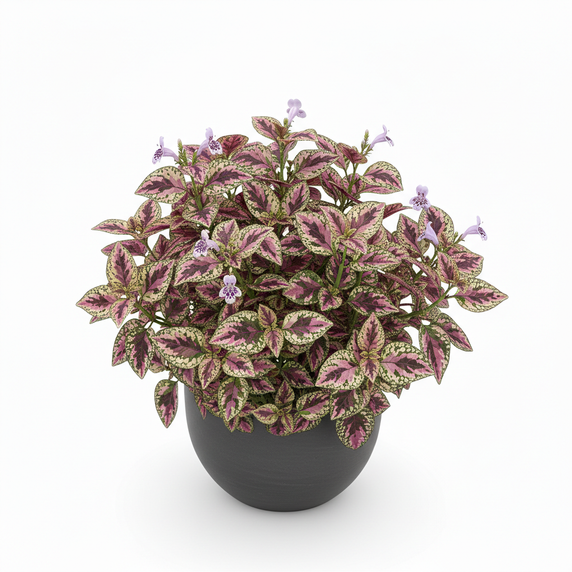
Leaves: The primary feature is the ovate (egg-shaped) leaves with a base color of green, heavily spotted with contrasting colors like pink, red, or white, giving it a "freckled" appearance.
Flowers: Small, tubular, two-lipped flowers, typically lilac or pink, appear on terminal spikes. They are often considered inconspicuous compared to the vibrant foliage.
Stem: Soft, herbaceous stems that can become woody at the base over time. Stems tend to grow leggy if not pruned.
Overall Form: A compact, bushy, mounding plant when properly maintained.
5. Size & Dimensions
Mature Height: Typically 30-60 cm (1-2 ft) when grown as a houseplant.
Mature Spread: Approximately 30-60 cm (1-2 ft).
Growth Rate: Fast.
6. Light Requirements
Optimal Light: Bright, indirect light.
Light Exposure Notes: Too much direct sunlight can scorch the leaves and cause the colors to fade. Insufficient light will lead to less vibrant coloration and leggy growth as the plant stretches towards the light source.
7. Watering Needs
Watering Frequency: Keep the soil consistently moist but not waterlogged. Water thoroughly when the top 2-3 cm (1 inch) of soil feels dry to the touch.
Watering Notes: This plant is known for wilting dramatically when it needs water but typically revives quickly once watered. Reduce watering frequency during the winter months.
8. Soil & Potting
Soil Type: A well-draining, all-purpose potting mix rich in organic matter. A peat-based mix is ideal.
Repotting: Repot every 1-2 years in the spring, or when the plant becomes root-bound. This is also a good time to refresh the soil.
9. Temperature & Humidity
Optimal Temperature: Prefers average to warm room temperatures between 18-27°C (65-80°F).
Humidity Level: High humidity is preferred. Levels above 50% are ideal.
Temperature & Humidity Notes: Avoid cold drafts and temperatures below 13°C (55°F). To increase humidity, mist the plant regularly, place it on a pebble tray with water, or use a humidifier.
10. Fertilization
Fertilizer Type: A balanced, liquid houseplant fertilizer, diluted to half-strength.
Fertilization Schedule: Feed every 2-4 weeks during the growing season (spring and summer). Do not fertilize in the fall and winter.
11. Maintenance & Care Level
Care Level: Easy to moderate. Its primary needs are consistent moisture and regular pruning.
Pruning/Pinching: Frequent pinching back of the stem tips is necessary to encourage a bushy, compact form and prevent the plant from becoming leggy. Pinching off the flower spikes can help the plant direct more energy into its colorful foliage.
12. Growth & Propagation
Propagation Method: Easily propagated from stem cuttings.
Propagation Steps: Take a 10 cm (4-inch) stem cutting from the tip. Remove the lower leaves and place the cutting in a glass of water or directly into moist potting mix. Roots should develop within a few weeks.
13. Common Problems
Pests: Can be susceptible to common houseplant pests such as spider mites, mealybugs, aphids, and whiteflies, especially in low humidity.
Diseases: Root rot is the most common disease, caused by overwatering. Powdery mildew can also occur if air circulation is poor.
Common Issues: Legginess (due to low light), fading leaf color (due to incorrect light levels), and wilting (due to underwatering).
14. Benefits & Uses
Indoor/Outdoor Use: Primarily grown as a colorful indoor houseplant. It can also be used outdoors as an annual bedding plant in cooler climates or as a perennial groundcover in tropical zones.
Decorative Value: Highly prized for its unique and vibrant foliage, making it an excellent choice for adding a splash of color to desks, shelves, terrariums, and container arrangements.
15. Toxicity & Safety
Toxicity to Humans: Non-toxic.
Toxicity to Pets: Non-toxic to cats and dogs, as listed by the ASPCA.
Safety Notes: Considered a safe plant to have in homes with children and pets.

Hypoestes phyllostachya
Transform your home or office with the irresistible charm of the Polka Dot Plant! With its lively, freckled leaves in shades of pink, red, and white, this plant is a living piece of art. It's perfectly sized for any desk, shelf, or bright corner, bringing instant joy and personality. Plus, it's completely pet-safe! Order now and let this colorful companion brighten your day.
1. Basic Identification
Common Name: Polka Dot Plant
Botanical Name: Hypoestes phyllostachya
Former Name: None
Plant Type: Herbaceous Perennial
Plant Code / SKU: PLT-1829
Alternative Names:
Freckle Face Plant
Measles Plant
خد العروس
2. Taxonomy & Classification
Order: Lamiales
Family: Acanthaceae
Genus: Hypoestes
3. Origin & Distribution
Native Range: Madagascar
Distribution: Widely cultivated globally as a houseplant and as an outdoor ornamental in tropical and subtropical climates.
4. Visual Characteristics
Leaves: The primary feature is the ovate (egg-shaped) leaves with a base color of green, heavily spotted with contrasting colors like pink, red, or white, giving it a "freckled" appearance.
Flowers: Small, tubular, two-lipped flowers, typically lilac or pink, appear on terminal spikes. They are often considered inconspicuous compared to the vibrant foliage.
Stem: Soft, herbaceous stems that can become woody at the base over time. Stems tend to grow leggy if not pruned.
Overall Form: A compact, bushy, mounding plant when properly maintained.
5. Size & Dimensions
Mature Height: Typically 30-60 cm (1-2 ft) when grown as a houseplant.
Mature Spread: Approximately 30-60 cm (1-2 ft).
Growth Rate: Fast.
6. Light Requirements
Optimal Light: Bright, indirect light.
Light Exposure Notes: Too much direct sunlight can scorch the leaves and cause the colors to fade. Insufficient light will lead to less vibrant coloration and leggy growth as the plant stretches towards the light source.
7. Watering Needs
Watering Frequency: Keep the soil consistently moist but not waterlogged. Water thoroughly when the top 2-3 cm (1 inch) of soil feels dry to the touch.
Watering Notes: This plant is known for wilting dramatically when it needs water but typically revives quickly once watered. Reduce watering frequency during the winter months.
8. Soil & Potting
Soil Type: A well-draining, all-purpose potting mix rich in organic matter. A peat-based mix is ideal.
Repotting: Repot every 1-2 years in the spring, or when the plant becomes root-bound. This is also a good time to refresh the soil.
9. Temperature & Humidity
Optimal Temperature: Prefers average to warm room temperatures between 18-27°C (65-80°F).
Humidity Level: High humidity is preferred. Levels above 50% are ideal.
Temperature & Humidity Notes: Avoid cold drafts and temperatures below 13°C (55°F). To increase humidity, mist the plant regularly, place it on a pebble tray with water, or use a humidifier.
10. Fertilization
Fertilizer Type: A balanced, liquid houseplant fertilizer, diluted to half-strength.
Fertilization Schedule: Feed every 2-4 weeks during the growing season (spring and summer). Do not fertilize in the fall and winter.
11. Maintenance & Care Level
Care Level: Easy to moderate. Its primary needs are consistent moisture and regular pruning.
Pruning/Pinching: Frequent pinching back of the stem tips is necessary to encourage a bushy, compact form and prevent the plant from becoming leggy. Pinching off the flower spikes can help the plant direct more energy into its colorful foliage.
12. Growth & Propagation
Propagation Method: Easily propagated from stem cuttings.
Propagation Steps: Take a 10 cm (4-inch) stem cutting from the tip. Remove the lower leaves and place the cutting in a glass of water or directly into moist potting mix. Roots should develop within a few weeks.
13. Common Problems
Pests: Can be susceptible to common houseplant pests such as spider mites, mealybugs, aphids, and whiteflies, especially in low humidity.
Diseases: Root rot is the most common disease, caused by overwatering. Powdery mildew can also occur if air circulation is poor.
Common Issues: Legginess (due to low light), fading leaf color (due to incorrect light levels), and wilting (due to underwatering).
14. Benefits & Uses
Indoor/Outdoor Use: Primarily grown as a colorful indoor houseplant. It can also be used outdoors as an annual bedding plant in cooler climates or as a perennial groundcover in tropical zones.
Decorative Value: Highly prized for its unique and vibrant foliage, making it an excellent choice for adding a splash of color to desks, shelves, terrariums, and container arrangements.
15. Toxicity & Safety
Toxicity to Humans: Non-toxic.
Toxicity to Pets: Non-toxic to cats and dogs, as listed by the ASPCA.
Safety Notes: Considered a safe plant to have in homes with children and pets.