


Italian Stone Pine
Transform your garden with the timeless elegance of the Italian Stone Pine. With its stunning, architectural umbrella canopy and lush green needles, this Pinus pinea is more than a plant—it's a living sculpture. Ideal for creating a focal point in any landscape, it's also the source of delicious gourmet pine nuts. Drought-resistant and sun-loving, it brings Mediterranean grandeur right to your doorstep. Order now to invest in a lifetime of natural beauty.
1. Basic Identification
Common Name: Italian Stone Pine, Umbrella Pine, Parasol Pine
Botanical Name: Pinus pinea
Plant Variant: Standard
Plant Color: Green
Arabic Name: بينوس
2. Taxonomy & Classification
Kingdom: Plantae
Division: Pinophyta
Class: Pinopsida
Order: Pinales
Family: Pinaceae
Genus: Pinus
Species: P. pinea
3. Origin & Distribution
Native to the Mediterranean region, including Southern Europe, North Africa, and the Levant. It has been cultivated for its edible pine nuts for over 6,000 years and is widely distributed across Italy, Spain, and Portugal.
4. Visual Characteristics
In its youth, it is a bushy globe, but as it matures, it develops a highly distinctive, broad, flat-topped umbrella-like canopy. The bark is thick, plated, and deeply fissured with reddish-brown tones. The needles are bright green, flexible, and usually occur in pairs.
5. Size & Dimensions
A medium-to-large evergreen tree typically reaching heights of 12 to 20 meters (40 to 65 feet). The canopy can spread nearly as wide as the tree is tall, creating significant shade.
6. Light Requirements
Full sun is essential. This tree requires at least 6 to 8 hours of direct sunlight daily to maintain its structural integrity and health.
7. Watering Needs
Low to moderate. While young trees require regular watering to establish a deep root system, mature Italian Stone Pines are highly drought-tolerant and prefer to dry out between waterings.
8. Soil & Potting
Requires well-draining soil. It thrives in sandy or loamy soils and is tolerant of acidic to neutral pH levels. It is also well-adapted to coastal conditions and salt spray.
9. Temperature & Humidity
Thrives in warm, Mediterranean climates (USDA Zones 8-11). It is heat-tolerant but prefers areas with low to moderate humidity. It can tolerate light frosts once established.
10. Fertilization
Generally minimal. For young trees, a balanced, slow-release fertilizer can be applied in early spring to encourage growth. Mature trees in the landscape rarely require supplemental feeding.
11. Maintenance & Care Level
Low maintenance. Pruning is rarely necessary except to remove dead lower branches or to emphasize the umbrella shape as the tree grows.
12. Growth & Propagation
Slow to moderate growth rate. Propagation is primarily through seeds (pine nuts), which are found within the large, woody cones that take about 36 months to mature.
13. Common Problems
Relatively pest-resistant, though it can be susceptible to the pine processionary moth in some regions or root rot if planted in poorly drained, waterlogged soil.
14. Benefits & Uses
Highly valued as an ornamental specimen in landscaping and rooftop gardens. It is the primary source of commercial pine nuts (pignoli). Also used for coastal erosion control and as a popular living Christmas tree when small.
15. Toxicity & Safety
Non-toxic to humans. While not considered highly toxic to pets, the ingestion of pine needles can cause mild gastrointestinal upset or irritation in cats and dogs. The resin can also be sticky and irritating to skin.
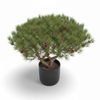
Italian Stone Pine

Transform your garden with the timeless elegance of the Italian Stone Pine. With its stunning, architectural umbrella canopy and lush green needles, this Pinus pinea is more than a plant—it's a living sculpture. Ideal for creating a focal point in any landscape, it's also the source of delicious gourmet pine nuts. Drought-resistant and sun-loving, it brings Mediterranean grandeur right to your doorstep. Order now to invest in a lifetime of natural beauty.
1. Basic Identification
Common Name: Italian Stone Pine, Umbrella Pine, Parasol Pine
Botanical Name: Pinus pinea
Plant Variant: Standard
Plant Color: Green
Arabic Name: بينوس
2. Taxonomy & Classification
Kingdom: Plantae
Division: Pinophyta
Class: Pinopsida
Order: Pinales
Family: Pinaceae
Genus: Pinus
Species: P. pinea
3. Origin & Distribution
Native to the Mediterranean region, including Southern Europe, North Africa, and the Levant. It has been cultivated for its edible pine nuts for over 6,000 years and is widely distributed across Italy, Spain, and Portugal.
4. Visual Characteristics
In its youth, it is a bushy globe, but as it matures, it develops a highly distinctive, broad, flat-topped umbrella-like canopy. The bark is thick, plated, and deeply fissured with reddish-brown tones. The needles are bright green, flexible, and usually occur in pairs.
5. Size & Dimensions
A medium-to-large evergreen tree typically reaching heights of 12 to 20 meters (40 to 65 feet). The canopy can spread nearly as wide as the tree is tall, creating significant shade.
6. Light Requirements
Full sun is essential. This tree requires at least 6 to 8 hours of direct sunlight daily to maintain its structural integrity and health.
7. Watering Needs
Low to moderate. While young trees require regular watering to establish a deep root system, mature Italian Stone Pines are highly drought-tolerant and prefer to dry out between waterings.
8. Soil & Potting
Requires well-draining soil. It thrives in sandy or loamy soils and is tolerant of acidic to neutral pH levels. It is also well-adapted to coastal conditions and salt spray.
9. Temperature & Humidity
Thrives in warm, Mediterranean climates (USDA Zones 8-11). It is heat-tolerant but prefers areas with low to moderate humidity. It can tolerate light frosts once established.
10. Fertilization
Generally minimal. For young trees, a balanced, slow-release fertilizer can be applied in early spring to encourage growth. Mature trees in the landscape rarely require supplemental feeding.
11. Maintenance & Care Level
Low maintenance. Pruning is rarely necessary except to remove dead lower branches or to emphasize the umbrella shape as the tree grows.
12. Growth & Propagation
Slow to moderate growth rate. Propagation is primarily through seeds (pine nuts), which are found within the large, woody cones that take about 36 months to mature.
13. Common Problems
Relatively pest-resistant, though it can be susceptible to the pine processionary moth in some regions or root rot if planted in poorly drained, waterlogged soil.
14. Benefits & Uses
Highly valued as an ornamental specimen in landscaping and rooftop gardens. It is the primary source of commercial pine nuts (pignoli). Also used for coastal erosion control and as a popular living Christmas tree when small.
15. Toxicity & Safety
Non-toxic to humans. While not considered highly toxic to pets, the ingestion of pine needles can cause mild gastrointestinal upset or irritation in cats and dogs. The resin can also be sticky and irritating to skin.