


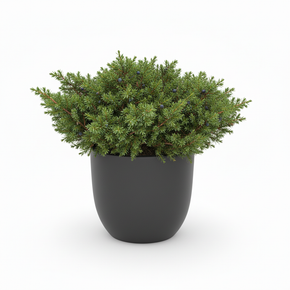



Embrace the art of nature with our exquisite Japanese Garden Juniper. Whether you're a seasoned bonsai enthusiast or seeking a resilient, sculptural evergreen for your patio, this Juniperus procumbens delivers year-round beauty. Its lush, blue-green foliage and naturally spreading form create a living masterpiece that evokes a sense of peace and strength. Easy to shape and incredibly hardy, it's the perfect plant to begin your bonsai journey or to add a touch of sophisticated greenery to your outdoor space. Order yours today and cultivate tranquility.
Common Name: Japanese Garden Juniper
Botanical Name: Juniperus procumbens
Former Name: Juniperus chinensis var. procumbens
Plant Type: Evergreen groundcover shrub / Bonsai
Plant Code / SKU: PLT-1744
Alternative Names:
Procumbens Juniper
Creeping Juniper
Ibuki
جانبروس
Order: Pinales
Family: Cupressaceae
Genus: Juniperus
Native Range: Native to the coastal regions of southern Japan, particularly the island of Kyushu.
Leaves/Foliage: Features dense, awl-shaped, needle-like foliage that is typically a vibrant blue-green or gray-green color. The needles are arranged in whorls of three around the stems.
Flowers/Cones: As a gymnosperm, it produces cones, not flowers. It is typically dioecious (male and female cones on separate plants). Male cones are small and yellowish. Female cones are small, berry-like, and mature to a bluish-black or brownish color, often with a waxy coating.
Stem/Trunk: The stems are woody and spreading, creating a low, mat-forming habit. The bark is typically reddish-brown to gray and may become shaggy or exfoliating on older specimens.
Height: Typically grows 1 to 2 feet (30-60 cm) tall in a landscape setting.
Spread: Can spread widely, reaching 10 to 15 feet (3-4.5 m) or more over time.
Best in full sun, requiring at least 6 hours of direct sunlight per day to maintain its dense foliage and compact form. It can tolerate light shade, but may become leggy and less vigorous.
Drought-tolerant once established. Water regularly and deeply during the first growing season to establish a strong root system. For mature plants, water only during extended periods of drought. Allow soil to dry out completely between waterings. Bonsai specimens require more frequent and precise watering.
Soil Type: Prefers well-drained soil and is intolerant of wet, soggy conditions. It is adaptable to a wide range of soil types, including sandy, rocky, and poor soils.
pH: Adaptable to a wide range of soil pH, from slightly acidic to slightly alkaline (pH 5.5 to 7.5).
Temperature: Very hardy and tolerant of a wide range of temperatures. It is suitable for USDA hardiness zones 4 through 9.
Humidity: Tolerates a wide variety of humidity levels, including dry conditions. Good air circulation is important to prevent fungal diseases.
Requires little to no fertilization when planted in the ground. If desired, a balanced, slow-release fertilizer for evergreens can be applied in the spring. For bonsai, a regular feeding schedule with a specific bonsai fertilizer during the growing season is recommended.
Low maintenance as a groundcover. Pruning is generally not necessary but can be done in late winter or early spring to shape the plant or control its spread. As a bonsai, the care level is moderate to high, requiring regular pruning, wiring, and repotting to maintain its shape and health.
Growth Rate: Slow to moderate.
Propagation: Best propagated from semi-hardwood cuttings taken in late summer or fall. It can also be propagated by layering.
Pests: Susceptible to spider mites, bagworms, juniper scale, and aphids.
Diseases: Can be affected by twig blights (Phomopsis and Kabatina), especially in humid climates or with overhead watering. Root rot can occur in poorly drained soils.
Widely used as a durable and attractive groundcover, especially for slopes, banks, and erosion control. Excellent for rock gardens, foundation plantings, and coastal landscapes. It is one of the most popular and classic choices for bonsai cultivation.
The foliage and berry-like cones are considered mildly toxic if ingested in large quantities, potentially causing stomach upset. The sap can cause mild skin irritation or dermatitis in some sensitive individuals. It is recommended to keep away from pets and children who may be prone to chewing on plants.
```Embrace the art of nature with our exquisite Japanese Garden Juniper. Whether you're a seasoned bonsai enthusiast or seeking a resilient, sculptural evergreen for your patio, this Juniperus procumbens delivers year-round beauty. Its lush, blue-green foliage and naturally spreading form create a living masterpiece that evokes a sense of peace and strength. Easy to shape and incredibly hardy, it's the perfect plant to begin your bonsai journey or to add a touch of sophisticated greenery to your outdoor space. Order yours today and cultivate tranquility.
Common Name: Japanese Garden Juniper
Botanical Name: Juniperus procumbens
Former Name: Juniperus chinensis var. procumbens
Plant Type: Evergreen groundcover shrub / Bonsai
Plant Code / SKU: PLT-1744
Alternative Names:
Procumbens Juniper
Creeping Juniper
Ibuki
جانبروس
Order: Pinales
Family: Cupressaceae
Genus: Juniperus
Native Range: Native to the coastal regions of southern Japan, particularly the island of Kyushu.
Leaves/Foliage: Features dense, awl-shaped, needle-like foliage that is typically a vibrant blue-green or gray-green color. The needles are arranged in whorls of three around the stems.
Flowers/Cones: As a gymnosperm, it produces cones, not flowers. It is typically dioecious (male and female cones on separate plants). Male cones are small and yellowish. Female cones are small, berry-like, and mature to a bluish-black or brownish color, often with a waxy coating.
Stem/Trunk: The stems are woody and spreading, creating a low, mat-forming habit. The bark is typically reddish-brown to gray and may become shaggy or exfoliating on older specimens.
Height: Typically grows 1 to 2 feet (30-60 cm) tall in a landscape setting.
Spread: Can spread widely, reaching 10 to 15 feet (3-4.5 m) or more over time.
Best in full sun, requiring at least 6 hours of direct sunlight per day to maintain its dense foliage and compact form. It can tolerate light shade, but may become leggy and less vigorous.
Drought-tolerant once established. Water regularly and deeply during the first growing season to establish a strong root system. For mature plants, water only during extended periods of drought. Allow soil to dry out completely between waterings. Bonsai specimens require more frequent and precise watering.
Soil Type: Prefers well-drained soil and is intolerant of wet, soggy conditions. It is adaptable to a wide range of soil types, including sandy, rocky, and poor soils.
pH: Adaptable to a wide range of soil pH, from slightly acidic to slightly alkaline (pH 5.5 to 7.5).
Temperature: Very hardy and tolerant of a wide range of temperatures. It is suitable for USDA hardiness zones 4 through 9.
Humidity: Tolerates a wide variety of humidity levels, including dry conditions. Good air circulation is important to prevent fungal diseases.
Requires little to no fertilization when planted in the ground. If desired, a balanced, slow-release fertilizer for evergreens can be applied in the spring. For bonsai, a regular feeding schedule with a specific bonsai fertilizer during the growing season is recommended.
Low maintenance as a groundcover. Pruning is generally not necessary but can be done in late winter or early spring to shape the plant or control its spread. As a bonsai, the care level is moderate to high, requiring regular pruning, wiring, and repotting to maintain its shape and health.
Growth Rate: Slow to moderate.
Propagation: Best propagated from semi-hardwood cuttings taken in late summer or fall. It can also be propagated by layering.
Pests: Susceptible to spider mites, bagworms, juniper scale, and aphids.
Diseases: Can be affected by twig blights (Phomopsis and Kabatina), especially in humid climates or with overhead watering. Root rot can occur in poorly drained soils.
Widely used as a durable and attractive groundcover, especially for slopes, banks, and erosion control. Excellent for rock gardens, foundation plantings, and coastal landscapes. It is one of the most popular and classic choices for bonsai cultivation.
The foliage and berry-like cones are considered mildly toxic if ingested in large quantities, potentially causing stomach upset. The sap can cause mild skin irritation or dermatitis in some sensitive individuals. It is recommended to keep away from pets and children who may be prone to chewing on plants.
```

Take 20% off your first order
Enter the code below at checkout to get 20% off your first order