

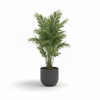





Transform your space with the enduring elegance of the Lady Palm. This isn't just a plant; it's a living piece of art that works for you, purifying your air while demanding almost nothing in return. Perfect for that empty corner or brightening up your office, the Rhapis excelsa is famously forgiving and pet-friendly. Its lush, deep green fans bring a touch of the tropics indoors, creating an instant feeling of calm and sophistication. Invest in a plant that grows with you, offering years of beauty with minimal fuss. Add a Lady Palm to your cart today and breathe easier in style!
Common Name: Lady Palm
Botanical Name: Rhapis excelsa
Arabic Name: رابيس
Variant: Standard
Color: Natural
Country of Origin: Netherlands
Kingdom: Plantae
Order: Arecales
Family: Arecaceae
Genus: Rhapis
Species: Rhapis excelsa
The Lady Palm is native to southern China and Taiwan. It has been cultivated for centuries, particularly in Japan, where it was often found in imperial palaces and traditional homes.
This palm features multi-stemmed, bamboo-like stalks covered in dark brown, fibrous matting. Its leaves are glossy, deep green, and fan-shaped, divided into several broad, ribbed segments with blunt tips.
In an indoor environment, the Lady Palm typically grows to a height of 6 to 12 feet (1.8 to 3.6 meters) with a similar spread, though it is a very slow-growing plant.
It thrives in bright, indirect light but is highly adaptable and can tolerate medium to low light levels better than many other palm species. Direct sunlight should be avoided as it may scorch the leaves.
Water thoroughly when the top 1–2 inches of soil feels dry. While it enjoys consistent moisture, it is sensitive to overwatering and should never be left sitting in water. Reduce watering during the winter months.
Requires a well-draining potting mix, ideally one that is peat-based or high in organic matter. Use a pot with adequate drainage holes to prevent root rot.
Prefers temperatures between 15°C and 27°C (60°F - 80°F). It is comfortable in average household humidity but will appreciate occasional misting or a humidifier in very dry environments.
Apply a balanced, water-soluble liquid fertilizer every 2-3 months during the spring and summer growing seasons. Do not fertilize in the winter.
Maintenance Level: Low. It is a hardy and resilient plant that requires minimal pruning, usually only to remove older, browning lower fronds.
The growth rate is slow. Propagation is most successfully achieved through the division of large clumps or by removing suckers/offshoots from the base of the plant.
Relatively pest-resistant but can occasionally attract spider mites or scale. Brown leaf tips can occur if the air is too dry or if there is a buildup of minerals from tap water.
Known as an excellent air purifier, it was featured in NASA’s Clean Air Study for its ability to remove ammonia, formaldehyde, xylene, and benzene from indoor air. It is highly valued for interior design in both homes and offices.
Non-toxic to humans, cats, and dogs, making it a safe choice for households with pets and children.
Transform your space with the enduring elegance of the Lady Palm. This isn't just a plant; it's a living piece of art that works for you, purifying your air while demanding almost nothing in return. Perfect for that empty corner or brightening up your office, the Rhapis excelsa is famously forgiving and pet-friendly. Its lush, deep green fans bring a touch of the tropics indoors, creating an instant feeling of calm and sophistication. Invest in a plant that grows with you, offering years of beauty with minimal fuss. Add a Lady Palm to your cart today and breathe easier in style!
Common Name: Lady Palm
Botanical Name: Rhapis excelsa
Arabic Name: رابيس
Variant: Standard
Color: Natural
Country of Origin: Netherlands
Kingdom: Plantae
Order: Arecales
Family: Arecaceae
Genus: Rhapis
Species: Rhapis excelsa
The Lady Palm is native to southern China and Taiwan. It has been cultivated for centuries, particularly in Japan, where it was often found in imperial palaces and traditional homes.
This palm features multi-stemmed, bamboo-like stalks covered in dark brown, fibrous matting. Its leaves are glossy, deep green, and fan-shaped, divided into several broad, ribbed segments with blunt tips.
In an indoor environment, the Lady Palm typically grows to a height of 6 to 12 feet (1.8 to 3.6 meters) with a similar spread, though it is a very slow-growing plant.
It thrives in bright, indirect light but is highly adaptable and can tolerate medium to low light levels better than many other palm species. Direct sunlight should be avoided as it may scorch the leaves.
Water thoroughly when the top 1–2 inches of soil feels dry. While it enjoys consistent moisture, it is sensitive to overwatering and should never be left sitting in water. Reduce watering during the winter months.
Requires a well-draining potting mix, ideally one that is peat-based or high in organic matter. Use a pot with adequate drainage holes to prevent root rot.
Prefers temperatures between 15°C and 27°C (60°F - 80°F). It is comfortable in average household humidity but will appreciate occasional misting or a humidifier in very dry environments.
Apply a balanced, water-soluble liquid fertilizer every 2-3 months during the spring and summer growing seasons. Do not fertilize in the winter.
Maintenance Level: Low. It is a hardy and resilient plant that requires minimal pruning, usually only to remove older, browning lower fronds.
The growth rate is slow. Propagation is most successfully achieved through the division of large clumps or by removing suckers/offshoots from the base of the plant.
Relatively pest-resistant but can occasionally attract spider mites or scale. Brown leaf tips can occur if the air is too dry or if there is a buildup of minerals from tap water.
Known as an excellent air purifier, it was featured in NASA’s Clean Air Study for its ability to remove ammonia, formaldehyde, xylene, and benzene from indoor air. It is highly valued for interior design in both homes and offices.
Non-toxic to humans, cats, and dogs, making it a safe choice for households with pets and children.



Take 20% off your first order
Enter the code below at checkout to get 20% off your first order