


Lythraceae
Lagerstroemia indica
Make your landscape stand out with Crape Myrtle—an elegant, multi-stem flowering tree that thrives in sun and heat. Once established, it’s easy-care and rewarding, delivering months of summer color and a refined architectural shape for villas, patios, and business entrances.
1. Basic Identification
Common Name: Crape Myrtle
Botanical Name: Lagerstroemia indica
Arabic Name: ورد القهوة
Scientific Name: Lagerstroemia indica
Family: Lythraceae
Variant: Standard
Color: Natural
Country: Italy
2. Taxonomy & Classification
Kingdom: Plantae
Order: Myrtales
Family: Lythraceae
Genus: Lagerstroemia
Species: Lagerstroemia indica
3. Origin & Distribution
Native to the temperate and tropical regions of Asia, including China, Korea, Japan, and the Indian subcontinent. It has been widely naturalized and cultivated in warm climates across the globe, particularly in the Southern United States and Mediterranean regions like Italy.
4. Visual Characteristics
Known for its showy, crinkled flowers with a crepe-like texture that appear in large clusters (panicles). The tree features a striking, multi-stemmed habit and smooth, exfoliating bark that peels to reveal a beautiful cinnamon-colored inner wood. Leaves are dark green, oval-shaped, and provide vibrant autumn colors ranging from yellow to orange-red.
5. Size & Dimensions
The Standard variant typically reaches heights of 15 to 25 feet (4.5 to 7.5 meters) with a spread of 6 to 15 feet. Growth rates are moderate to fast, depending on environmental conditions.
6. Light Requirements
Full Sun. This plant requires at least 6 to 8 hours of direct sunlight daily to ensure prolific blooming and to prevent issues like powdery mildew.
7. Watering Needs
Moderate. Regular watering is essential during the first two growing seasons to establish a deep, extensive root system. Once established, it is notably drought-tolerant, though it performs best with deep weekly watering during peak summer heat.
8. Soil & Potting
Thrives in well-drained soil. It is adaptable to various soil types including clay, loam, and sand. Prefers a slightly acidic to neutral pH. While usually planted in the ground, it can be maintained in very large, well-draining pots or planters for patio use.
9. Temperature & Humidity
Highly heat-tolerant and thrives in warm climates. It is hardy in USDA zones 6 through 9. Prefers low to moderate humidity; extremely high humidity without adequate air circulation can promote fungal growth on the foliage.
10. Fertilization
Apply a balanced, slow-release fertilizer (such as a 10-10-10 NPK) in early spring before new growth begins. Established trees generally require little fertilization unless the soil is very poor.
11. Maintenance & Care Level
Easy-care. Maintenance involves annual pruning in late winter or early spring to remove dead wood and "suckers" at the base. Deadheading spent flowers can sometimes encourage a second bloom in late summer.
12. Growth & Propagation
Fast-growing. It can be propagated via semi-hardwood cuttings in summer or hardwood cuttings in winter. It also spreads through seeds, though cultivars may not grow true from seed.
13. Common Problems
Susceptible to powdery mildew, especially in shady or humid conditions. Aphids can sometimes target new growth, leading to sooty mold. Avoid "Crape Murder"—the practice of severely topping the tree—which weakens the structure and ruins its natural form.
14. Benefits & Uses
Excellent as a focal point in landscapes, lining driveways, or providing shade for patios. Its air-purifying qualities and vibrant summer blooms make it a favorite for urban beautification and corporate entrances. The exfoliating bark provides year-round architectural interest.
15. Toxicity & Safety
Non-toxic to humans, dogs, cats, and horses. It is considered a very safe choice for residential landscapes and public areas.

Lagerstroemia indica
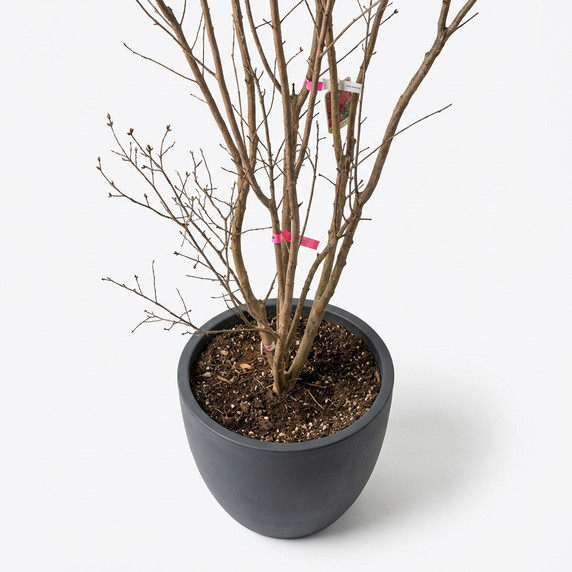
Make your landscape stand out with Crape Myrtle—an elegant, multi-stem flowering tree that thrives in sun and heat. Once established, it’s easy-care and rewarding, delivering months of summer color and a refined architectural shape for villas, patios, and business entrances.
1. Basic Identification
Common Name: Crape Myrtle
Botanical Name: Lagerstroemia indica
Arabic Name: ورد القهوة
Scientific Name: Lagerstroemia indica
Family: Lythraceae
Variant: Standard
Color: Natural
Country: Italy
2. Taxonomy & Classification
Kingdom: Plantae
Order: Myrtales
Family: Lythraceae
Genus: Lagerstroemia
Species: Lagerstroemia indica
3. Origin & Distribution
Native to the temperate and tropical regions of Asia, including China, Korea, Japan, and the Indian subcontinent. It has been widely naturalized and cultivated in warm climates across the globe, particularly in the Southern United States and Mediterranean regions like Italy.
4. Visual Characteristics
Known for its showy, crinkled flowers with a crepe-like texture that appear in large clusters (panicles). The tree features a striking, multi-stemmed habit and smooth, exfoliating bark that peels to reveal a beautiful cinnamon-colored inner wood. Leaves are dark green, oval-shaped, and provide vibrant autumn colors ranging from yellow to orange-red.
5. Size & Dimensions
The Standard variant typically reaches heights of 15 to 25 feet (4.5 to 7.5 meters) with a spread of 6 to 15 feet. Growth rates are moderate to fast, depending on environmental conditions.
6. Light Requirements
Full Sun. This plant requires at least 6 to 8 hours of direct sunlight daily to ensure prolific blooming and to prevent issues like powdery mildew.
7. Watering Needs
Moderate. Regular watering is essential during the first two growing seasons to establish a deep, extensive root system. Once established, it is notably drought-tolerant, though it performs best with deep weekly watering during peak summer heat.
8. Soil & Potting
Thrives in well-drained soil. It is adaptable to various soil types including clay, loam, and sand. Prefers a slightly acidic to neutral pH. While usually planted in the ground, it can be maintained in very large, well-draining pots or planters for patio use.
9. Temperature & Humidity
Highly heat-tolerant and thrives in warm climates. It is hardy in USDA zones 6 through 9. Prefers low to moderate humidity; extremely high humidity without adequate air circulation can promote fungal growth on the foliage.
10. Fertilization
Apply a balanced, slow-release fertilizer (such as a 10-10-10 NPK) in early spring before new growth begins. Established trees generally require little fertilization unless the soil is very poor.
11. Maintenance & Care Level
Easy-care. Maintenance involves annual pruning in late winter or early spring to remove dead wood and "suckers" at the base. Deadheading spent flowers can sometimes encourage a second bloom in late summer.
12. Growth & Propagation
Fast-growing. It can be propagated via semi-hardwood cuttings in summer or hardwood cuttings in winter. It also spreads through seeds, though cultivars may not grow true from seed.
13. Common Problems
Susceptible to powdery mildew, especially in shady or humid conditions. Aphids can sometimes target new growth, leading to sooty mold. Avoid "Crape Murder"—the practice of severely topping the tree—which weakens the structure and ruins its natural form.
14. Benefits & Uses
Excellent as a focal point in landscapes, lining driveways, or providing shade for patios. Its air-purifying qualities and vibrant summer blooms make it a favorite for urban beautification and corporate entrances. The exfoliating bark provides year-round architectural interest.
15. Toxicity & Safety
Non-toxic to humans, dogs, cats, and horses. It is considered a very safe choice for residential landscapes and public areas.