


Lucky Bamboo 'Braided'
Invite prosperity and serene beauty into your home or office with our stunning 90cm Braided Lucky Bamboo. More than just a plant, this Dracaena sanderiana is a living sculpture and a symbol of good fortune. Its elegant, intertwined stalks create a captivating focal point, while its lush green leaves purify the air. Renowned for its resilience and low-maintenance nature, it's the perfect green companion for both beginners and seasoned plant lovers. Ideal as a thoughtful gift or a personal treat to enhance your decor and well-being.
1. Basic Identification
Common Name: Lucky Bamboo
Botanical Name: Dracaena sanderiana
Arabic Name: بامبو
Plant Variant: Braided
Plant Color: Green
Country of Origin: China
2. Taxonomy & Classification
Kingdom: Plantae
Clade: Tracheophytes
Order: Asparagales
Family: Asparagaceae
Genus: Dracaena
Species: D. sanderiana
3. Origin & Distribution
Despite its common name, Lucky Bamboo is native to Central Africa, specifically Cameroon. It has become a staple in Southeast Asian culture, particularly in China and Taiwan, where it is extensively cultivated for decorative and symbolic purposes.
4. Visual Characteristics
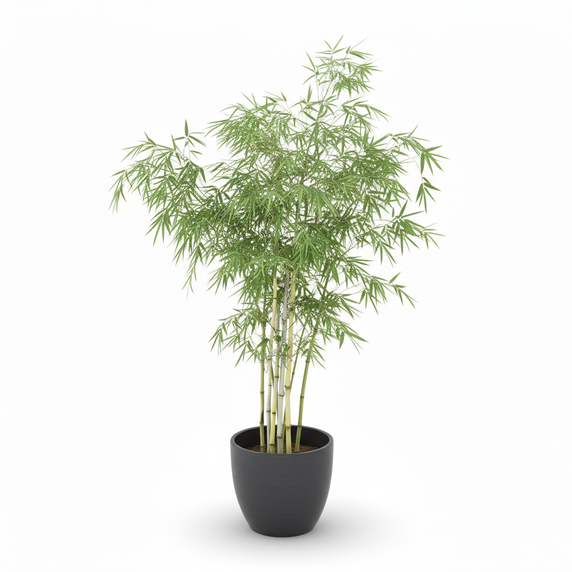
This variety features several flexible stalks that have been meticulously braided together. The stems are segmented and look like bamboo, though it is not a true bamboo. It produces clusters of thin, lance-shaped, vibrant green leaves at the crown of the stalks.
5. Size & Dimensions
The product stands approximately 90cm in height. Indoors, Lucky Bamboo typically grows to a height of 1 to 3 feet. The stems usually maintain a diameter of roughly 1.5 to 2.5 cm.
6. Light Requirements
Thrives in bright, indirect sunlight. Avoid placing it in direct hot sun, as this can cause the leaves to turn yellow or brown. It is also quite tolerant of lower light conditions, making it ideal for office environments.
7. Watering Needs
Can be grown in water or soil. If grown in water, ensure the roots are always submerged and change the water every 7-10 days using filtered or distilled water. If grown in soil, keep the soil consistently moist but never waterlogged.
8. Soil & Potting
If not grown directly in water with pebbles for support, it prefers a well-draining, rich potting soil. Ensure the container has adequate drainage to prevent root rot.
9. Temperature & Humidity
Prefers warm temperatures between 18°C and 35°C. It should be protected from cold drafts and air conditioning vents. It enjoys moderate humidity but adapts well to standard indoor air conditions.
10. Fertilization
Requires very little fertilizer. A single drop of liquid fertilizer added to the water once a month or every other month during the growing season is sufficient. Over-fertilization can lead to yellowing leaves.
11. Maintenance & Care Level
Maintenance Level: Very Easy. Care involves regular water changes and occasional dusting of the leaves to ensure optimal photosynthesis. Trim any yellowing or dead leaves with clean shears.
12. Growth & Propagation
Lucky Bamboo is a slow-growing plant. It is easily propagated by taking stem cuttings and placing them in fresh water until roots develop.
13. Common Problems
The most common issues are yellow leaves, often caused by too much direct sun, chlorinated tap water, or excessive fertilizer. Root rot can occur if the water is not changed frequently or if soil drainage is poor.
14. Benefits & Uses
Highly valued as an air-purifying plant that removes indoor toxins. In Feng Shui, it is used to attract positive energy, wealth, and health. Its braided aesthetic makes it a popular choice for modern interior design and corporate gifting.
15. Toxicity & Safety
Toxicity: Yes. It contains saponins and is toxic to cats and dogs if ingested, potentially causing vomiting and weakness. It is generally safe for humans but may cause mild stomach discomfort if consumed.
Lucky Bamboo 'Braided'
Invite prosperity and serene beauty into your home or office with our stunning 90cm Braided Lucky Bamboo. More than just a plant, this Dracaena sanderiana is a living sculpture and a symbol of good fortune. Its elegant, intertwined stalks create a captivating focal point, while its lush green leaves purify the air. Renowned for its resilience and low-maintenance nature, it's the perfect green companion for both beginners and seasoned plant lovers. Ideal as a thoughtful gift or a personal treat to enhance your decor and well-being.
1. Basic Identification
Common Name: Lucky Bamboo
Botanical Name: Dracaena sanderiana
Arabic Name: بامبو
Plant Variant: Braided
Plant Color: Green
Country of Origin: China
2. Taxonomy & Classification
Kingdom: Plantae
Clade: Tracheophytes
Order: Asparagales
Family: Asparagaceae
Genus: Dracaena
Species: D. sanderiana
3. Origin & Distribution
Despite its common name, Lucky Bamboo is native to Central Africa, specifically Cameroon. It has become a staple in Southeast Asian culture, particularly in China and Taiwan, where it is extensively cultivated for decorative and symbolic purposes.
4. Visual Characteristics
This variety features several flexible stalks that have been meticulously braided together. The stems are segmented and look like bamboo, though it is not a true bamboo. It produces clusters of thin, lance-shaped, vibrant green leaves at the crown of the stalks.
5. Size & Dimensions
The product stands approximately 90cm in height. Indoors, Lucky Bamboo typically grows to a height of 1 to 3 feet. The stems usually maintain a diameter of roughly 1.5 to 2.5 cm.
6. Light Requirements
Thrives in bright, indirect sunlight. Avoid placing it in direct hot sun, as this can cause the leaves to turn yellow or brown. It is also quite tolerant of lower light conditions, making it ideal for office environments.
7. Watering Needs
Can be grown in water or soil. If grown in water, ensure the roots are always submerged and change the water every 7-10 days using filtered or distilled water. If grown in soil, keep the soil consistently moist but never waterlogged.
8. Soil & Potting
If not grown directly in water with pebbles for support, it prefers a well-draining, rich potting soil. Ensure the container has adequate drainage to prevent root rot.
9. Temperature & Humidity
Prefers warm temperatures between 18°C and 35°C. It should be protected from cold drafts and air conditioning vents. It enjoys moderate humidity but adapts well to standard indoor air conditions.
10. Fertilization
Requires very little fertilizer. A single drop of liquid fertilizer added to the water once a month or every other month during the growing season is sufficient. Over-fertilization can lead to yellowing leaves.
11. Maintenance & Care Level
Maintenance Level: Very Easy. Care involves regular water changes and occasional dusting of the leaves to ensure optimal photosynthesis. Trim any yellowing or dead leaves with clean shears.
12. Growth & Propagation
Lucky Bamboo is a slow-growing plant. It is easily propagated by taking stem cuttings and placing them in fresh water until roots develop.
13. Common Problems
The most common issues are yellow leaves, often caused by too much direct sun, chlorinated tap water, or excessive fertilizer. Root rot can occur if the water is not changed frequently or if soil drainage is poor.
14. Benefits & Uses
Highly valued as an air-purifying plant that removes indoor toxins. In Feng Shui, it is used to attract positive energy, wealth, and health. Its braided aesthetic makes it a popular choice for modern interior design and corporate gifting.
15. Toxicity & Safety
Toxicity: Yes. It contains saponins and is toxic to cats and dogs if ingested, potentially causing vomiting and weakness. It is generally safe for humans but may cause mild stomach discomfort if consumed.